
Maintaining APBN Stability Amid Global Uncertainty: DPR Budget Committee's Recommendations
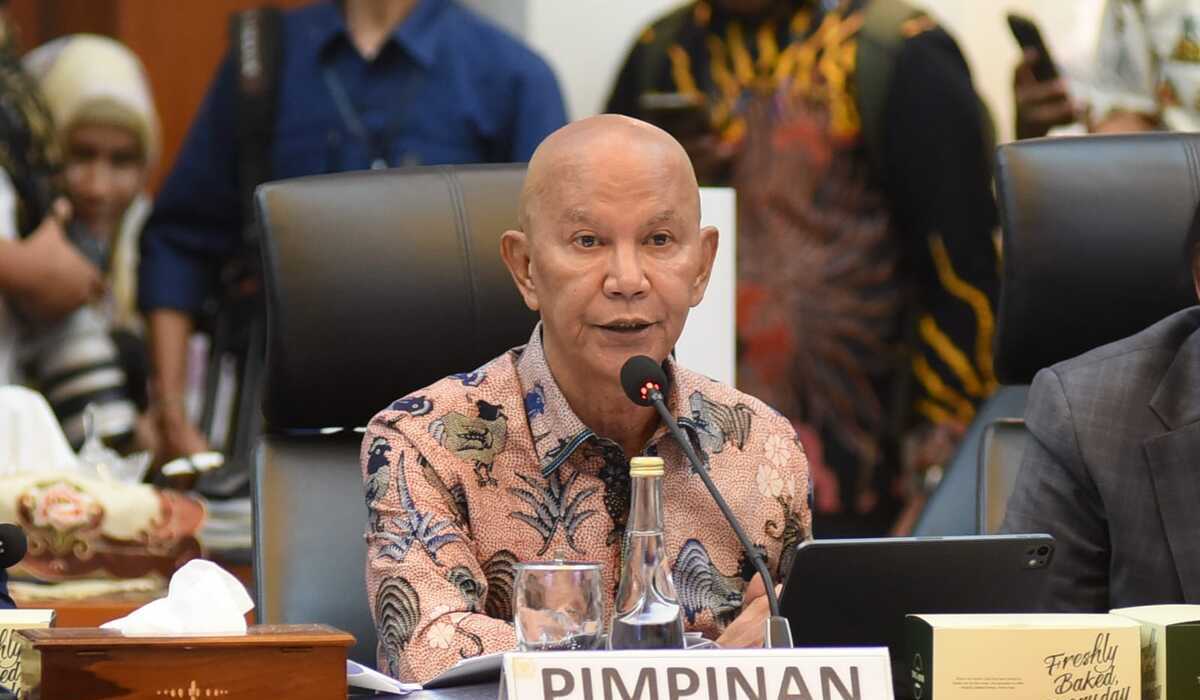
The Budget Committee (Banggar) of the Indonesian House of Representatives has proposed several strategic measures to the government to maintain the stability of the State Budget (APBN) amid rising global economic uncertainty. Banggar DPR chairman Said Abdullah stated that strengthening the fiscal foundation needs to be undertaken collaboratively to safeguard the national economy.
Said noted that various global dynamics, ranging from financial market turbulence to Middle East conflicts, could potentially have spillover effects on Indonesia’s economy. Nevertheless, he assessed that the national fiscal condition remains within a relatively safe corridor.
“We need not panic and should not be a nation caught off guard. Looking at the macro assumptions and APBN posture this year, matters are actually still reasonably well managed,” Said stated in a statement on Thursday, 12 March.
To maintain fiscal stability, Banggar DPR RI presented four policy recommendations for government consideration. First, the government is requested to refine urgent priority programmes.
According to Said, programmes that are genuinely needed by society must continue to avoid disrupting public services or the national development agenda. “We hope the government will sharpen programmes that are truly priority and urgent. Such programmes must certainly be continued,” he said.
Second, priority programmes that are not particularly urgent can be considered for temporary deferral. This measure is assessed as capable of providing additional fiscal space for the government in facing various global economic uncertainties.
Third, the PDI Perjuangan faction legislator urged the government to refine subsidy policy to ensure better targeting. He assessed that there remains a fairly high error rate in subsidy distribution, both in terms of ineligible recipients and communities that should receive support but remain unreached.
“Our subsidies still have a fairly high error rate, so refinement is needed to ensure truly accurate targeting,” he explained.
Fourth, Banggar DPR RI also encouraged the government to strengthen productive social assistance for micro, small and medium enterprise (UMKM) operators. According to Said, business capital support for UMKM operators, particularly in the micro sector, can help stimulate the real sector amid global economic pressures.
He noted that of approximately 43.9 million UMKM operators in Indonesia, the majority are micro enterprises requiring small-scale financing support to continue developing. These four measures, Said said, form part of efforts to maintain national fiscal health.
This simultaneously ensures APBN remains capable of functioning as an economic stabilisation instrument amid evolving global dynamics.
“If these micro enterprises receive even relatively small capital support, the impact can be directly felt in real sector movements,” he concluded.