
Maintaining and Preserving the Virtue of Hajj
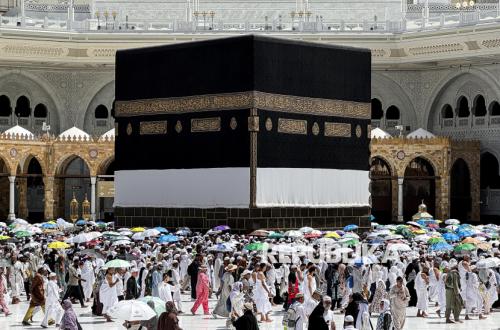
After completing the series of Hajj rituals in the Holy Land of Mecca, pilgrims begin returning to their home countries, especially those in the first wave, while others continue their journey to Medina to increase their worship at the Nabawi Mosque and visit the tomb of the Prophet Muhammad (PBUH). Upon finishing the Hajj procession, these guests of the Most Merciful (dhuyufurrahman) receive a new title: ‘Haji’ or ‘Hajjah’. However, the greatest question every individual must face upon returning is not ‘how many times have you performed the Hajj?’, but rather ‘is your Hajj mabrur (accepted), and are you able to maintain it?’
Understanding the essence of a mabrur Hajj is a crucial first step. Linguistically, the word ‘mabrur’ comes from ‘al-birr’, meaning goodness or virtue. Imam An-Nawawi explains that a mabrur Hajj is one not accompanied by sin, untainted by immorality, and whose performer fulfils all its pillars, conditions, and etiquettes with sincerity and correctness. Scholars emphasise that a mabrur Hajj is one where all requirements are met and performed as perfectly as possible by the pilgrim.
The Prophet Muhammad (PBUH) affirmed the virtue of a mabrur Hajj in his saying: ‘Al-hajjul mabruru laisa lahu jaza’un illal jannah’ (The reward for an accepted Hajj is nothing less than Paradise). The prospect of an act of worship being rewarded directly with Paradise is what makes every Muslim yearn for the mabrur status for their pilgrimage.
The Essence and Wisdom of Hajj Mabrur
Every pilgrim naturally hopes to achieve a mabrur Hajj. However, Imam al-Ghazali, in his work Ihya’ ’Ulumiddin, teaches that the core of Hajj is not merely the proper execution of rituals in Mecca and Medina. The true essence of a mabrur Hajj lies in the transformation after the pilgrimage, where a person becomes better in their worship, more humble, more caring towards others, and increasingly detached from worldly dependence.
Hasan al-Bashri provided a profound definition: a mabrur Hajj is when the pilgrim returns home with an ascetic (zuhd) attitude towards the world and a love for the hereafter. Imam al-Munawi then offered a practical conclusion: the sign of an accepted Hajj is that the person returns better than before and does not revert to committing sins.
Thus, the wisdom of a mabrur Hajj is not only personal but also social. On a personal level, a mabrur Hajj purifies the soul (tazkiyatun nafs), cultivates a higher spiritual awareness, and educates one’s mental resilience in facing life’s hardships. Socially, Hajj serves as a means for the global Muslim community to know one another, foster mutual respect (tasamuh), and nurture strong solidarity and unity.