
Mahjong Becomes the New Language of Gen Z
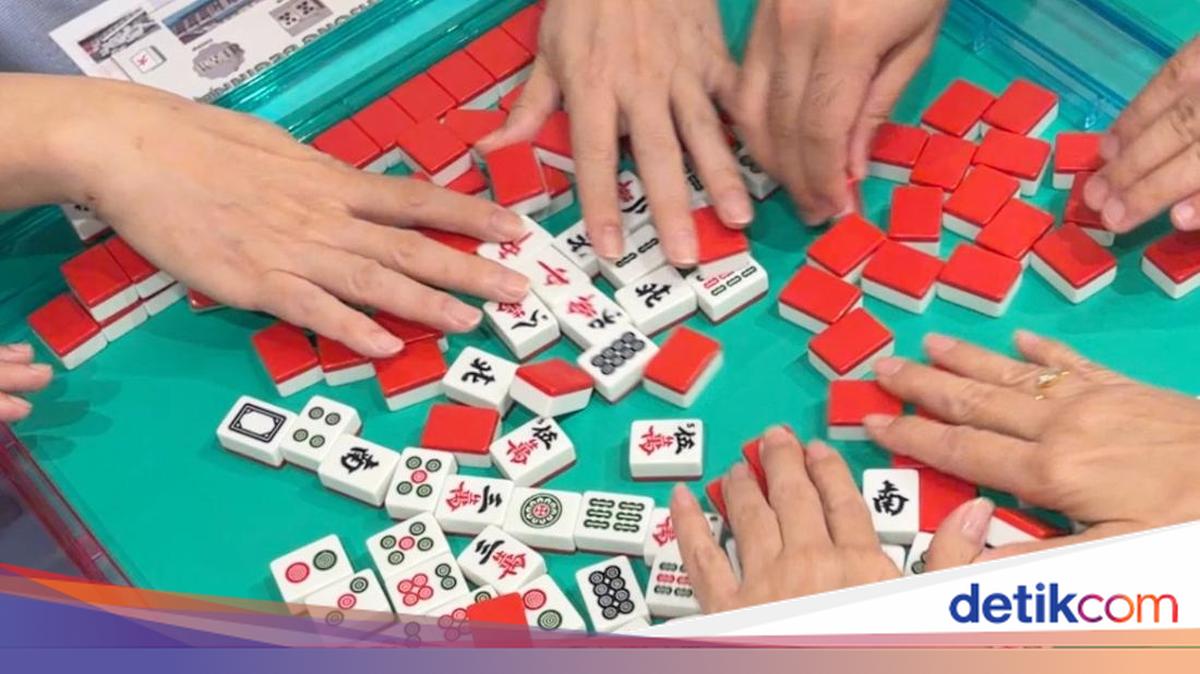
The clacking of mahjong tiles colliding forms a rhythm almost like music. The composers are none other than hands moving without pause. Four pairs of hands ‘dance’ quickly, shuffling, arranging, and then discarding tiles with confidence. Every movement merges into a rhythm that fills the entire room. A few years ago, a scene like this might have felt foreign. Mahjong, a tile game from China often associated with the living rooms of the elderly or family gatherings, has now found a new home among urban youth. The game is no longer hidden in private spaces but is openly present in hotels, restaurants, and cafes.
Angela Widowati, affectionately known as Ella, stood observing the flow of the game. Occasionally she would approach, correct a participant’s tile arrangement, or patiently re-explain the rules. Behind this activity, she is the figure who started it all. Since March 2025, the 57-year-old has founded and managed the Sahabat Mahjong Society community, which initially started from an elderly home in the Pondok Indah area. Over time, the community has grown rapidly, no longer dominated by the elderly but also attracting the interest of younger people. ‘More and more people know about it and more and more come curious. Especially when our sessions are scheduled in cafes, lots of Gen Z attend. The participants range from the young to the elderly, it’s complete, everyone is there,’ said Ella. Mahjong is slowly becoming a cross-generational meeting space.
Ella’s journey with mahjong, however, is much longer than just the past year. She came across the game by chance decades ago, while her life was constantly moving to follow her husband’s assignments as a diplomat. As a housewife, Ella used her time to socialise as well as gain knowledge, one of which was through mahjong. Her first encounter with the game happened about 25 years ago, when she was pregnant with her second child. Since then, in every country of posting, she has always sought out a community to play with. ‘I first got to know mahjong 25 years ago when my second child was still in the womb. That’s when I tried playing mahjong, hosting at home, from Peru moving to several subsequent countries I always looked for a mahjong community. At least once a week I would play,’ Ella recounted. Mahjong became her way of building connections in foreign places. The game was not just entertainment, but a social bridge, a universal language that did not require many words.
The habit continued until a turning point occurred while she was in Washington DC, United States. At that time, Ita Mahendra Siregar, the wife of the Indonesian Ambassador, encouraged her to teach mahjong upon returning to Jakarta. Initially she was hesitant, considering the game was not yet very popular in Indonesia. However, she took the seriousness of the invitation even more seriously. Ella compiled a learning module during her final posting in Malaysia so she could teach mahjong more systematically. ‘I have to be able to share this knowledge in a structured way, so it’s easy to understand,’ she said. She designed learning stages from zero to advanced levels, ensuring anyone could understand the game without feeling overwhelmed. This approach became key. In this community, mahjong is not taught as an exclusive game, but as an inclusive learning process. From beginners to regular players, everyone is given space to develop. And from that process, something more than just a game emerged. ‘They feel a pleasant sensation like healing, but not the kind of healing that just wastes time. They can relax with friends, laugh, but their brains keep working and staying active.’
Globally, mahjong is indeed experiencing a revival. Eventbrite data recorded that searches related to mahjong surged 18-fold throughout 2023–2025, while the number of mahjong-themed events increased up to 45-fold. From bars in Los Angeles to social clubs in New York, the game has transformed into a part of the urban lifestyle. In Indonesia, similar symptoms are beginning to show. Amidst the high cost of entertainment and saturation with digital interaction, mahjong presents itself as a ‘third place’ outside of home and the office. One table, four people, and a long enough time to chat becomes a simple formula that actually feels rare. At Sahabat Mahjong Society, the playing schedule is almost never empty. The packed schedule is not without reason. Requests keep coming, often exceeding capacity. ‘Tomorrow we have a mahjong session in Pondok Indah that is already full, overflowing even. Now it’s every day, except Thursday we rest, if we don’t rest I can’t handle it,’ said Ella with a laugh.
Among the participants, young faces are starting to dominate. One of them is Tesa Digrazia, 23, who is now a teaching assistant in the community. Her interest in mahjong started at home but grew as the community formed. ‘My initial interest in mahjong came from my own mother (Mrs Ella) and I started to get a bit serious because this community was formed. For beginners, it might feel intimidating at first because you have to memorise the tiles, there are many pictures and symbols,’ she said. At a glance, this strategy-based tile game originating from China is reminiscent of a mix of playing cards and dominoes, but with a higher level of complexity.