
Mahfud: Threats to Democracy Could Jeopardise Golden Indonesia 2045
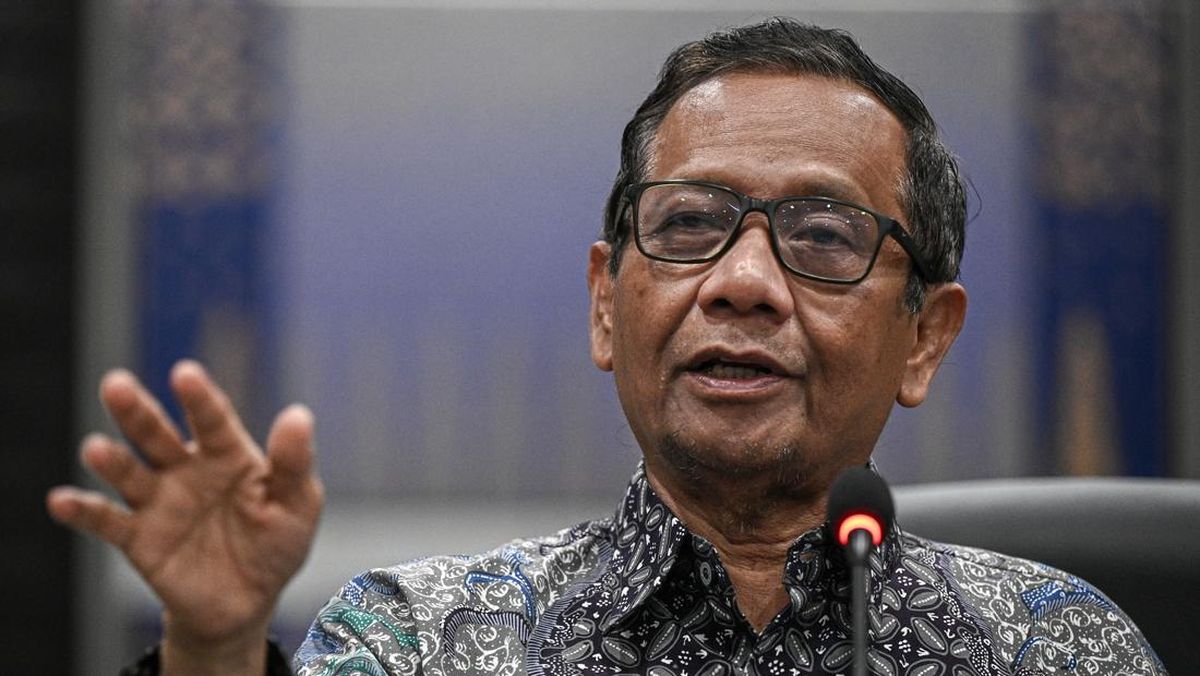
Constitutional law expert and former chief of the Constitutional Court (MK), Mahfud MD, has stressed the importance of enforcing the law to protect democracy and national unity. He said democracy without the rule of law risks triggering chaos and threatening the ambition of Golden Indonesia 2045.
He made the remarks at the Soetandyo Lecture at the Faculty of Social and Political Sciences (FISIP) of Airlangga University (Unair) in Surabaya on Thursday (29 October).
Speaking about the importance of preserving the state, Mahfud recalled a 2018 speech by Prabowo Subianto, who predicted that Indonesia could collapse by 2030 because of widespread corruption. At the time, Prabowo, now president, sharply criticised the country’s condition, saying it was heading towards a “kleptocracy”, or government by thieves.
“If democracy is not safeguarded by law, we may not make it to Golden Indonesia [2045]—we could already have collapsed,” Mahfud said.
To prevent collapse and achieve the Golden Indonesia 2045 target, he said, good governance must meet five key requirements: transparency, accountability, legal responsibility, and independence from political forces and other interference.
Mahfud believes that if these pillars of law enforcement and institutions are in place, extreme poverty will have been eradicated in Indonesia by 2045, leaving only relative poverty, with every citizen enjoying a far more adequate minimum income.
“If all of that can be achieved, then, based on objective studies accepted by international scientific reasoning, we will reach Golden Indonesia. In 2045, we will reach Golden Indonesia,” said Mahfud, who was also a candidate in the 2024 presidential election.
At the event, Mahfud examined the tension between the need for national integration and the practice of democracy, particularly in new states. He said Indonesia needs integration to remain united amid its ethnic, racial and religious diversity. That diversity, he added, must be managed democratically.
Mahfud said democracy is not an ideal system, but remains the best option compared with monarchy, aristocracy and oligarchy. He described a cycle of power in which monarchies often give rise to aristocracies, which then deteriorate into oligarchies—an unjust system in which a small group of capital owners wields power arbitrarily.
He said democracy challenges oligarchy by giving the people room to monitor power and ensure its circulation. However, he warned that democratic freedom without rules can lead to anarchy. The law, or nomocracy, is therefore essential to prevent disorder.
“Democracy is not ideal. But it is still the best of all the bad options,” Mahfud said.
Mahfud also highlighted the vulnerability of democracy in developing countries, citing the ideas of two Indonesian public figures: scholar Azyumardi Azra and economist Boediono, who served as Indonesia’s 11th vice-president from 2009 to 2014.
According to research Boediono presented while he was a professor at Gadjah Mada University (UGM), democracy can grow stably only when a country’s per capita income reaches a certain level of prosperity.
“According to studies by Azyumardi Azra and Mr Boediono, democracy will develop well if a country’s per capita income is at least US$5,500,” said Mahfud, who served as defence minister under Indonesia’s fourth president, Abdurrahman Wahid (Gus Dur), and as coordinating minister for political, legal and security affairs under its seventh president, Joko Widodo (Jokowi).
Mahfud said that below this threshold, a country is highly vulnerable to a return to authoritarianism. Indonesia’s per capita income currently stands at around US$4,900, he said.
He questioned how long Indonesia would take to reach the proposed threshold, and whether the theory would be borne out by the country’s current political situation.
A population that is not yet economically secure or well educated, he added, is vulnerable to demagogues—politicians who rely on empty talk and promises rather than evidence. He cited New Order-era politicians who exploited communities by promising to build bridges in areas that did not even have rivers.
The New Order was the regime led by Indonesia’s second president, Soeharto, for 32 years before it fell during the 1998 Reformasi movement.
Correcting the government
Mahfud said criticism must remain possible as a means of correcting, improving and evaluating the government, including the administration currently in power. Addressing students, he stressed that young people, as future national leaders, need a much stronger understanding of civic life.
“There are many things among our state officials, who should be leading the nation, that need to be corrected,” Mahfud said.
As a solution, he emphasised the importance of preparing new figures who genuinely understand the essence of democracy to take up leadership positions. Any transition, he said, must take place through lawful and constitutional mechanisms.
“How do we make corrections? If a change of leadership takes place through a constitutional process, we must prepare people who have a deeper understanding of democracy,” he said.
Mahfud said he hoped students would not merely observe, but would absorb the framework of democracy.
Source: jawawa.id (https://jawawa.id/newsitem/mahfud-threats-to-democracy-could-jeopardise-golden-indonesia-2045-1793389877)
Originally published by CNN Indonesia (https://www.cnnindonesia.com/nasional/20261030150556-32-1421497/mahfud-ancaman-ke-demokrasi-bisa-ganggu-indonesia-emas-2045), translated from Indonesian