
Maharaksa (OASA) Reveals WtE Expansion Plans, Set to Develop Three PSEL Projects
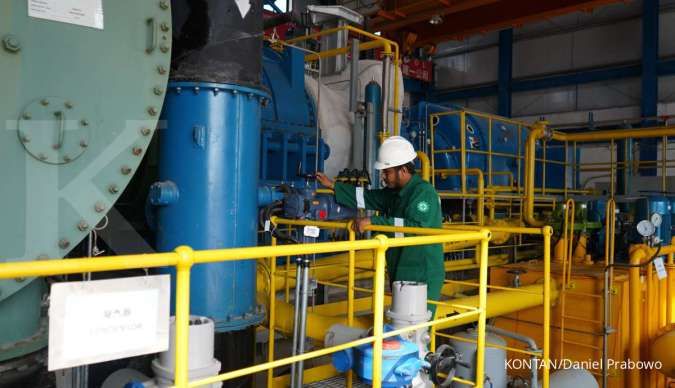
PT Maharaksa Biru Energi Tbk (OASA) is ready to support the development of the waste-to-energy (WtE) ecosystem in Indonesia. The company will accelerate its WtE business expansion by undertaking three Pengolahan Sampah menjadi Energi Listrik (PSEL) projects.
President Director Bobby Gafur Umar revealed that the PSEL projects to be built by OASA are located in Lampung Raya, South Tangerang (Tangsel), and Jakarta. The Lampung Raya PSEL is the newest project secured by OASA through the Bumi Biru Indonesia consortium. This consortium has been designated as the selected partner for the development of the Lampung Raya PSEL project in the Partner Selection Batch-2 process organised by Danantara Indonesia. The Bumi Biru Indonesia consortium consists of SUS Environment Inc. and OASA’s subsidiary, PT Indoplas Dewata Energi.
The Lampung Raya PSEL is targeted to begin groundbreaking in the third quarter of 2026 and to be operational by the fourth quarter of 2028. Bobby explained that the project scheme refers to Presidential Regulation (Perpres) Number 109 of 2025. Under this regulation, the electricity tariff is set at US$ 0.20 per kilowatt-hour (kWh) with a 30-year power purchase agreement. Danantara will also participate in the project, making it more attractive in terms of investment and commercial viability, as well as improving risk management. Bobby believes the regulatory change from Perpres Number 35 of 2018 to Perpres Number 109/2025 can accelerate PSEL project development. “Previously, there were several risks and costs that resulted in high investment. So, the new Perpres has reduced many risks, capex, and investment,” Bobby stated during a presentation on Monday (20/7/2026).
Another project owned by OASA is the Tangsel PSEL. This project, with a processing capacity of 1,100 tonnes of waste per day, is targeted to produce 25 MW of electricity. The Tangsel PSEL project is carried out by PT Indoplas Tianying Energy, a partnership between OASA’s subsidiary, PT Indoplas Energi Hijau, and China Tianying Inc. The consortium won the Tangsel PSEL project in April 2025. Bobby confirmed that OASA will proceed with the Tangsel PSEL project through several adjustments in line with the implementation of Perpres Number 109/2025. “The new Perpres includes a transitional provision, stating that if there is already a winner, it can be transitioned to the new scheme. Tangsel has entered the transition,” Bobby said. OASA is still in discussions with Danantara regarding several adjustments to the Tangsel PSEL project, including Danantara’s ownership portion in the project. “We cannot comment much yet, as this is still in process and nearing finalisation. So, let Danantara make the announcement later,” Bobby added.
In addition to the Lampung Raya and Tangsel PSEL projects, OASA also has a PSEL project in Jakarta. Bobby explained that the Jakarta PSEL was actually OASA’s first WtE project, secured back in 2020. “Regarding the Jakarta project, I cannot say much yet. I have spoken with the Governor of Jakarta and others. Currently, we are surveying for the most suitable location,” Bobby said.
Bobby did not detail the investment requirements for the WtE business expansion and the construction of the PSEL projects to be undertaken by OASA. He emphasised that the investment needs for each PSEL project will refer to the feasibility study prepared by Danantara. Bobby only provided an illustration that the investment required to build a PSEL facility with a processing capacity of 1,000 tonnes could reach Rp 2 trillion to Rp 3 trillion. Despite the large investment, Bobby is confident that the PSEL projects will support the sustainability of OASA’s performance in the long term. OASA will earn revenue from construction to operation and maintenance. Bobby also illustrated that a PSEL facility with a capacity of 1,000 tonnes could potentially generate revenue of around US$ 35 million, or approximately Rp 600 billion, per year. “The ecosystem in preparing these projects seems to be in good shape, it is just a matter of execution. The development of WtE requires strong collaboration between the government, the private sector, technology partners, and various stakeholders. The current progress is part of a joint effort to accelerate the construction of WtE facilities in Indonesia,” Bobby concluded.