
Maggot Farming Opens Economic Opportunities for Residents of Makassar Rental Flats
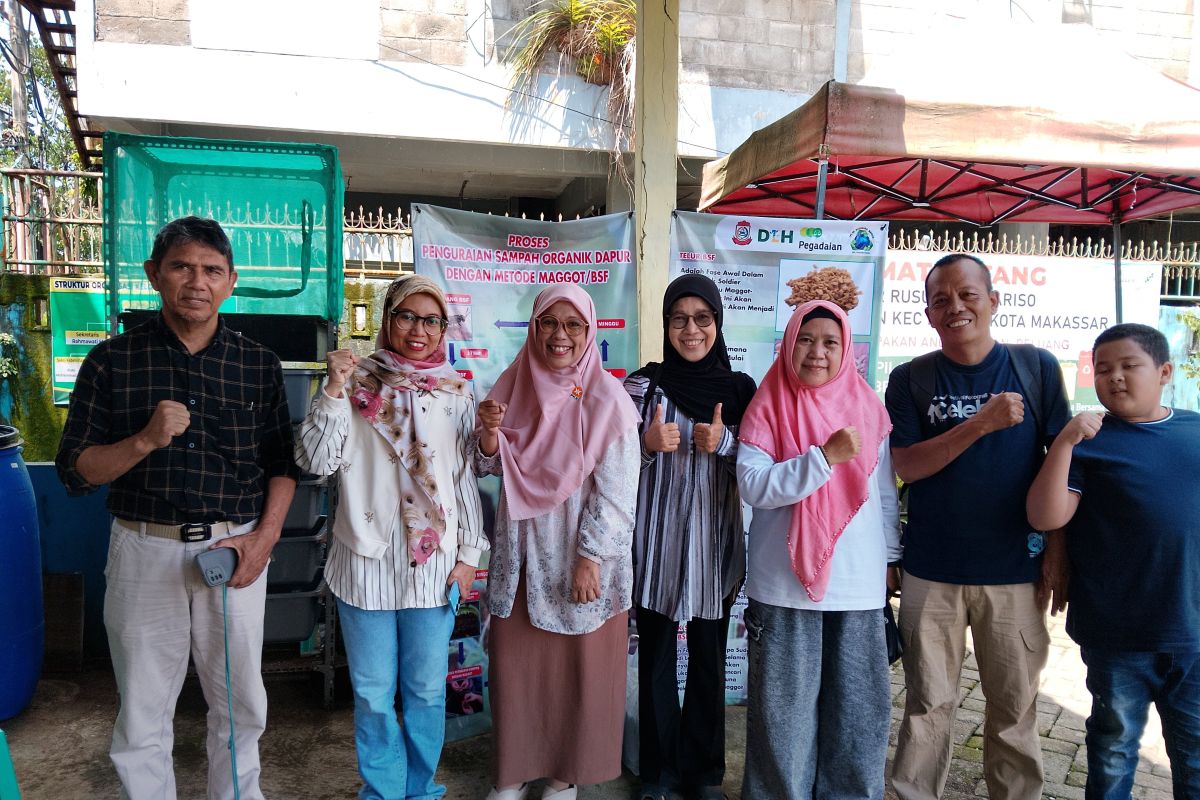
Makassar (ANTARA) - Maggot farming is opening new economic opportunities for marginalised residents in the Mariso Rental Flats (Rusunawa) area, Panambungan Ward, Mariso Subdistrict, Makassar City.
“The waste problem that has long been a challenge is now turning into an opportunity. One such pilot is the Community Self-Help Group (KSM) TPS 3R Rusunawa Mariso,” said the Facilitator and Chairman of KSM TPS 3R Rusunawa Mariso, Muhammad Saleh, in Makassar on Saturday.
To address the waste issue, he said, one solution is processing organic waste with maggots or larvae of the Black Soldier Fly (BSF), which have high market value.
Maggots can consume organic waste at 2-5 times their body weight per day, producing kasgot (organic fertiliser) and maggots that have high economic value as animal feed.
Therefore, maggot farming is seen as providing a dual solution: reducing waste volume while generating economically valuable products.
Organic waste such as food scraps, vegetables, and fruits is utilised as the main feed in the maggot production process, allowing household waste to be processed productively.
In addition to being environmentally friendly, Saleh continued, maggots are known to have high protein content that is greatly needed as feed for livestock such as fish, chickens, and birds. Market demand for maggots is also steadily increasing along with the growth of the fisheries and livestock sectors.
Not only producing maggots, the processing residue in the form of kasgot (leftover feed) also has utility value as organic fertiliser. This makes the maggot farming process a low-waste system, as all outputs can be reused.
From an economic perspective, this business requires relatively small capital but has the potential to provide sustainable profits, with an average production of 100 kilograms of maggots per harvest every week.
South Sulawesi DPRD member Yeni Rahman has praised the maggot farming developed in the Mariso Rental Flats area, which is the first in Makassar and has the potential to become a model for other regions.
According to her, in addition to its economic value, the programme also helps address Makassar’s waste problem, with annual production reaching around 800 to 1,000 tonnes.
She also emphasised the importance of involving the surrounding community, especially housewives, in the waste sorting process. This step not only supports maggot production but also opens additional income opportunities from selling maggots or kasgot as plant fertiliser.