
MAGA, Trump's Credibility, and Iran's Determination
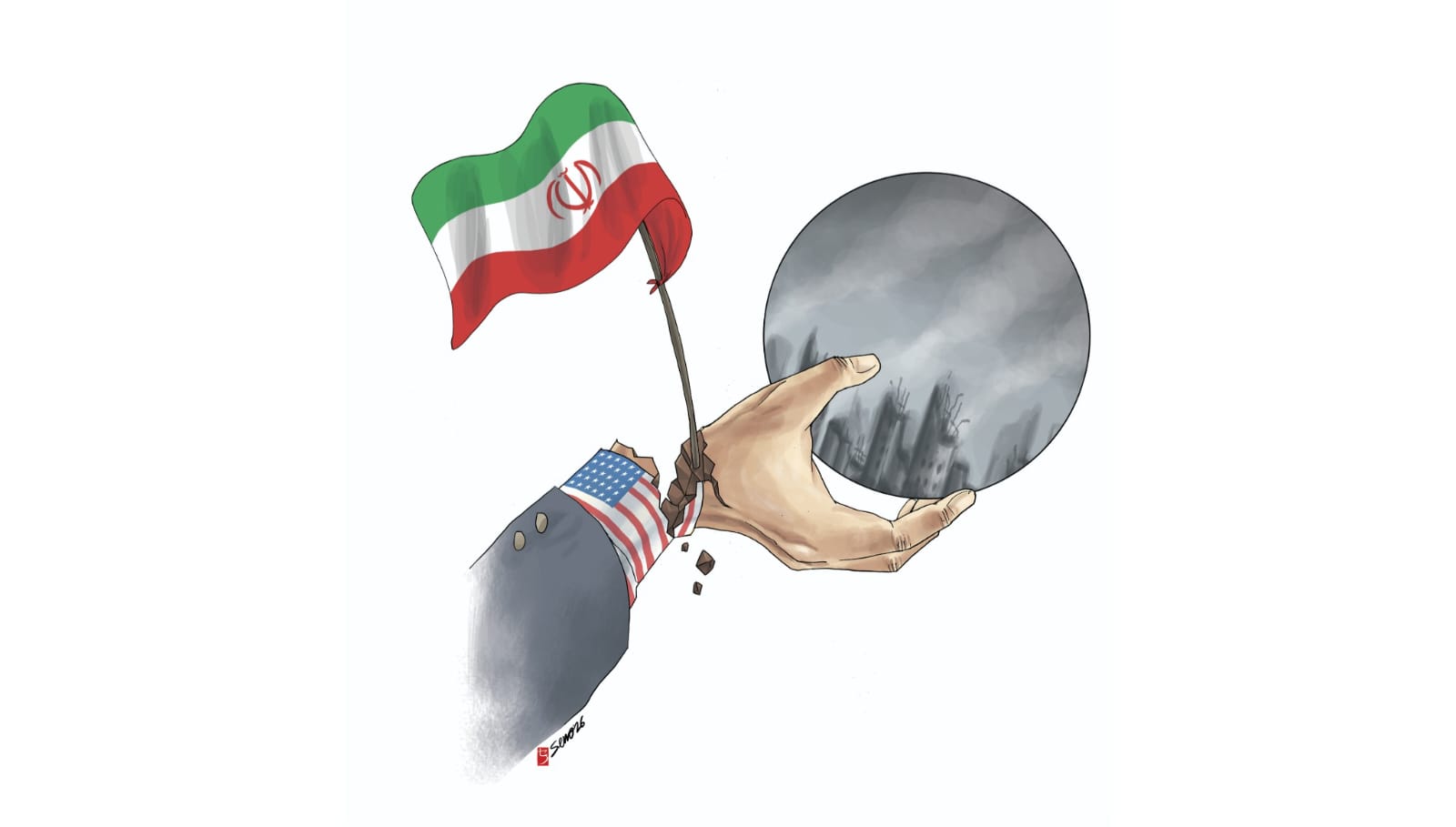
The armed conflict between Iran and the US continues and tends to escalate, despite a memorandum of understanding (MoU) between the two nations being signed on 17 June. In response to Iran’s attack on a cargo ship in the Strait of Hormuz, the US retaliated by striking military sites, radar, missile centres, fast boats, and the port of Bandar Abbas in southern Iran. Reciprocal attacks ensued. Iran targeted US military bases in Kuwait, Bahrain, Qatar, Oman, the United Arab Emirates, and Jordan. The expanded Iranian attacks were a response to three rounds of US strikes on Iranian cities, including Tehran.
The events began on 9 July at the conclusion of the funeral procession for Iran’s Supreme Leader Ayatollah Ali Khamenei, who was killed in the initial day of US-Israeli aggression on 28 February. The recent Iran-US turmoil occurred because the US deliberately created a different interpretation of the MoU regarding the Strait of Hormuz. Article 5 of the MoU stipulates that during the 60-day negotiation to end Iran’s war against the US and Israel, international tankers and cargo vessels are free to transit the Strait of Hormuz without a fee under Iranian arrangements. In reality, these tankers and cargo vessels transited Hormuz via the southern side of the Strait, which is Oman’s maritime territory.
By supporting the change of the Hormuz route for international tankers and cargo, Trump did not want the precedent of Iranian control over Hormuz to continue permanently. This would mean Iran’s position in negotiations related to Hormuz would strengthen. This is something the US, the Gulf monarchies, NATO, and many other countries do not want, because following a comprehensive resolution of the conflict in the region, Iran plans to levy a fee or toll on ships passing through the strategic strait. Moreover, the US’s image as a global military superpower is being questioned. This is already visible with the formation of an alliance between Egypt, Saudi Arabia, Turkey, and Pakistan. Furthermore, the fate of the world depends on Iran.
Although Trump declared the MoU had ended, the US still intends to proceed to the next stage of negotiations (60 days). Iran does as well, even as it challenges the US, stating it will not allow the MoU to be violated. Indeed, Trump’s credibility in the eyes of Iran is at a nadir. Trump has repeatedly committed aggression alongside Israel against Iran when Iran-US negotiations were making substantial progress. Besides the Hormuz issue, the MoU requires a cessation of war on all fronts. In reality, Israel is still occupying southern Lebanon and attacking civilians without Trump being able to stop it.
Facing Iran and the defiance of Israeli Prime Minister Benjamin Netanyahu, who refuses to withdraw from Lebanon, is certainly troubling for the arrogant Trump. Trump has no more cards to play to counterbalance Iran. War with Iran not only creates a global energy crisis but is also unpopular in the US. The war is deemed unnecessary, except to serve Israel’s interests. Meanwhile, the American people must pay the cost of the war, which erodes their purchasing power. To the extent that Trump’s colleagues who support the ‘Make America Great Again’ (MAGA) slogan are abandoning him.
If the conflict with Iran continues until the US midterm elections on 4 November, the Republican Party will suffer a crushing defeat against the Democrats. This explains why the House of Representatives and the Senate support the enforcement of the President’s War Powers Act. This means they demand that the authority to wage war against another country must receive Congressional approval. This illustrates the Republicans’ concern over the protracted conflict with Iran, even though they initially supported the US-Israeli aggression against the mullah regime.
Beyond Netanyahu’s persuasion for the US and Israel to launch another war against Iran to enable regime change, the war cannot be separated from Trump’s MAGA ambitions. MAGA itself depicts US superiority in the economy, technology, and military facing serious challenges. A young, energetic, patient, and rapidly advancing China is difficult for the US to contain. Other growing major powers include India, Russia, Turkey, Brazil, and South Africa. Together with China, they formed the BRICS economic alliance to counterbalance the US.
Therefore, during the 2016 US presidential campaign, candidate Donald Trump championed the MAGA slogan, a white nationalist political movement to answer the changing global economic, political, and military challenges. To support MAGA, since his first term in office (2017-2021), Trump has ignored the rules-based international order. He introduced the diction of exceptionalism, meaning the US no longer heeds international law, which he accused of hindering American progress. The US then attacked Venezuela and threatened to occupy Greenland.
Washington also shifted its focus from the Middle East to the Indo-Pacific to hinder China’s growth and to topple the mullah regime in Iran to control the Persian Gulf’s energy resources, obstruct China’s global infrastructure development (OBOR) into the Middle East and Africa via Iran, while simultaneously weakening Russia’s influence in Central Asia where Iran acts as a buffer zone. Moreover, controlling the Gulf’s energy, the main source of China’s energy imports, would increase Beijing’s dependence on Washington. For this reason, in 2018, Trump withdrew from the multilateral nuclear deal, the JCPOA.
The JCPOA, made between Iran and the P5+1 (the US, China, Russia, the UK, France, plus Germany), required Tehran to limit uranium enrichment to a level of 3.67%, sufficient only for civilian purposes. Iran also agreed that the UN nuclear watchdog, the IAEA, would strictly monitor the implementation of the agreement. In return, Tehran was free to export its energy to the global market, and the US would gradually release Iranian funds frozen in banks.