
Madura Shops Are Spreading Across Yogyakarta: How Their Business Model Works
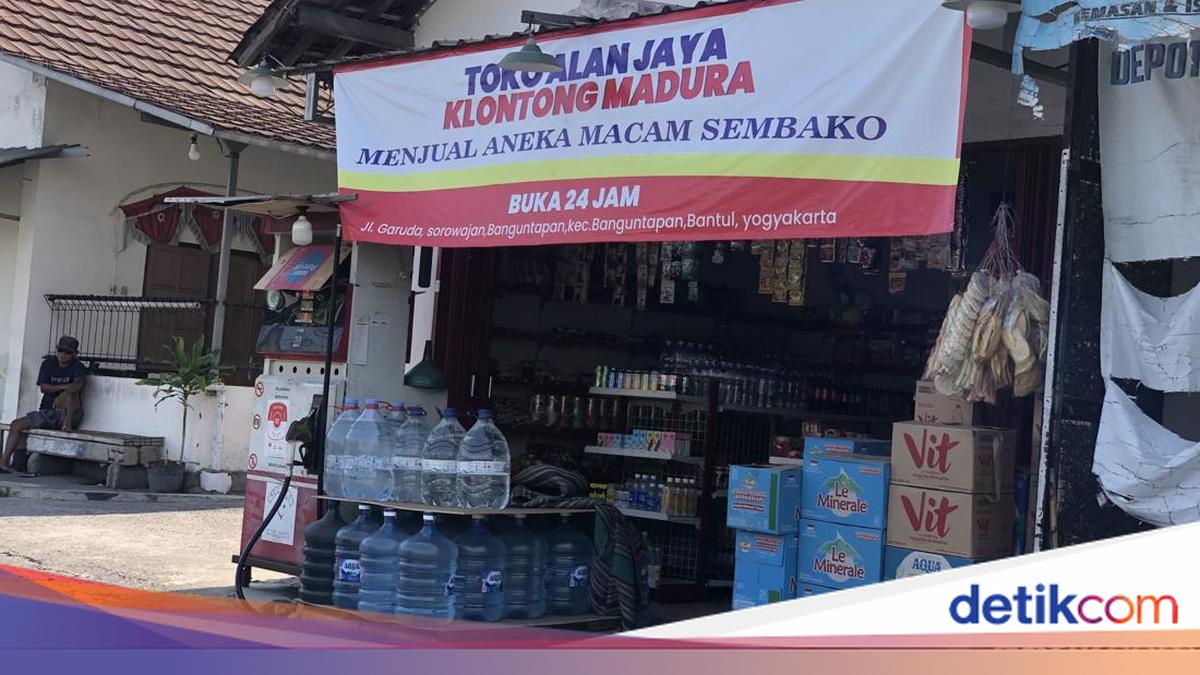
In cities, particularly in the Special Region of Yogyakarta (DIY), Madurese convenience shops are easy to find. Their business model is not a franchise, but something simpler.
These shops are general stores, commonly recognised by the mini petrol pumps outside and their 24-hour opening hours.
Heri Irawan, one of the earliest owners of a Madurese shop in Yogyakarta, said he opened his first outlet in 2017 in Seturan, Depok, Sleman. At the time, few Madurese people were running convenience shops in Yogyakarta. The shops began spreading rapidly after the COVID-19 pandemic.
“If I remember correctly, it was in 2017, on Selokan Mataram in Seturan. Yes, I opened it myself,” Heri told detikJogja when they met him in Bantul on Friday (16 October 2026).
“After COVID, Madurese people came here. Before COVID, things were good for me. I found the locations myself too,” he added.
Heri now owns five shops across Sleman and Bantul. He said opening each one cost around Rp100 million, including the rental fee for the premises.
“Per shop, the initial capital is Rp100 million for us. We use a system a bit like a minimarket, with shelving. The rental is included in the initial capital,” he explained.
Heri uses two approaches: running branches and entering into partnerships. For branch outlets, he hires staff to look after the shops, with two or three employees at each one.
“My employees include local people too. They don’t have to be Madurese; we often hire locals. They are paid a salary and work in shifts—three shifts,” Heri said.
“That means we’re providing job opportunities. We’re open to people from anywhere. We recently hired someone from Magelang and someone from eastern Indonesia. What matters is that they are willing to work and honest,” he added.
The second model is a 50-50 profit-sharing partnership. Heri said he invites relatives from Madura to take part. He provides the capital, while his partner manages the shop.
“Yes, I invite them. For a husband-and-wife partnership, the profit is split 50-50. They don’t contribute capital; I provide everything, but they manage the shop full-time. If they want to leave, the accounts have to be checked. If the business is losing money, then something has gone wrong,” he said.
“Madurese people don’t want to work for a salary under this system. Even if they take something from the shop—not just cigarettes, even crackers—they have to pay for it. I ask them to remit the proceeds every month,” Heri continued.
Heri said monthly turnover has no fixed figure and fluctuates depending on the shop’s location. Turnover has also changed since he first opened his shop.
“Turnover depends on the location; it isn’t fixed. Sometimes it’s Rp1.5 million, which is the lowest. That’s why, for Madurese profit-sharing arrangements, there’s no risk,” he said.
“Does the highest turnover reach tens of millions? Not really, and it’s rare now. It was different before, when there weren’t many Madurese people here,” he added.
Around 600 Madurese shops
Subur Adi Cahyono, head of the Yogyakarta Madurese Family Retailers Association (KMY), said the association currently has records of around 600–700 member-owned convenience shops. As with Heri’s business, one person may own more than one outlet.
“Our records show around 600 to 700 shops belonging to members. But there are thousands overall, including those that haven’t joined KMY, sometimes because they don’t know about us yet,” Subur told detikJogja.
“One person can own 10 shops, or more than one—there are many with multiple outlets. The largest concentration is in Sleman, especially around Babarsari and Condongcatur. That’s where it first began, in eastern Depok,” he added.
Subur said owners of multiple shops often have other jobs and rely on employees to staff their outlets.
“Some are lecturers, police officers, lawyers or shop owners. They come from all sorts of backgrounds. Some bring relatives from Madura; others have settled here,” he said.
“Some owners have shops in Malang, Bali and Jakarta. Others stay in Yogyakarta and have several locations: they manage one themselves and have other people run the rest,” he concluded.
Source: jawawa.id (https://jawawa.id/newsitem/madura-shops-are-spreading-across-yogyakarta-how-their-business-model-works-1792223422)
Originally published by detikJogja (https://www.detik.com/jogja/bisnis/d-8711409/menjamur-di-jogja-begini-lho-sistem-bisnis-warung-madura), translated from Indonesian