
Madura Set for Total Transformation as Mega Project Draws Chinese Investment
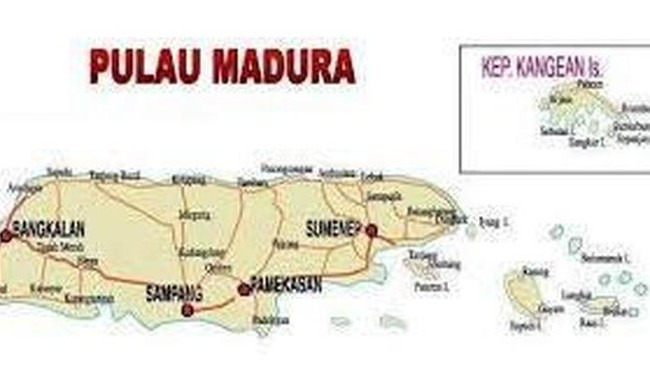
The development of an industrial estate in Bangkalan, Madura, East Java, is not solely driven by land availability. Economic redistribution considerations have also underpinned the private sector’s entry into developing the industrial area. The Wiraraja Madura Industrial Estate is one of the projects projected to open a new economic growth centre in East Java. The government has previously stated that Bangkalan has the potential to become a counterbalance to the heavy industrial estate that has developed around Gresik. Industrial development in Bangkalan has a broader dimension because it is linked to the economic conditions of the local community.
“We are not focused only on Java itself. Why Bangkalan? Firstly, we are focused there because the government has long prepared infrastructure since the era of B.J. Habibie for industrialisation,” said Akhmad Ma’ruf Maulana, Chairman of the Indonesian Industrial Estates Association (HKI), to CNBC Indonesia, quoted on Tuesday (25/8/2026).
Previously completed infrastructure development has become one of the assets for the area to be developed into an industrial base. The problem is that infrastructure readiness has not been fully matched by private sector entry into industrial estate development. The socio-economic conditions of the community are also another consideration. Industrialisation is expected to create new economic activity while providing employment opportunities for communities around the estate.
“But why has the private sector not entered? Well, I happened to enter as a son of the region. The infrastructure there has already been built, but poverty is also extreme, very severe poverty there, extremely severe,” he said.
The industrial estate development is directed towards bringing in large-scale manufacturing activities. Various prospective industries being explored include plastics, yarn, mattresses, furniture, food, and fish canning. The entry of these factories is expected to ensure that the benefits of the estate’s development do not stop at investment and production activity. The knock-on effects can include labour demand, the growth of supporting businesses, and increased economic turnover around the estate.
“That is why I entered there so that there would be job creation and economic redistribution,” said Ma’ruf.
Physical construction of the estate has not yet begun as it is still awaiting the completion of the permitting stages. Once that process is complete, construction will proceed to prepare the estate for the companies that have been approached. “It is in the permitting stage, perhaps early next month, or if the permits are completed I will immediately build,” Ma’ruf concluded.
China Ready to Build Large Factories Here
The Wiraraja Madura Industrial Estate in Bangkalan, East Java, is entering the preparation stage to attract manufacturing investment from various countries. China has become one of the largest sources of investment, with plans to develop one industrial cluster in the estate. This development is part of Indonesia-China cooperation to strengthen the new industrial base in Madura. Previously, the government has encouraged cooperation in developing the Wiraraja Madura Industrial Estate through the Two Countries Twin Parks (TCTP) scheme.
Akhmad Ma’ruf Maulana said that incoming investment does not come from just one company. A number of manufacturing sectors have been prepared to fill the estate. “But it is not only China; it happens that China is the largest. For China, I am bringing in one cluster, one industrial estate cluster,” said Ma’ruf.
The estate is projected not merely to be a factory location, but also part of a production chain connected to export markets. A number of industries being prepared have fairly diverse manufacturing and processing characteristics. “So the factories include a plastics factory, yarn, mattresses, furniture, then chocolate, then food packaging, food, like fish canning, fish canning, food, but everything is for export,” he said.
Cooperation with Chinese investors is one important part of the development. The government has previously said that the industrial estate in Bangkalan is expected to become a new economic growth centre in East Java and complement the heavy industrial estate that has developed in the Gresik area. As a result, the industrial estate will absorb a large workforce. Although he could not yet state how many workers would be absorbed, he estimated it would reach thousands.
Besides China, investment exploration is also being conducted with a number of other countries. This shows that the estate is not being directed to become an industrial estate that depends on only one country of capital origin. “But it is not only China; I also have several industries coming there, such as Korea and Japan,” said Ma’ruf.
The estate’s development is still in the early phase before physical construction is carried out. After the administrative and permitting processes are completed, construction of the industrial estate will begin to accommodate the companies that have been approached. “So I am the one developing it, I am the industrial estate, I am the one bringing them in, I am the one building the industrial estate, my industrial estate,” Ma’ruf asserted.