
Made from Red Rice, Not Tea Leaves: Jatiluwih’s Distinctive Brew
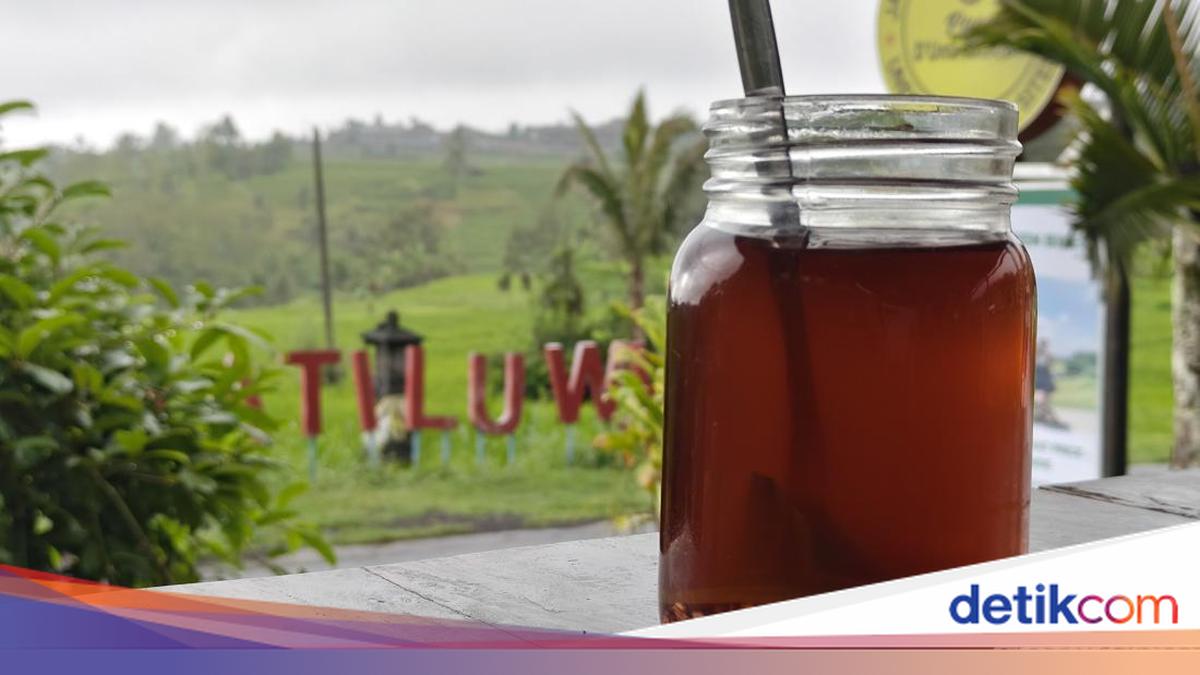
Tea is usually associated with a drink made from tea leaves. But that is not the case in Jatiluwih village, Penebel district, Tabanan, Bali. In the village, famous for its terraced rice fields, there is a traditional drink called red rice tea. Rather than using tea leaves, it is made from local red rice, which gives it a naturally reddish colour.
Red rice tea is distinctive not only for its ingredients. The drink also carries a long history as an ancestral heritage, known since around the 1940s. Initially, it was made only for family consumption. Today, the Jatiluwih speciality is being introduced to tourists and sold in several areas outside Bali.
I Wayan Semarajaya, 57, owner of Warung Krisna in Banjar Gunung Sari, Jatiluwih village, said red rice tea had been known in his family since the time of his ancestors. He estimates that the recipe dates back to around the 1940s.
“It has been around for a long time. At first, it was only for family consumption. Nobody knows who invented it because it is an ancestral heritage,” said Semarajaya, who also works as a farmer in Jatiluwih.
Stored for months
According to Semarajaya, what makes red rice tea unique is that it is made entirely from local red rice. Processing does not begin immediately after harvest. The rice is first stored in its husks for three to four months.
Once it has been stored for long enough, the rice is milled. The resulting grains are then roasted for about 15 minutes, until they release their distinctive aroma. The rice is then cooled before being boiled in warm water.
“The red colour comes purely from the rice bran; no tea leaves are added. One serving requires only about 1.5 grams, or two tablespoons, of rice,” he explained.
Red rice tea can be served hot or cold. Ginger, pandan leaves or lemongrass can also be added for extra flavour.
Gaining recognition among tourists
Semarajaya said tourists who try red rice tea generally respond positively, describing it as unique and distinctive compared with ordinary tea.
Gradually, the traditional drink, once made only for family consumption, is being introduced to a wider market. Jatiluwih red rice tea has even featured at a food festival in Jakarta.
The product has also been sold in Jakarta, Surabaya and several parts of Bali, including to restaurants. Sales are made in response to orders and through word of mouth.
Red rice tea sells at retail for between Rp 25,000 and Rp 30,000, while resellers pay around Rp 20,000.
However, Semarajaya acknowledged that marketing remains a challenge. The drink tends to appeal to middle-aged consumers, particularly those interested in natural products, while interest among younger people remains relatively limited.
“Innovation is needed so that it appeals to everyone. I hope the relevant parties will also help promote it so that red rice tea becomes better known. In the Jatiluwih tourist area, only a few farmers are actively promoting it,” he said.
Semarajaya secured intellectual property rights for the product under the name Krisna Organik in 2015. The protection expired in August 2025, and he is now starting the process of registering it again.
Source: jawawa.id (https://jawawa.id/newsitem/made-from-red-rice-not-tea-leaves-jatiluwihs-distinctive-brew-1794023430)
Originally published by detikBali (https://www.detik.com/bali/kuliner/d-8742206/bukan-dari-daun-teh-minuman-khas-jatiluwih-ini-terbuat-dari-beras-merah), translated from Indonesian