
Madani: Biofuel Raw Materials Must Diversify Instead of Relying Solely on Palm Oil
Jakarta (ANTARA) - The Executive Director of Madani Berkelanjutan, Nadia Hadad, stated that although the biofuel (BBN) policy was originally designed to utilise a diverse range of raw materials, in practice, it has become heavily reliant on palm oil, a situation that needs rectification.
“If biofuels rely solely on palm oil with increasingly ambitious targets without clear preparation and safeguards, Indonesia’s forest cover could be threatened,” Nadia said in Jakarta on Tuesday.
According to her, a study conducted by the Madani Berkelanjutan Foundation, alongside the Institute for Essential Services Reform (IESR), Koaksi Indonesia, and Landscape Alliance, traced the application of biofuel policies in Indonesia over the past two decades.
She explained that following Presidential Instruction Number 1 of 2006 regarding the Provision and Utilisation of Biofuels as Alternative Fuels, the government integrated biofuels into the National Energy Policy through Presidential Regulation Number 5 of 2006.
Through Presidential Decision Number 10 of 2006, the government also established the National Team for Biofuel Development for the Acceleration of Poverty and Unemployment Reduction, tasked with formulating policies and drafting the 2006-2025 biofuel development blueprint and roadmap.
Two decades later, the policy, which was originally aimed at energy security, poverty alleviation, and rural development, has shifted into a mechanism for absorbing surplus palm oil.
The primary issue is not merely the imbalance between different types of biofuel, but the dependence on large-scale, land-based first-generation raw materials, namely crude palm oil (CPO). Meanwhile, non-food raw materials and waste, such as used cooking oil, rubber seeds, and nyamplung, have not been seriously developed.
She noted that increasing mandates does not automatically mean land expansion, but policies must account for various dynamics such as supply certainty, forest and land fires, competition with export interests, and commitments to the NDC and FOLU Net Sink.
“The limit of 18.15 million hectares must serve as a guide, because beyond that figure, palm oil expansion is no longer ecologically sustainable,” she said.
She stated that IESR modelling in this study shows a significant gap between ambition and supply. By 2030, the requirement for biodiesel for land transport, assuming full diesel substitution, is estimated at approximately 42 million kilolitres, whereas the biodiesel supply in the National Energy Policy is only around 26.6 million kilolitres.
Furthermore, by 2050, the requirement is expected to rise to approximately 81.6 million kilolitres, while the aggregate biofuel supply is projected to drop to around 24.3 million kilolitres. A similar pattern is observed in bioethanol; throughout the 2020-2050 period, projected supplies are unable to keep pace with the demand for petrol and aviation fuel.
She explained that the biodiesel programme is supported by palm oil export levies managed by the Palm Oil Fund Management Agency (BPDP). Between 2015 and 2024, between 62.7% and 98.7% of the funds distributed by BPDP annually were used to cover the price difference for biodiesel, while smallholder palm oil farmers have yet to become a significant part of the supply chain.
Other research findings included in the study regarding the Environmental Carrying Capacity and Capacity (D3TLH) by the Lokahita Foundation, Madani Berkelanjutan, Satya Bumi, and Sawit Watch (2024) set an upper limit for national palm oil plantations at 18.15 million hectares, while existing plantation areas already stand at approximately 17.8 million hectares.
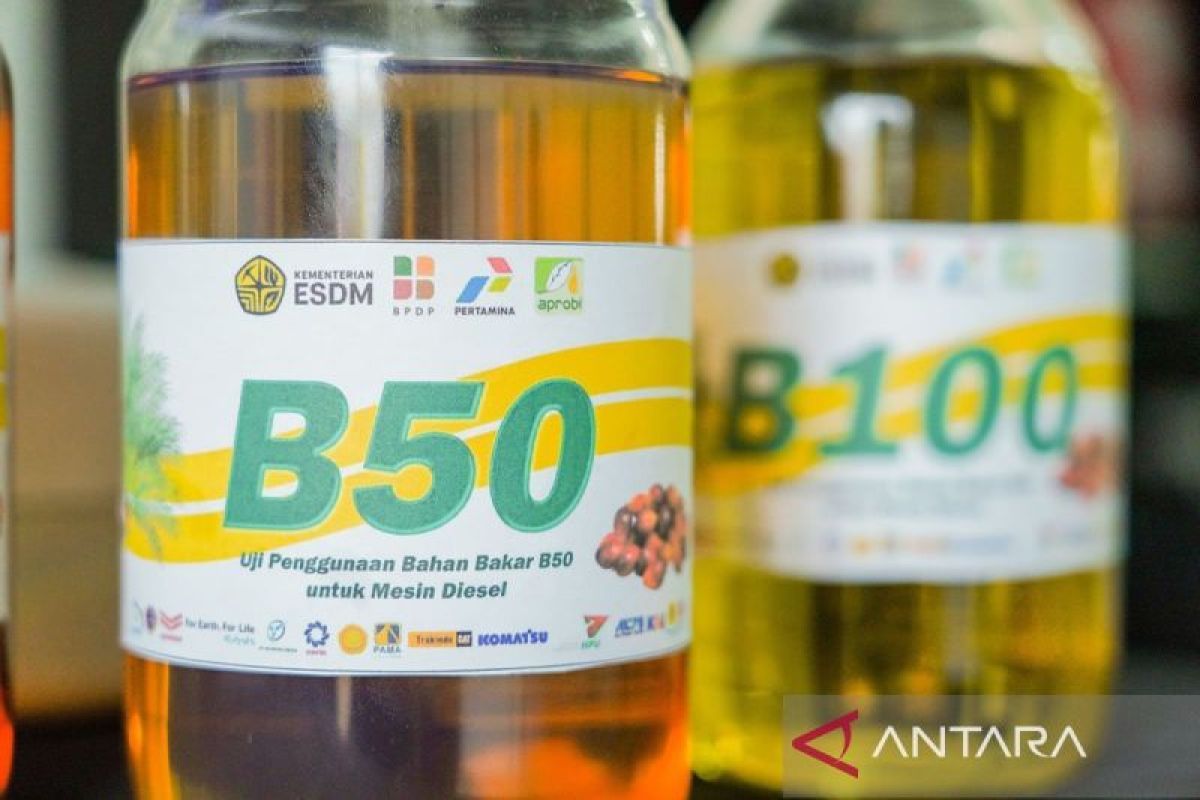
“Domestic CPO consumption for biodiesel has exceeded consumption for food since 2023. Studies estimate that B50 will require approximately 17.9 million tonnes of CPO. As the space for palm oil approaches its limit, additional demand is no longer neutral,” she said.
Unless intensification is implemented, this demand risks being translated into expansion into forests, peatlands, degraded lands, and high biodiversity value areas.
However, she noted that solutions are available; the Madani study recorded approximately 7 million hectares of palm oil plantations older than 20 years whose productivity could be optimised through replanting.
Source: jawawa.id (https://jawawa.id/newsitem/madani-biofuel-raw-materials-must-diversify-instead-of-relying-solely-on-palm-oil-1790690410)
Originally published by Antara (Indonesian) (https://www.antaranews.com/berita/5763693/madani-bahan-baku-bbn-harus-beragam-jangan-bertumpu-pada-sawit), translated from Indonesian