
Macro Assumptions of the 2027 State Budget: What Are the Effects on the JCI and Rupiah?
President Prabowo Subianto, in his State Address presenting the Government’s Introduction/Statement on the Draft Law on the State Revenue and Expenditure Budget (RUU APBN) for the 2027 Fiscal Year along with the Financial Note and Supporting Documents, has targeted Indonesia’s economic growth to reach 6%, with the 10-year government bond (SBN) yield at 6.9% and the Rupiah exchange rate at Rp 17,500 per US dollar.
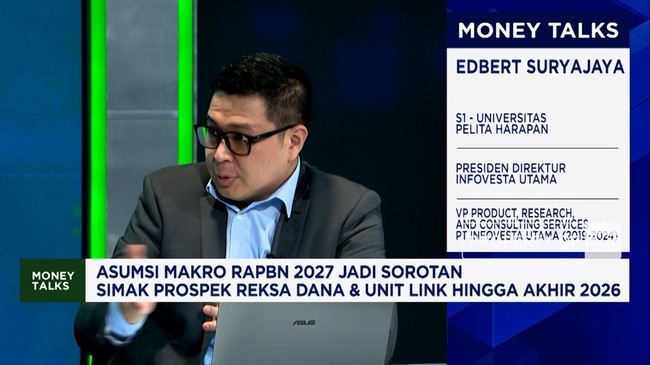
Infovesta Utama President Director Edbert Suryajaya assesses that the macro framework of the 2027 State Budget is already quite realistic but remains challenging for achieving the 6% economic target, as it represents an increase of up to 10% from the 2025 GDP target of 5.4%. To achieve this target, the government needs to make efforts to boost the economy and maintain purchasing power through job creation, particularly in labour-intensive sectors.
From the financial market perspective, market participants are observing the policy direction of the US central bank’s benchmark interest rate, with the Fed forecast to hold the FFR level until the end of 2026, although the potential for an increase remains as tensions in the Middle East have not subsided. The Fed’s policy will certainly influence Bank Indonesia’s rate policy, the Rupiah exchange rate, and the attractiveness of Indonesia’s financial market to foreign investors.
What sentiments are of concern to market participants regarding Indonesia? For more details, watch the dialogue between Shania Alatas and Infovesta Utama President Director Edbert Suryajaya on Power Lunch, CNBC Indonesia (Friday, 24/08/2026).