
M6.3 Earthquake Strikes Yogyakarta, Killing 6,234 – Second Largest in Indonesia
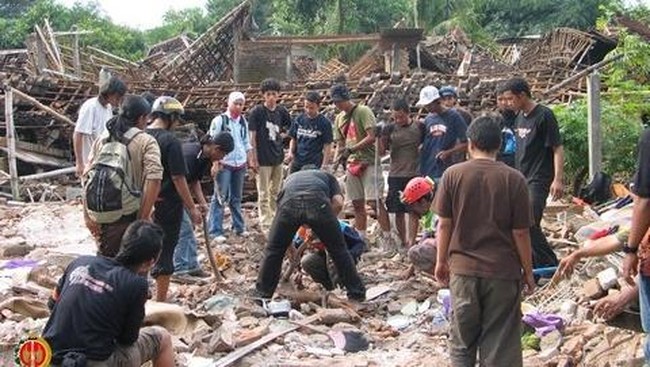
Jakarta, CNBC Indonesia - That morning, Ningsih was awake before the sun had fully risen over the eastern horizon. However, since her lectures began at seven, the final-year student at a private university in Yogyakarta chose to relax in bed for a moment. Alas, that moment of leisure was cut short as a violent tremor shook her dormitory at precisely 05:54 WIB. “I was just rolling over when the shaking started. My body was tossed around violently,” Ningsih told CNBC Indonesia on Tuesday, 26 May 2026, recalling the Yogyakarta earthquake exactly 20 years prior. Ningsih and other dorm residents immediately rushed out. But before they could grasp what was happening, horrifying rumours spread by word of mouth: a tsunami was about to engulf Yogyakarta from the southern coast of Java. At the time, Indonesia’s collective memory was still haunted by the 2004 Aceh tsunami tragedy. Thus, the rumour was quickly believed despite lacking confirmation. Consequently, panic spread far faster than official information. Thousands of residents fled their homes and dormitories in search of safer ground. For Ningsih, the scene that morning was one of the largest mass panics she had ever witnessed. “I witnessed it firsthand: small sedans filled with up to 12 people. In their panic over tsunami rumours, people crammed into vehicles that normally seat four or five,” she recalled. Amid the morning panic, Ningsih and her dorm mates took only the clothes they were wearing. She hurriedly left her Gejayan dormitory, following the crowd northwards. Unaware, she ran over 15 kilometres until reaching the Kaliurang crossroads. Ningsih and her friends then joined panicked locals on motorcycles, climbing higher to reach elevated villages in the Kaliurang area. Yet upon arrival, fear had not subsided. Rumours spread that Mount Merapi was erupting, further intensifying the panic initially triggered by the earthquake and the false tsunami warning. This was the atmosphere engulfing Yogyakarta exactly 20 years ago. On 27 May 2006, a magnitude 6.3 earthquake struck the Special Region of Yogyakarta and parts of Central Java. The epicentre was in Bantul, near the confluence of the Opak and Oya rivers. Researchers later confirmed the quake was linked to activity along the Opak Fault and tectonic movements in the collision zone between the Indo-Australian and Eurasian plates south of Java. According to an ITB thesis titled ‘The 27 May 2006 Yogyakarta Earthquake and Paleoseismology of the Opak Fault’ (2007), the Opak Fault is a left-lateral strike-slip fault trending southwest-northeast. Though long known as an active geological structure, its activity had been minimal for a prolonged period before releasing massive energy on 27 May 2006. This made it Indonesia’s second-largest earthquake after the 2004 Indian Ocean quake that triggered the Aceh tsunami. Following the main quake at 05:54 WIB, Yogyakarta was hit by hundreds of aftershocks. While their intensity gradually decreased, they were sufficient to heighten panic among residents still trying to escape. At least 176 aftershocks were felt within 24 hours of the main event. The disaster’s impact was immense. According to data from the Ministry of Social Affairs compiled by detikcom, the earthquake killed 6,234 people in Yogyakarta and surrounding areas. Additionally, 33,231 suffered serious injuries and 12,917 sustained minor injuries. Physical damage was extensive. Over 109,000 buildings were severely damaged or completely destroyed, while approximately 301,000 others suffered varying degrees of damage, from minor to severe. For Yogyakarta’s residents, the 27 May 2006 earthquake was not merely a natural disaster but a tragedy that instantly altered thousands of lives. It also served as a stark reminder of the critical importance of disaster preparedness and awareness for communities living in tectonically active regions like Indonesia.