
M4CR Programme Drives Community-Based Mangrove Rehabilitation in North Kalimantan
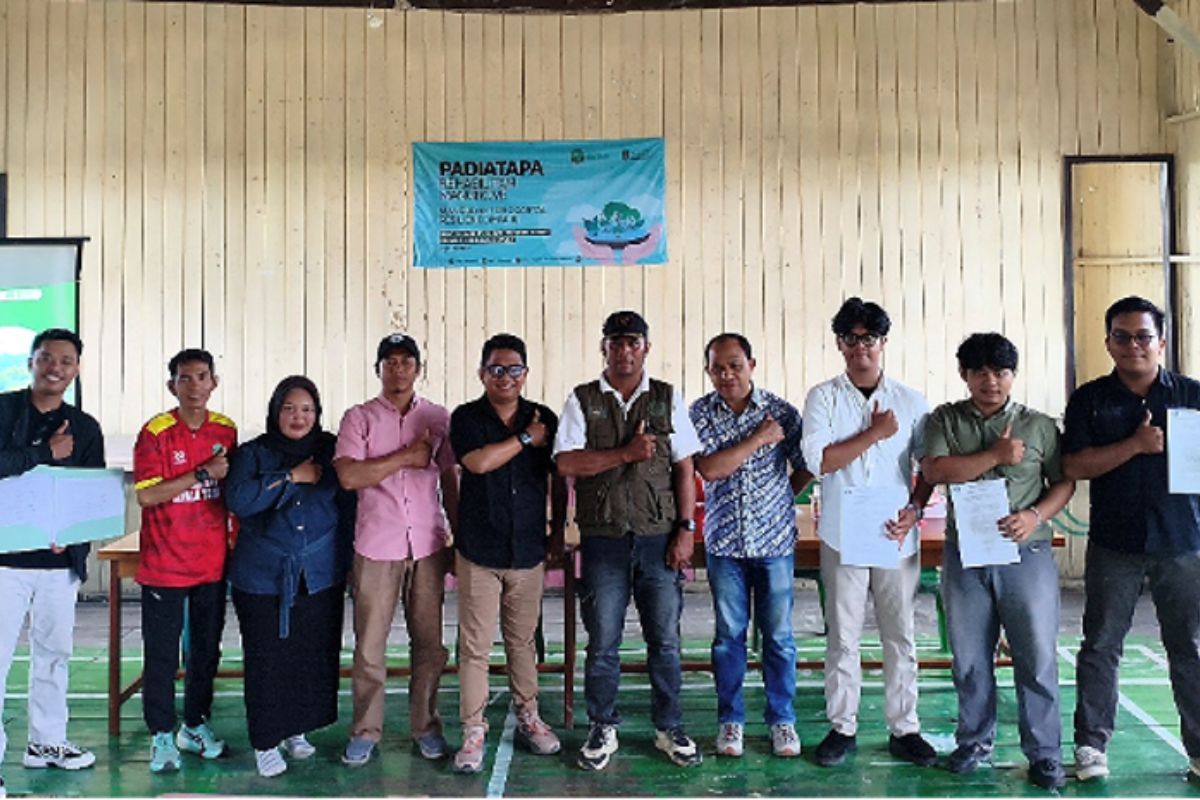
North Kalimantan has become a priority region in the government’s efforts to restore mangrove ecosystems through the Mangroves for Coastal Resilience (M4CR) programme, involving coastal communities from the planning stage through to area management.
According to the 2025 National Mangrove Map, North Kalimantan possesses 187,530 hectares of mangrove ecosystems out of Indonesia’s total 3.44 million hectares. The government aims to rehabilitate 600,000 hectares of mangroves by 2029, as outlined in the Enhanced Nationally Determined Contribution (NDC).
Through M4CR, mangrove rehabilitation is targeted to reach 32,634 hectares by 2027 across four priority provinces: Riau, North Sumatra, East Kalimantan, and North Kalimantan.
The programme is designed to address degradation while ensuring the sustainability of mangrove ecosystems, with local communities serving as the primary beneficiaries. Implementation is overseen by the Ministry of Forestry through the Directorate General of Watershed Management and Forest Rehabilitation (PDASRH), with support from various ministries, agencies, and local governments, alongside funding from the World Bank.
Prior to planting, M4lar implements Free, Prior, and Informed Consent (FPIC) to ensure that communities receive adequate information and are involved in the decision-making processes regarding mangrove rehabilitation in their regions.
In Bulungan Regency, FPIC was conducted in the villages of Sekatak Buji, Salimbatu, and Tanjung Buka. This process is vital as parts of the target rehabilitation areas include aquaculture ponds that are directly linked to local livelihoods.
Through agreements with residents, an area of 1,042 hectares will eventually be managed alongside 18 community groups.
This approach is expected to not only educate the community on rehabilitation plans but also to foster a sense of ownership and shared responsibility for the restored areas.
Akhmad Ashar Sarif, the M4CR North Kalimantan PPIU Manager, stated that the success of mangrove rehabilitation is determined not only by planting activities but also by the sustainable management of the area by the community.
“We hope these activities do not stop at planting alone. Once the activities are underway, the community must maintain a sense of ownership and work together to protect the agreed-upon areas, while gaining both ecological and economic benefits from their ponds,” he said.
For aquaculture areas, M4CR encourages the implementation of a silvofishery system using an open ditch pond pattern with a planting density of 800 mangrove trees per hectare. This pattern integrates the presence of mangroves with aquaculture activities within a single area, allowing ecological and economic functions to proceed in tandem.
The open ditch pond system also ensures that water circulation is maintained and preserves the connectivity between the mangrove areas and the aquaculture waters.
The presence of mangroves is expected to help maintain the ecological balance of the area, improve water quality, filter sediment, and provide habitats for various types of aquatic biota.
Source: jawawa.id (https://jawawa.id/newsitem/m4cr-programme-drives-community-based-mangrove-rehabilitation-in-north-kalimantan-1790777109)
Originally published by Antara (Indonesian) (https://www.antaranews.com/berita/5765259/program-m4cr-dorong-rehabilitasi-mangrove-berbasis-masyarakat-di-kalimantan-utara), translated from Indonesian