
M4CR Holds Livelihood Field School, Urges North Sumatran Crab Farmers to Protect Water Quality
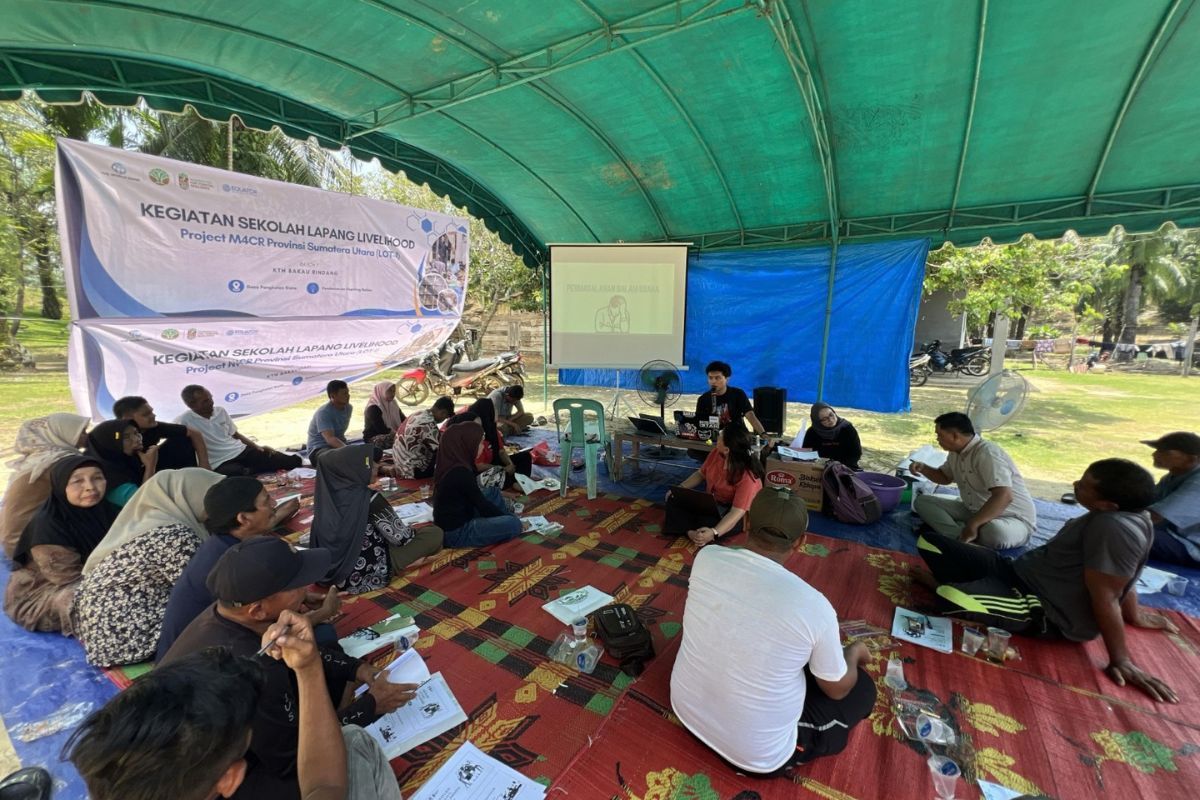
Jakarta (ANTARA) - Mangrove ecosystem recovery is increasingly being strengthened by giving priority to social and economic considerations through the Ministry of Forestry’s Mangroves for Coastal Resilience (M4CR) programme. One approach is silvofishery, in which aquaculture is combined with mangrove planting or conservation in the same pond area.
Silvofishery presents its own challenges. This has been experienced by the Bakau Rindang and Bakau Bahari Forest Farmers’ Groups in Pangkalan Siata, North Sumatra. Crab mortality in their silvofishery ponds has been higher than in ponds without mangroves, raising concerns that the businesses may not be viable in the long term.
M4CR responded by holding a Livelihood Field School. The participatory programme prioritised dialogue with farmers and aimed to improve local livelihoods based on the needs they face in the field. A total of 32 members of the Bakau Rindang and Bakau Bahari groups took part.
M4CR North Sumatra PPIU Manager Aditya Wahyu Putra stressed that mangrove recovery must go hand in hand with improvements to people’s welfare. “Mangrove recovery cannot stop at planting. Communities must also benefit economically. That is why, through this Livelihood Field School, we are inviting farmers to discuss and learn directly from the problems they face in their ponds. By understanding water quality, we hope crab farming in silvofishery ponds can be sustainable and go hand in hand with mangrove conservation,” he said.
During practical sessions, participants learned to measure pond-water pH and salinity. The results showed that water quality in the group’s ponds did not meet the optimum criteria for crabs. The high crab mortality was not caused by the presence of mangroves, but by an imbalance in the water’s chemical parameters that could not be detected by visual observation alone. The training is expected to change participants’ outlook and make them more alert to pond-water conditions.
Alongside the technical component, participants took part in business analysis sessions using SWOT and the Business Model Canvas (BMC). They learned about marketing strategies for their crab harvests and strengthening their organisations. At the end of the programme, they drew up a six-month follow-up action plan to improve pond management and aquaculture businesses.
Through the action plan, the groups are expected to support mangrove conservation while improving the local economy and food security in coastal communities. This marks an initial step towards self-reliance for the people of Pangkalan Siata village, where mangrove conservation and farmers’ welfare can advance together.
Source: jawawa.id (https://jawawa.id/newsitem/m4cr-holds-livelihood-field-school-urges-north-sumatran-crab-farmers-to-protect-water-quality-1791607956)
Originally published by Antara (Indonesian) (https://www.antaranews.com/berita/5779650/m4cr-gelar-sekolah-lapang-livelihood-ajak-petani-kepiting-sumut-jaga-kualitas-air), translated from Indonesian