
M 7.7 Earthquake Damages Fishing Boats and Salt Ponds in Nagekeo, East Nusa Tenggara
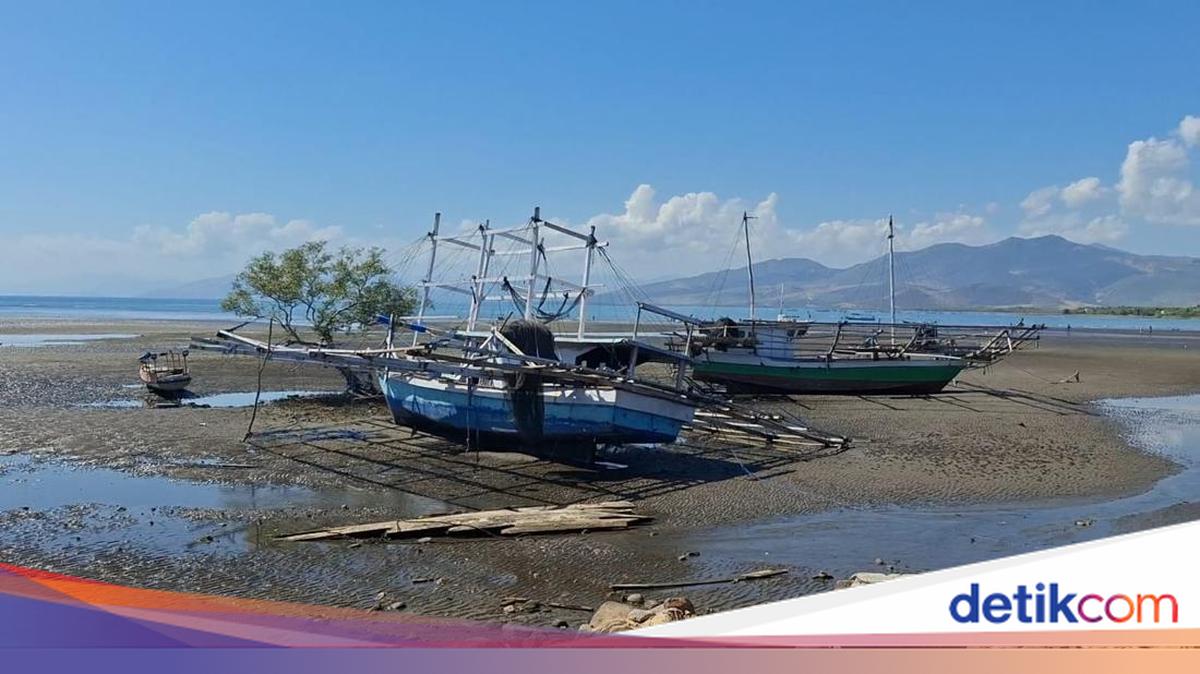
The M 7.7 earthquake not only shook Nagekeo, East Nusa Tenggara (NTT), but also struck at fishermen’s livelihoods. A total of 104 boats and items of fishing gear belonging to local fishermen were damaged, with preliminary losses estimated at Rp 800 million.
The damage occurred after the fishermen’s boats and equipment were battered by waves during the earthquake on Saturday (15/8/2026). Hundreds of affected fishermen are spread across the villages of Nggolonio, Nangadhero and Marapokot in Aesesa District.
“The impact has been felt greatly by fishermen, especially in terms of infrastructure and facilities such as motorboats, engines and fishing gear. Fishermen have suffered extensive damage,” said Oliva Monika Mogi, Head of the Nagekeo Marine and Fisheries Office (DKP), when met at her office on Monday (7/9/2026).
Oliva explained that her office immediately deployed staff to record the affected coastal areas after the powerful tremor. The result: 104 fishermen were found to have suffered damage to their fishing equipment.
According to Oliva, three villages in Aesesa District — Nggolonio, Nangadhero and Marapokot — experienced the worst impact. Fishermen on the southern coast, namely Mauponggo Sub-district and the villages of Kotagana and Keliwatulewa in Mauponggo District, were also affected.
“All of this data has been difficult to collect and report to the Regent of Nagekeo and the National Disaster Management Agency (BNPB),” Oliva explained.
Oliva said her office had coordinated with the Nagekeo Regional Disaster Management Agency (BPBD) so that the fishermen could receive assistance quickly and return to fishing.
However, the proposed procurement of fishing equipment was not accommodated under the emergency response category, even though preliminary calculations put the damage at Rp 800 million.
“As a result, we cannot provide assistance to the fishermen quickly. However, we are still trying to convey this to the Deputy Regent of Nagekeo so that further coordination with BNPB can take place, through the post-disaster rehabilitation and reconstruction plan document (R3P),” Oliva explained.
According to Oliva, with the R3P document in place, regular assistance can be obtained from the East Nusa Tenggara Provincial Government and the Ministry of Marine Affairs and Fisheries (KKP). On the other hand, drawing up the R3P document could take up to three months.
“Once the R3P document is complete, it can be submitted to the KKP for follow-up. We hope that by November the document can be sent to the relevant ministry,” said Oliva.
Oliva admitted that if the damage to boats, engines and fishing gear is not addressed promptly, it will affect fishermen’s incomes. For that reason, DKP Nagekeo will record the extent of the damage again, and fishermen suffering heavy losses will be proposed for funding under the 2027 regional budget (APBD).
Fishermen still traumatised
Oliva said that although hundreds of fishermen were affected by the earthquake, the supply of raw fish in Nagekeo remains sufficient. She claimed that five days after the disaster, the fishermen had already returned to sea.
“Once the government issued an advisory stating there was no longer a tsunami threat, they began resuming their activities. We have seen plenty of fish for sale at the market,” Oliva said.
According to DKP Nagekeo data, she said, fishermen’s catches amount to 1,000 tonnes of fish per month. “So that is included in the regional consumption records and household value each month.”
However, this account contradicts what the fishermen themselves say. Two fishermen from Nangadhero Village, Alman Saman (38) and Langgoi Ursil (44), admitted they had not dared to go out to sea because they were still traumatised.
Meanwhile, Langgoi Ursil said the raw fish entering Nagekeo came from fishermen from Sulawesi, not local Nagekeo fishermen.
“There is indeed fish in stock, but not much. And we buy it from Sulawesi fishermen who sell here, because none of us have dared to go out to sea yet,” said Langgoi, echoed by Alman Saman beside him, on Sunday (6/9/2026).
Salt ponds also damaged
In addition to fishing boats and equipment, the earthquake also damaged more than 100 hectares of salt ponds in Mbay 2 Sub-district, Aesesa District. The damage affected the salt-drying beds and the production roads used to transport output, which were severely damaged.
This situation has meant that salt already produced remains piled up at the site, as it cannot be transported following the severe damage to the access road. However, BPBD Nagekeo has taken action by allocating a budget to repair the damaged road.
“Because unless it is carried by hand, which costs Rp 10,000 per sack, there is no way to move it. So BPBD has also allocated a fuel budget for the salt farmers’ heavy machinery so that work on the damaged road can proceed,” Oliva explained.
According to Oliva, based on her office’s records, salt production in Mbay 2 Sub-district had reached more than 7,000 tonnes as of August 2026, while annual production averages 15,000 tonnes.
“And all of it is sold to outside markets, such as Surabaya and Palembang. But this year, the salt farmers have been complaining because selling prices have fallen,” Oliva concluded.
Source: jawawa.id (https://jawawa.id/newsitem/m-7-7-earthquake-damages-fishing-boats-and-salt-ponds-in-nagekeo-east-nusa-tenggara-1788792663)
Originally published by detikBali (https://www.detik.com/bali/nusra/d-8652925/gempa-m-7-7-rusak-perahu-hingga-tambak-garam-di-nagekeo-ntt), translated from Indonesian