
Luxury Castle Project Worth Rp3 Trillion Fails Completely, Now a Ghost Town
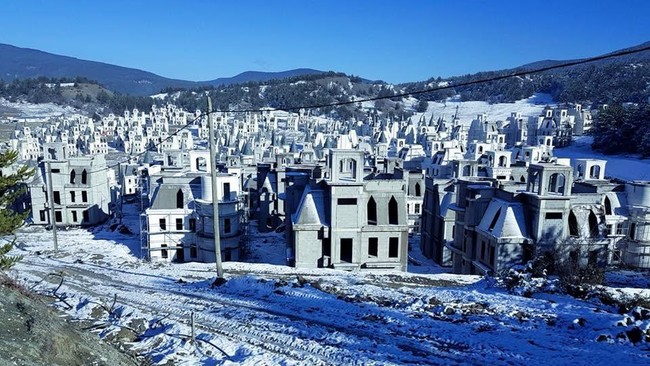
A luxury housing project worth around US$200 million, or approximately Rp3.58 trillion, in Turkey has turned into a ghost town after its developer went bankrupt. Hundreds of luxury castle-style villas built to attract wealthy buyers from the Middle East now lie abandoned, having never been occupied.
The Burj Al Babas complex is located near the town of Mudurnu, Turkey. The sight of hundreds of white castle structures standing in rows makes the area look like a fantasy film set or a Disney theme park.
The project was originally conceived as a luxury residential area offering more than just housing. In addition to French château-style villas, the developer also planned a shopping centre, restaurants, a traditional Turkish bath, a spa, sports facilities, and an entertainment area.
Construction began in 2014 by the Sarot Group, with a target of building 732 villas. Each home was marketed at prices ranging from US$370,000 to US$530,000, targeting wealthy buyers, particularly from the Gulf states. However, by the time the project halted, only around 587 villas had been partially built.
The architecture of Burj Al Babas was deliberately designed to be striking and stand out from other property projects. The villas combined European castle designs with modern resort-style facilities.
Its location in the mountains and forests near Istanbul was also promoted as a premium holiday destination, quieter than Turkey’s busy coastal tourist areas. The developer hoped the concept would attract international investors, especially from the Middle East.
Although it was reported that around 350 villas had been sold, the project ultimately ran into financial difficulties. Turkey’s economic slowdown, currency instability, and weakening interest from foreign investors placed increasing pressure on the developer.
At the same time, construction costs continued to rise, causing the company’s debt to swell. In 2018, construction was halted and Sarot Group filed for bankruptcy protection. Since then, hundreds of villas have been left in an unfinished state.
Contrary to some speculation that residents mysteriously left, the villas at Burj Al Babas were never actually inhabited. Most of the buildings only have their exterior structures completed. The interiors, utility networks, and other essential infrastructure were never finished, making the area uninhabitable.
Because the project stopped before it was ready for use, the villas have been empty from the start and have gradually become a ghost town. To this day, visitors can see rows of identical white castles stretching across the hills. Many buildings still show exposed construction materials, empty rooms, and interiors that were never completed. Roads within the complex were built, but supporting facilities such as the shopping centre, spa, and community areas were never realised.
Instead of becoming a luxury residential area, Burj Al Babas has turned into a popular destination for photographers, drone filmmakers, and urban explorers interested in visiting abandoned buildings.
Following the bankruptcy process, parties associated with the developer once expressed hope that part of the project could be completed through financial restructuring. Although discussions about reviving the project have surfaced occasionally, most of the Burj Al Babas area remains unfinished and empty.
There is no certainty whether the site will be completed, redeveloped, or left as a reminder of one of Turkey’s most ambitious property failures. Burj Al Babas has become one of the most famous abandoned complexes on the internet. The rows of identical empty castles, combined with the story of investment failure, have made the area a frequent subject of documentaries, travel features, and social media posts, symbolising how economic shifts can derail large-scale property projects.