
Lunar New Year marks arrival of Fire Horse Year for Confucian community
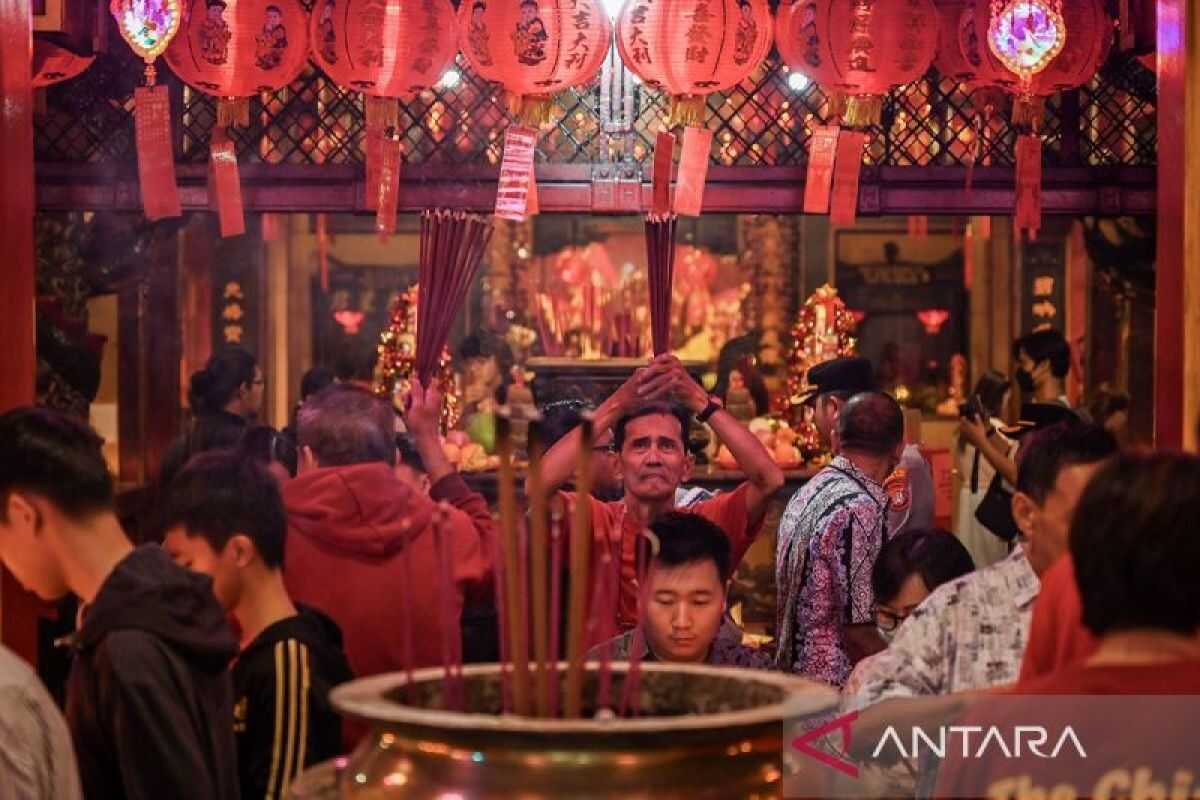
Jakarta (ANTARA) - The celebration of Lunar New Year 2577 Kongzili has marked the arrival of the Year of the Fire Horse, welcomed by the Confucian community with a series of worship services and traditions.
“They say it comes once every 60 years, and this is the grandest Fire Horse year. The horse zodiac is like one that leads from the front,” said a worshipper named Sanat (35) when met at Amurva Bhumi Temple in Jakarta on Tuesday.
Sanat expressed hope that this year would bring good fortune, health, and the strength to stride forward like the fire horse.
Sanat and his wife Cindy (33) typically visit several temples to offer prayers during the celebration.
The couple had prepared extensively to welcome the Lunar New Year with their family, from cleaning the house and preparing red envelopes (angpao) to traditional foods such as kue bakul (sticky rice cake).
“There’s a lot to prepare — worship supplies, house cleaning, and of course we prepare angpao for other family members as well,” he said.
He expressed gratitude for being able to celebrate the Lunar New Year with his family and offered prayers for blessings.
The South Jakarta Metropolitan Police deployed security personnel at two temples during the Lunar New Year celebrations to ensure all worship activities proceeded safely and in an orderly manner.
Security efforts were focused on two temples in the South Jakarta area, namely Bio Hok Tek Tjen Sin Temple (Kebayoran Lama) and Amurva Bhumi Temple (Setiabudi).
The security operation was carried out in coordination with the Indonesian Armed Forces (TNI), the South Jakarta Municipal Administration, the Civil Service Police Unit (Satpol PP), the Transportation Agency (Dishub), and other relevant agencies.
This cross-sector collaboration represented a joint commitment to providing a sense of safety and comfort for those celebrating the Lunar New Year.
At both locations, joint personnel were deployed to conduct overt and covert security measures, traffic management, sterilisation of worship areas, and dialogue-based patrols to anticipate potential public order disturbances.