
Luhut Urges Tsinghua University to Conduct Genomic Research on 435 Herbal Species
We have the entire ecosystem there. There are 435 herbal species, which I believe may be one of the largest collections in this region, perhaps even in the world.
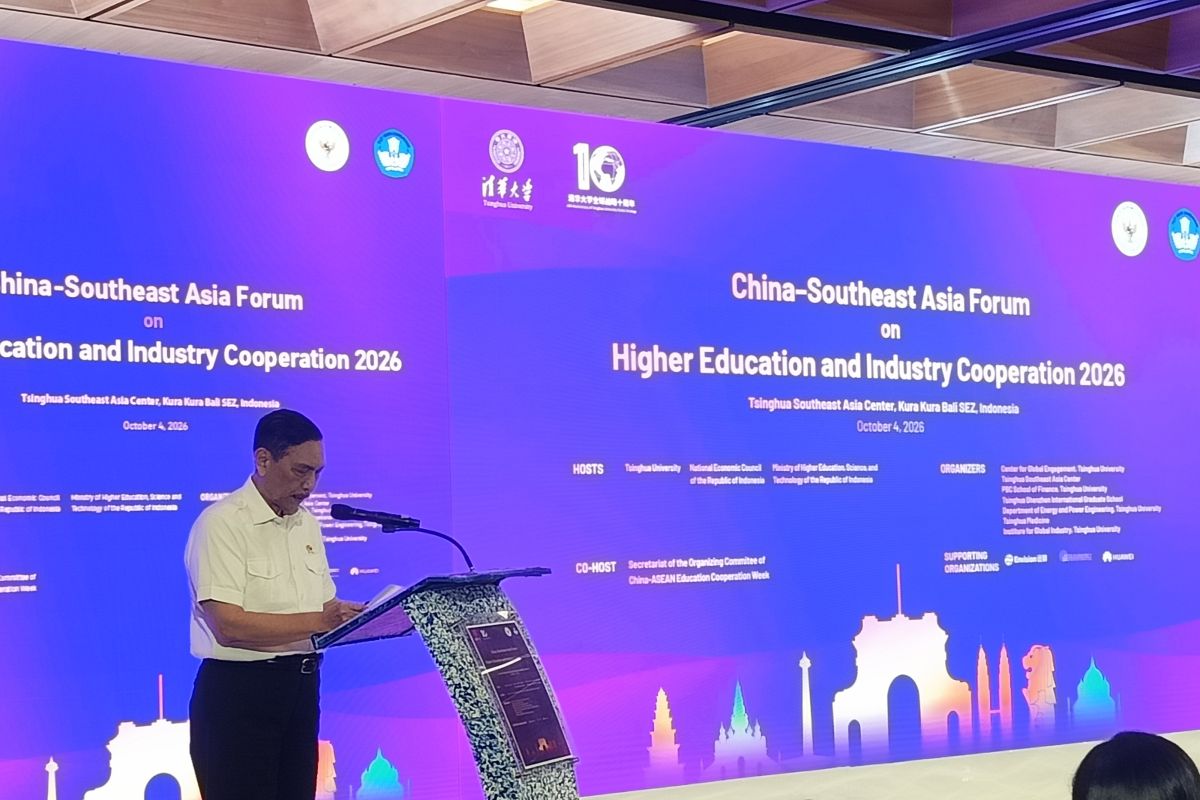
denpasar (ANTARA) - The Chairman of the National Economic Council (DEN), Luhut Binsar Pandjaitan, has requested Tsinghua University, China, to collaborate on developing genomic research regarding Indonesia’s herbal plant wealth, which includes 435 species at the Del Institute of Technology (IT Del) in North Sumatra.
“We have the entire ecosystem there. There are 435 herbal species, which I believe may be one of the largest collections in this region, perhaps even in the world,” said Luhut during the China Southeast Asia Forum on Higher Education and Industry Cooperation 2026 at the Kura Kura Bali Special Economic Zone (KEK) in Denpasar, Bali, on Sunday.
Luhut stated that Indonesia has developed genomic research capabilities and possesses the technological facilities to accelerate the assessment of biological resources. Consequently, he hopes that Tsinghua researchers can work alongside Indonesian scientists to strengthen these research efforts.
According to him, Indonesia’s biodiversity wealth needs to be studied and utilised responsibly through science, so that it is not only preserved but can also provide added value to the economy.
Luherm noted that IT Del is currently developing research capabilities and a herbal gene bank. This facility is supported by genome sequencing equipment from China, including the MGI T7 and MGI B300, to support molecular research.
He added that researchers are also developing artificial intelligence to assist in reading the molecules of frankincense, one of the herbal ingredients with potential for further study in health research.
Luhut believes that collaboration with high-capacity research universities such as Tsinghua can strengthen the capacity of Indonesian scientists in developing research based on biological resources. However, he emphasised that such cooperation must be directed towards concrete programmes, ranging from joint research and researcher exchanges to laboratory development and scientific publications.
“We are not spending large sums of money to build everything from scratch. We already have the infrastructure, but we need Tsinghua University to utilise it together,” he said.
In addition to herbal research, Luhut encouraged genomic cooperation in the agricultural sector to produce superior seeds and crops that are more resistant to environmental pressures, thereby increasing productivity and food security.
He assessed that agricultural research is a vital necessity for Indonesia in maintaining food availability amidst the challenges of development and changing environmental conditions.
Luhut expressed hope that the Tsinghua Southeast Asia Centre in Bali could serve as a gateway for strengthening educational and research cooperation between China, Indonesia, and other Southeast Asian nations. He asserted that the partnership between the two nations needs to move beyond investment and technology transfer towards joint innovation that produces benefits for society.
Source: jawawa.id (https://jawawa.id/newsitem/luhut-urges-tsinghua-university-to-conduct-genomic-research-on-435-herbal-species-1791093285)
Originally published by Antara (Indonesian) (https://www.antaranews.com/berita/5770480/luhut-minta-universitas-tsinghua-riset-genomik-435-spesies-herbal), translated from Indonesian