
Luhut Reveals Social Assistance Misallocation Data: Previously 77.6%, Now Below 5%
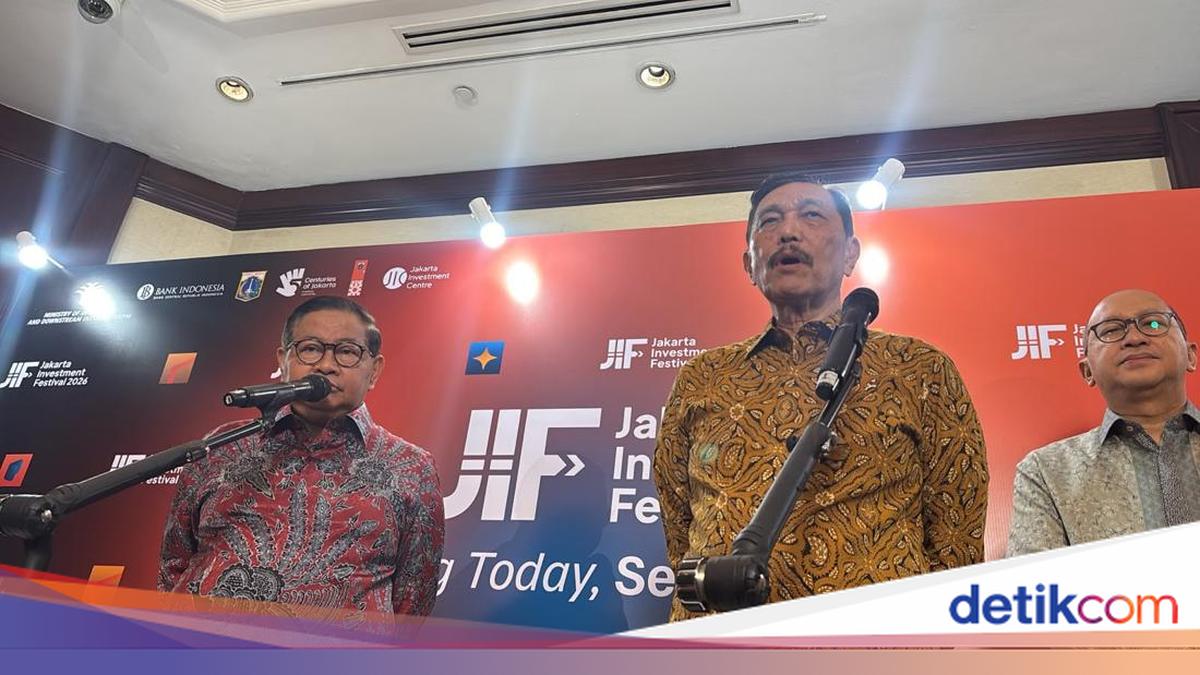
Chairman of the National Economic Council (DEN) Luhut Binsar Pandjaitan has revealed the high rate of social assistance (bansos) misallocation, which once reached 77.6 per cent. He said the figure has now been reduced to below 5 per cent through the use of digital technology and government data integration.
“When we conducted a trial in Banyuwangi, we found that misallocated social assistance or cash transfers reached 77.6 per cent,” Luhut said at the Jakarta Investment Festival (JIF) Summit 2026 in Tanah Abang, Central Jakarta, on Friday (28/8/2026).
Luhut said the figure demonstrates the scale of the problem of inaccurate targeting in social assistance distribution. The government subsequently utilised a digital system to integrate data from various ministries and agencies.
“You can imagine how large the figure of inaccurate targeting was. However, today we have resolved it so that the error rate can be reduced to below 5 per cent,” he said.
He explained that the government is targeting a social assistance distribution accuracy rate of more than 90 per cent by the end of this year. Luhut said the government’s digital system allows data on prospective social assistance recipients to be checked directly by linking various ministry and agency databases.
In a demonstration of the system, prospective recipients simply enter their Population Identification Number (NIK) and perform a face scan or face recognition. The facial data is then verified against the biometric database of the Civil Registry Agency (Dukcapil).
Prospective recipients are also asked to enter their electricity meter number to determine their average electricity consumption over the past six months. The system then checks the prospective recipient’s data against various government databases.
“So the registration process is completed quickly and provides immediate feedback on whether the person is eligible or not,” he explained.
Luhut assessed that the use of technology, including artificial intelligence (AI), can reduce the scope for human intervention in government services.
“Because you cannot bribe AI. Once the data is in there, there is nothing you can do to violate the rules,” Luhut said.
He said digitalisation makes government processes faster, more transparent and more predictable. The government is also continuing to integrate cross-ministerial data so that various programmes can be implemented with greater accuracy.
Luhut said the system has now been trialled in 256 regencies and cities. As of last week, the system had covered 16.8 million people and was supported by around 400,000 agents for monitoring purposes.
According to Luhut, the data integration is an important part of President Prabowo Subianto’s government digitalisation agenda. He said all cross-ministerial data is now beginning to communicate with one another and can be used to support real-time government decision-making.
“All cross-ministerial data is now ready and integrated. This system uses AI to read, synchronise and harmonise data,” he concluded.
Source: jawawa.id (https://jawawa.id/newsitem/luhut-reveals-social-assistance-misallocation-data-previously-77-6-now-below-5-1787896313)
Originally published by detikcom (https://news.detik.com/berita/d-8637838/luhut-ungkap-data-bansos-salah-sasaran-dulu-77-6-kini-di-bawah-5), translated from Indonesian