
Luhut Reports to Prabowo: Digital Single ID to Launch by End of 2026
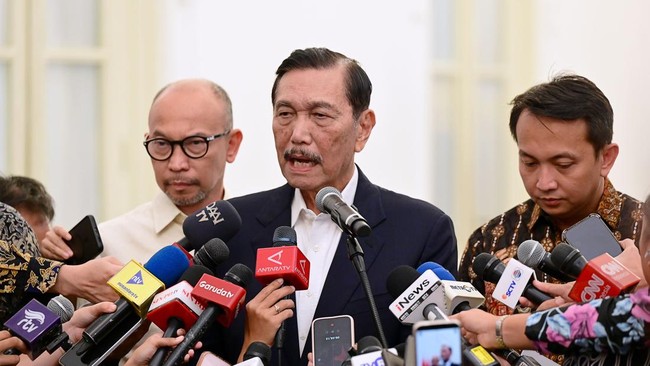
The government is continuing to accelerate national digital transformation as a foundation for strengthening governance, increasing state revenue and improving the quality of public services. This was conveyed by the Chairman of the National Economic Council (DEN), Luhut Binsar Pandjaitan, after being received by President Prabowo Subianto along with DEN officials at the Merdeka Palace in Jakarta on Tuesday. According to him, the government is preparing a Digital Single ID, an integrated data identity system targeted for completion by the end of 2026. He believes this artificial intelligence (AI)-based digital system will help make the distribution of social assistance and various forms of direct government transfers more accurately targeted. As a result, he is confident this system will create massive savings in the state budget. This, he said, has been reported to the President. ‘Perhaps by the end of this year there will be a Digital Single ID which means all social assistance or direct cash transfers will be targeted. So it will be appropriate and that will save a considerable amount,’ Luhut asserted at the Presidential Palace on Tuesday evening. Luhut said that the DEN reported to President Prabowo that about 80 per cent of the GovTech system is now connected. Luhut mentioned that since 1 June 2026, for the first time, data from eight key government ministries and agencies has been successfully integrated into a single system supported by artificial intelligence technology. ‘So all that data is now connected and is starting to be cleaned by AI. Yesterday we gave an example in the DPR when we were summoned, how face recognition can immediately resolve objection issues within one minute,’ the former coordinating minister for maritime affairs revealed. ‘So President Prabowo’s administration, this GovTech will become one of the most important parts. Why? Because all data will be properly collected later, and no one will be able to escape from that,’ said Luhut. According to Luhut, through this system, the government will also expand the scope of guidance for micro, small and medium enterprises. Luhut said that with a more complete and integrated database, the government can encourage a gradual expansion of the tax base while opening opportunities for the formation of new MSMEs and job creation. ‘All of that will be connected later to the national single window at the Ministry of Finance. I think this is important, because later with GovTech entering, we will grab those 64 million MSMEs so that they also participate in the 0.5 per cent paying tax, and if that happens then our tax ratio will rise from around 9 per cent now to perhaps 12-13 per cent over time and from there state revenue will increase quite significantly,’ Luhut added. Furthermore, Luhut explained that GovTech development is carried out efficiently by utilising existing digital ecosystems, such as PeduliLindungi, e-Katalog and Simbara, and is developed by young Indonesian talents. As part of the national implementation, the government is currently running pilot projects in 42 provinces, regencies and cities. ‘It has already run very successfully in Banyuwangi, and we are learning from this model. If these 42 are successful, by October this year there will be a national roll-out, all 514 regencies will be connected,’ Luhut revealed.