
Luhut pushes for seaweed downstreaming to prevent raw exports
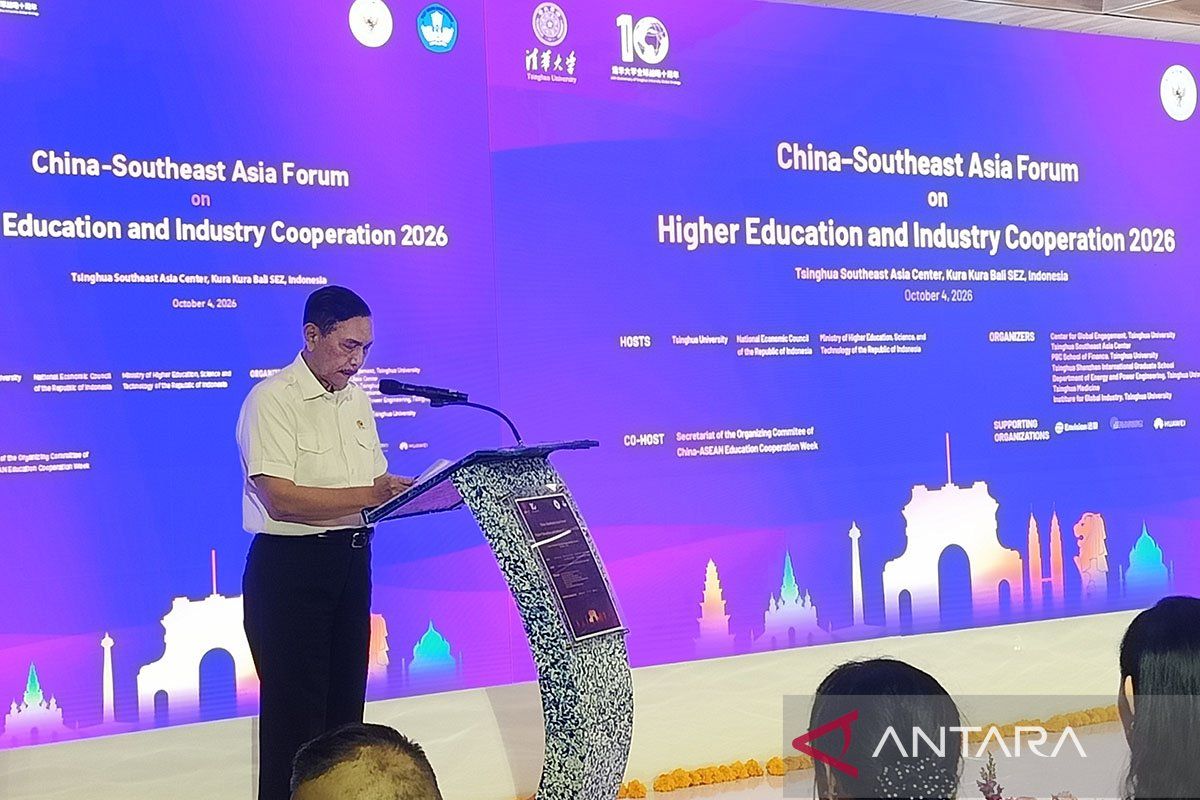
Denpasar (ANTARA) - The Chairman of the National Economic Council (DEN), Luhut Binsar Pandjaitan, is urging Indonesia to accelerate the downstreaming of seaweed so that the commodity is not merely exported as raw material, but is instead developed into value-added products through the strengthening of technology and the processing industry.
“We want to see this seaweed downstreaming implemented in the near future, without further delay,” said Luhut during the China Southeast Asia Forum on Higher Education and Industry Cooperation 2026 at the Kura Kura Bali Special Economic Zone (SEZ), Denpasar, on Sunday.
Luhut stated that Indonesia possesses vast marine resources, including seaweed, and therefore needs to develop a processing industry capable of increasing the economic value of the commodity.
He noted that the experience of nickel downstreaming could serve as a lesson for the development of the seaweed industry. Indonesia, according to Luhint, has learned the importance of investment and technological support in building an industrial ecosystem that generates domestic value addition.
He assessed that cooperation with China plays a role in developing several of Indonesia’s strategic industrial sectors, particularly through investment and technological support. He mentioned that Chinese investment in Indonesia over the last decade has reached more than 70 billion US dollars.
This cooperation has contributed to the development of industry and resource processing in Indonesia. However, he emphasised that the economic partnership between the two nations must continue to be developed so that it does not stop at the construction of factories and production facilities.
Luhut encouraged this cooperation to be expanded into the fields of research, technological development, innovation, and human resource capacity building, so that Indonesian industry becomes increasingly capable of producing value-added products.
“We want to move from industrial capability and technology transfer towards joint innovation, and from physical infrastructure towards the development of people and knowledge,” he said.
During the forum, Luhut also invited Tsinghua University and Chinese partners to establish joint laboratories, research programmes, and collaborations between universities and industry. He assessed that research support is necessary to develop the optimal utilisation of Indonesia’s natural resources, including agricultural and marine commodities.
According to Luhut, Indonesia cannot rely solely on the vastness of its natural resource wealth; it must also enhance its technological and innovation capabilities to achieve greater economic benefits. Therefore, he hopes that Indonesia-China collaboration can drive the development of local resource-based industries while strengthening the capacity of Indonesian researchers and workers.
Through seaweed downstreaming, Luhut hopes that Indonesia can expand the domestic processing of marine commodities and increase the added value of its maritime potential.