
Luhut Proposes Narrowing Corruption Definition to Bribery and Removing State-Loss Requirement
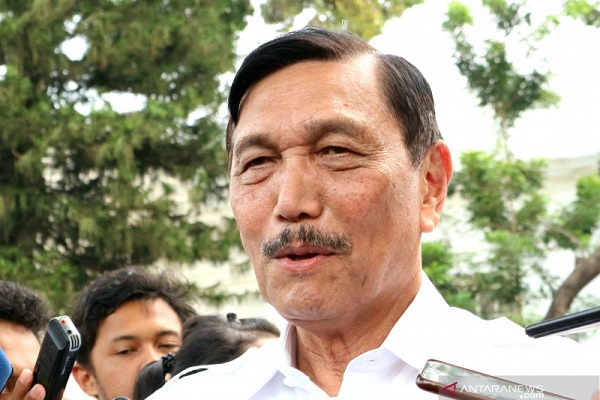
JAKARTA — President Prabowo Subianto has agreed to a proposal by National Economic Council (DEN) chairman Luhut Binsar Pandjaitan to change the definition of corruption in Indonesia. The proposal would narrow the definition to focus on bribery and remove state financial loss as an element, citing alignment with international standards and the need to protect business decisions by state-owned enterprises (SOEs) and the Daya Anagata Nusantara Investment Management Agency (Danantara).
Luhut outlined the proposed legal restructuring after a limited meeting with President Prabowo at Merdeka Palace in Jakarta on Tuesday (20 October 2026). He said the DEN team’s study referred to the United Nations Convention against Corruption (UNCAC), which Indonesia ratified around two decades ago. In his view, the convention treats bribery as the core of corruption without linking it to state losses.
“The President has agreed to the study prepared by the National Economic Council team on the definition of corruption. This is important to ensure that corruption enforcement in Indonesia meets international standards. We refer to the UN Convention chapter on the definition of corruption, where the definition in the UN convention ratified by the government 20 years ago is bribery; it does not discuss state losses,” Luhut said at the Presidential Palace complex in Jakarta on Tuesday (20 October 2026).
Luhut argued that including state losses in Indonesia’s corruption law has been a major obstacle to investment execution and corporate actions by SOEs. He said business decisions always carry a risk of loss and should not automatically be treated as criminal corruption, particularly in the case of financing and investment institutions such as Danantara.
“Indonesia is the only country that applies the issue of state losses. This makes it difficult for organisations such as Danantara to do business, when any business inevitably carries risks. So I think this is important,” Luhut said.
However, the claim that the UN Convention against Corruption (UNCAC 2003) or international standards restrict corruption to bribery and do not recognise public losses conflicts with international legal documents. According to the Corruption Eradication Commission’s Anti-Corruption Learning Centre website, UNCAC requires and encourages member states to criminalise various other forms of financial and bureaucratic crime, including embezzlement or misappropriation of public property, trading in influence, abuse of functions and illicit enrichment.
International organisations including the World Bank and Transparency International also define corruption broadly as the abuse of entrusted power for private gain. Under Indonesian law—Law No. 31/1999, as amended by Law No. 20/2001—bribery is only one of seven main categories of corruption offences. The other six cover state financial losses, embezzlement in office, extortion, fraudulent acts, conflicts of interest in procurement and gratification.
Narrowing the definition of corruption to bribery and removing the state-loss provisions could have serious consequences for law enforcement, the article argues. Systemic corruption, including fictitious projects, budget manipulation, conflicts of interest in vendor appointments and the embezzlement of public assets, could escape prosecution if no direct bribe transaction were found.
The change could also normalise public officials’ acceptance of gifts or lavish benefits, which may not involve an explicit bribery agreement at the outset. If corruption were reduced to bribery, conditional benefits received by officials could risk being treated as legal and evade criminal prosecution. It could also limit the Corruption Eradication Commission (KPK) and the Attorney General’s Office to pursuing bribery through sting operations, while hindering recovery of state losses caused by deliberately manipulated business decisions.
The article further warns that the proposal could allow financial crimes without direct bribe transactions to go unpunished. Fictitious projects, budget manipulation, conflicts of interest in vendor selection and the misappropriation of public assets could no longer be prosecuted as corruption without evidence of a direct bribe payment.
It also warns of increased risks to the state budget. Decisions by SOEs or Danantara that are deliberately made unprofitable through collusion or intentional misconduct could lose the criminal-law controls used to recover state losses.
Source: jawawa.id (https://jawawa.id/newsitem/luhut-proposes-narrowing-corruption-definition-to-bribery-and-removing-state-loss-requirement-1792612226)
Originally published by afu.id (https://afu.id/hukum-kriminal/luhut-usul-definisi-korupsi-disederhanakan-sekadar-penyuapan-minta-kerugian-negara-dihapus-demi-bisnis-bumn-dampaknya-membahayakan-negara), translated from Indonesian