
Luhut Praises Social Affairs Ministry's Performance in Integrating Data and Digitalising Social Assistance
The Social Affairs Ministry, I think, has performed very well,” said Luhut in a written statement on Monday (11/5/2026).
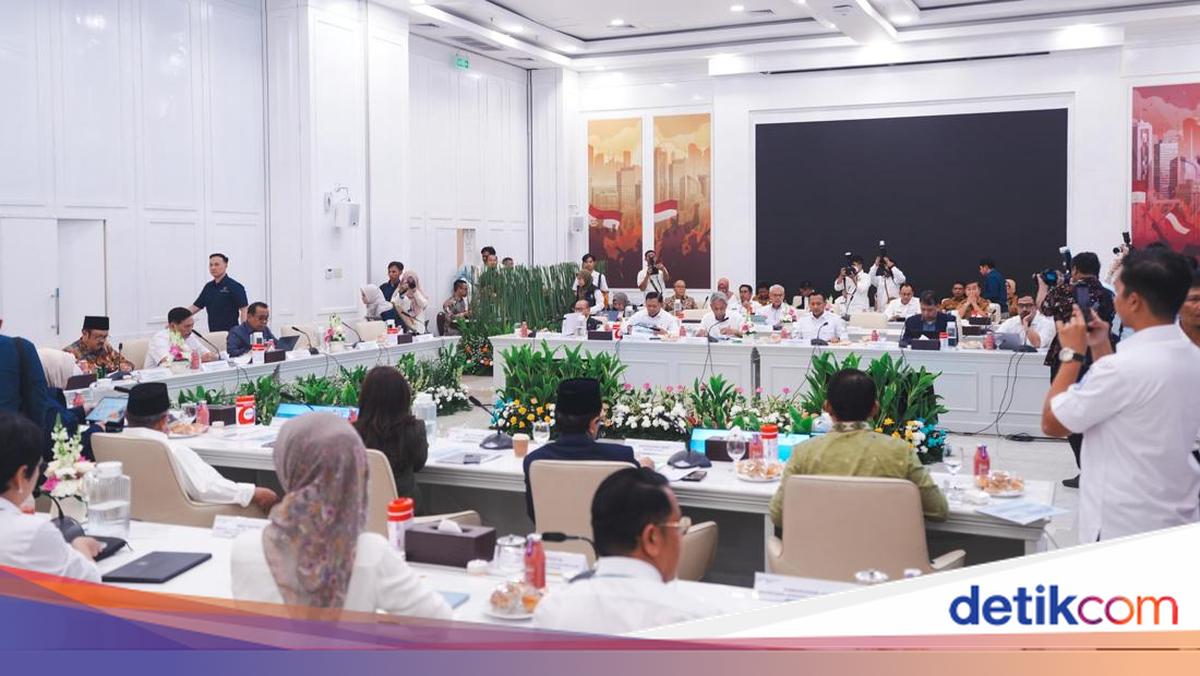
The meeting discussed accelerating the digital integration of social assistance and economic empowerment programmes based on the National Socio-Economic Single Data (DTSEN) and Digital Public Infrastructure (DPI).
The government targets cross-ministerial/institutional system integration to improve the accuracy of social assistance targeting, accelerate services, and support poverty alleviation towards a target below 5% by 2029.
Luhut also requested that all ministries/institutions immediately integrate their data into the government’s AI-based digital system.
“No more delays in entering the system. With a connected and AI-based system, the government can make more accurate, efficient decisions and reduce corruption,” said Luhut.
In this regard, the Social Affairs Ministry continues to strengthen its commitment to digitalising integrated social assistance with community empowerment programmes. Through the utilisation of DTSEN and SIKS-NG, the data collection, verification, and distribution processes for assistance are expected to become faster, more transparent, and accurately targeted.
The Social Affairs Ministry is also preparing to strengthen the Affirmative Business Card (KUA) programme, which connects social assistance recipients with economic empowerment programmes, business training, mentoring, and gradual access to business development.
Meanwhile, Minister of National Development Planning/Head of Bappenas Rachmat Pambudy stated that the social assistance digitalisation programme has reached a more mature stage and is directed to ensure that social assistance and empowerment programmes truly reach deserving communities.
“This digitalisation programme has reached a very good point. This programme can reach the targeted communities and support the poverty rate reduction target,” said Rachmat.
On the other hand, Deputy Minister of Social Affairs Agus Jabo Priyono said that social assistance digitalisation is designed to shorten the previously lengthy distribution process into a shorter one through digital systems and biometric-based verification.
The system is also equipped with an appeal mechanism so that the community can more openly know the reasons for eligibility to receive assistance.
In addition, the Social Affairs Ministry is preparing a graduation process for beneficiaries through integration with productive business programmes. Beneficiaries who have become independent will then be directed to enter business strengthening programmes through SAPA UMKM and the Productive Business Card (KUP).
“Social assistance digitalisation is not only about accelerating services but also an important instrument to connect social assistance with empowerment programmes and beneficiary graduation towards independence,” said Agus Jabo.
The meeting also discussed expanding the social assistance digitalisation pilot, which was previously conducted in Banyuwangi and will be expanded to 42 districts/cities in 2026. The government is also preparing Bali as a model province for the implementation of an integrated digital ecosystem for social protection and economic empowerment.
“We are ready to strengthen cross-ministerial/institutional synergy so that data becomes more accurate and government interventions for poor and vulnerable communities can be carried out more effectively,” concluded Agus Jabo.