
Luhut Explains Why State Losses Do Not Automatically Constitute Corruption
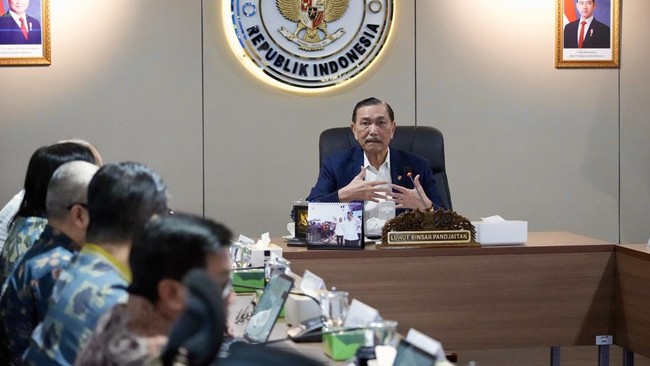
Jakarta, CNBC Indonesia – National Economic Council (DEN) chair Luhut Binsar Pandjaitan has stressed that recommendations to improve the Anti-Corruption Law are not intended to remove state financial loss as an element of corruption offences.
Luhut said Articles 2 and 3 of the law, corresponding to Articles 603 and 604 of the Criminal Code, would be retained. The DEN’s proposals focus on clarifying the evidentiary requirements and broadening the scope of corruption offences.
“State financial loss remains an element of the Anti-Corruption Law, and misappropriated public money must still be returned. What we propose is clear and objective proof, so that perpetrators of corruption cannot escape prosecution and people who make decisions or take action in good faith are not punished without grounds,” Luhut said in an official DEN statement.
The DEN has also proposed adding new offences to broaden Indonesia’s anti-corruption efforts and bring them into line with international standards, he said.
The recommendations were submitted to President Prabowo Subianto at the Merdeka Palace in Jakarta on 20 October 2026.
The DEN said Luhut’s comments on the United Nations Convention against Corruption (UNCAC)—which does not make state losses an element of an offence—were an explanation of international standards, not a proposal to remove state losses from Indonesian law.
Four DEN recommendations
The DEN has proposed four main steps to improve the Anti-Corruption Law. First, it recommends revising Articles 2 and 3 of the law, along with Articles 603 and 604 of the Criminal Code, to clarify the elements of offences and how they must be proved.
Second, it proposes adding a policy judgment rule, or business judgment rule. This would protect decision-makers who act in good faith, follow procedures and have no conflict of interest.
The DEN stressed that this protection would not apply to misappropriation, bribery or actions taken for personal gain.
Third, it proposes adopting UNCAC offences that are not yet fully covered by national law, including bribery of foreign public officials.
Fourth, it proposes drafting an omnibus law on state finances to provide certainty about the status of state assets.
Indonesia ratified UNCAC through Law No. 7 of 2006. However, the DEN said the convention’s provisions have not yet been fully incorporated into national law.
Legal certainty and investment
The DEN considers improvements to anti-corruption rules to be linked to the government’s efforts to encourage investment and sustain economic growth.
Luhut said legal certainty was a prerequisite for economic growth. Law enforcement therefore needed to be certain, fair and consistent, without reducing the effectiveness of anti-corruption efforts.
“Legal certainty is one of the main prerequisites for economic growth, and cross-country data over three decades consistently show this. Improving the Anti-Corruption Law is not about weakening the fight against corruption, but about ensuring enforcement is certain, fair and in line with international standards,” he said.
The DEN also highlighted the need to reform the legal framework for combating corruption amid concerns that enforcement continues to create uncertainty. Indonesia’s Corruption Perceptions Index was also described as having tended to stagnate.
According to the DEN, the proposed revisions would follow up on Constitutional Court rulings No. 142/PUU-XXII/2024 and No. 28/PUU-XXIV/2026. In its statement, the council said the rulings highlighted inconsistent application of Articles 2 and 3 of the Anti-Corruption Law and the need for a comprehensive review of both provisions.
The DEN said its recommendations were based on studies and discussions with various parties, including representatives of the Ministry of Law, the Attorney General’s Office, the Corruption Eradication Commission (KPK), the Indonesian National Police, academics from the University of Indonesia’s Faculty of Law and anti-corruption figures, including former KPK leaders.
The council said it would continue monitoring the issue and submit follow-up recommendations to the President. Its aim is to make anti-corruption enforcement more effective while ensuring fair legal certainty for the public and businesses.