
Luhut confident Indonesia's economic growth can reach 8%
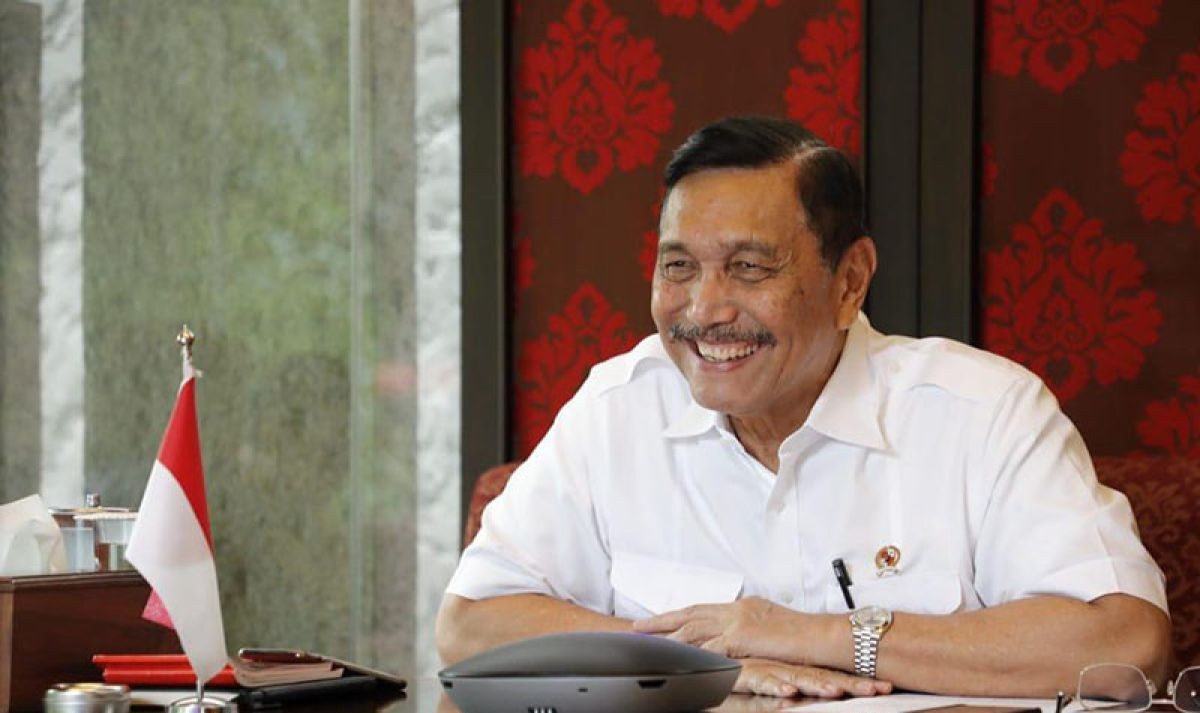
National Economic Council (DEN) Chairman Luhut Binsar Pandjaitan is confident that 8-9% economic growth can be achieved through deregulation and digitalisation. He made the statement during the ASEAN Regional Economic Outlook and Fiscal Policy agenda at DEN’s office in Central Jakarta on Monday (25/5).
“We must increase tax revenue, not chase it in the zoo. Digitalisation will be an excellent tool for this,” Luhut said.
Another key to growth is deregulating regulations. Luhut cited the environmental impact assessment (Amdal) permit taking up to two years, whereas in other countries it can be much faster.
“Reducing in-person contact will make us more efficient. As of June 1, everything is connected and data is being integrated. It will take a few months for the AI to run, data harmonisation to start, and the President will roll it out in October this year,” Luhut added.
With this, he said, data will be much more accurate, enabling the President to make more precise and swift decisions.
“For example, with MBG data, we can see which regions need attention, which can be second-priority, and so on. The President must not be given incorrect data. This will achieve the President’s goals,” Luhut explained.
He believes in the contribution of President Prabowo’s priority programs to the national economy.
“Never before in Indonesia’s history have we had daily funds reaching below Rp1 trillion. This has influenced the economy, and the 5.61% growth last year is partly due to this,” Luhut said.
“But if better managed, that figure could be higher. Over time, achieving 8-9% growth with deregulation, efficiency, and less corruption will be very possible,” he concluded.
At the same event, Deputy Finance Minister Suahasil Nazara highlighted the credibility of state budget (APBN) management. He said the government manages the APBN adaptively, adjusting to economic conditions.
“Last year, we launched four stimulus packages as we saw public needs. Did we abandon fiscal discipline? No. We maintained fiscal discipline with deficits below 3% and kept the debt-to-GDP ratio in check,” Suahasil said.
He noted Indonesia successfully balanced economic growth and deficits, with many countries having higher deficits but lower growth.
“Indonesia is a country with deficits below 3%. Last year it was 2.9%, this year planned at 2.68%, yet it grew 5.11% last year and 5.61% early this year,” he said.
“So Indonesia is a good bargain with flexible APBN management. All major Indonesia plans — free nutritious meals, village cooperatives, people’s schools, health improvements — are budgeted in the APBN to boost public welfare. We also have Danantara as an investment partner,” Suahasil added.
“This new microeconomic policy management will drive Indonesia’s growth through deregulation. With reforms, we are confident of reaching 8% growth as per President Prabowo’s target during his administration,” he concluded.
DEN Chairman Luhut Binsar Pandjaitan praised the strategic commodity export policy through a single channel via Danantara Sumberdaya Indonesia (DSI).
The government continues to accelerate digital transformation in social assistance (bansos) distribution to improve targeting, efficiency, and transparency.
DEN Chairman Luhut Binsar Pandjaitan confirmed national energy stock, particularly crude oil (BBM) and LPG, remains sufficient.
DEN stated the reciprocal tariff agreement signed by Indonesia and the US has strategic value.
Indonesia’s government has temporarily suspended PT Toba Pulp Lestari’s (TPL) operating permit following strong allegations that the pulp and paper company contributed to environmental damage and ecological disasters in Sumatra.
PT Bank Negara Indonesia (Persero) Tbk or BNI affirmed its commitment as a global Indonesian bank actively driving national economic growth.
According to Perry, the increase was primarily driven by a 28.4% year-on-year rise in commercial bank deposits at Bank Indonesia.
He explained that national capacity is not solely measured by the size of the state budget (APBN).
President Prabowo Subianto stated the APBN is a tool for the nation’s struggle to strengthen the economy and equalise public welfare.
President Prabowo Subianto highlighted the significant leakage of national wealth as the root cause of Indonesia’s economic issues.