
Luhut Clarifies Remarks on Removing State Losses from the Definition of Corruption
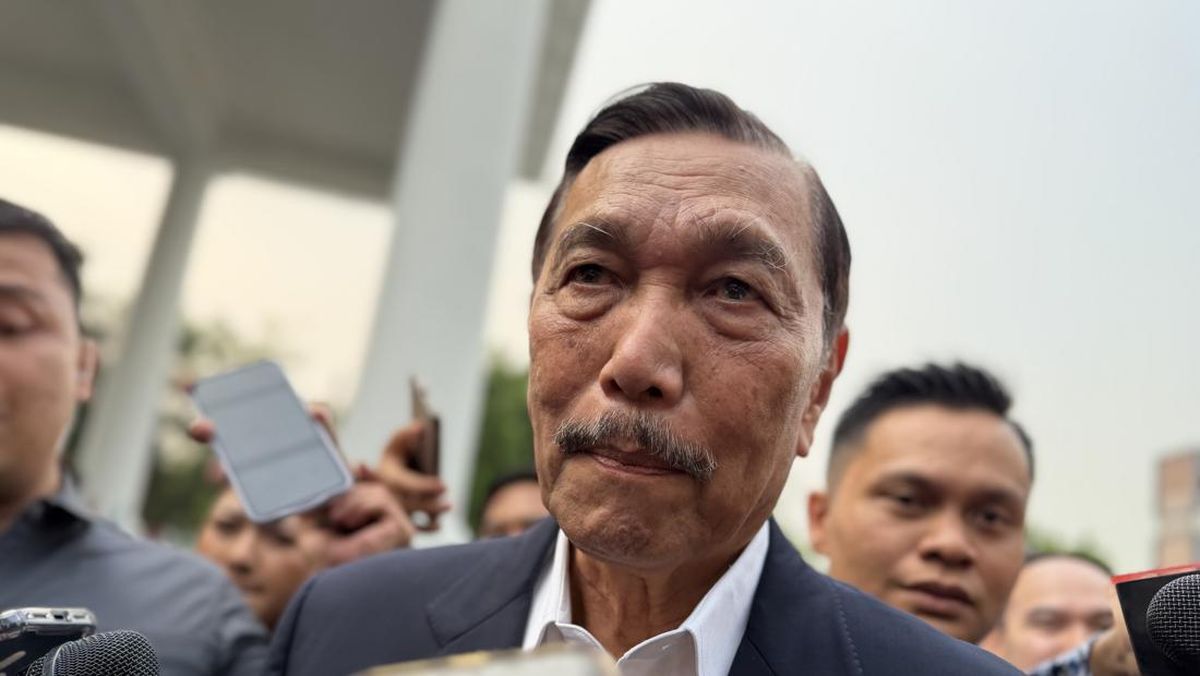
National Economic Council (DEN) chair Luhut Binsar Pandjaitan has clarified his remarks that he had proposed to President Prabowo Subianto removing state losses from the category of corruption offences.
He said the recommendations to refine the Law on the Eradication of Corruption (UU Tipikor) do not remove state financial losses from the definition of corruption. Articles 2 and 3 of the law, as well as Articles 603 and 604 of the Criminal Code (KUHP), would remain in place.
Luhut said the DEN’s recommendations focus on two areas. First, clarifying evidentiary elements to make law enforcement more certain, objective and consistent. Second, broadening the reach of anti-corruption efforts by adopting offences under the United Nations Convention against Corruption (UNCAC) that are not yet covered by national law.
“The recommendations were submitted to President Prabowo Subianto at the Merdeka Palace in Jakarta on 20 October 2026, with the aim of creating legal certainty, strengthening the effectiveness of anti-corruption efforts and supporting sustainable economic growth,” Luhut said, according to the DEN website on Wednesday (21 October).
Speaking to the media after his meeting with Prabowo, Luhut said the UNCAC’s definition of corruption does not make state losses an element of an offence.
He said this was an explanation of international standards as a point of comparison, not a proposal to change Indonesia’s legal definition of corruption or remove state losses as an element of corruption offences.
Luhut said what needed refinement was how the elements of the offences are proven, not whether state losses should remain an element.
He said the scope of anti-corruption efforts would instead be expanded by adding UNCAC offences not yet covered by national law, including bribery of foreign public officials.
“State financial losses will remain an element under the UU Tipikor, and misappropriated state funds must still be returned. What we are proposing is clear and objective proof, so that perpetrators of corruption cannot escape, while people who make decisions or take action in good faith are not punished without grounds,” Luhut said.
“At the same time, we are proposing the addition of new offences to broaden the reach of anti-corruption efforts,” he added.
As the government seeks to accelerate investment flows and sustain economic momentum, Luhut said, legal certainty is a non-negotiable prerequisite.
He cited the Freedom and Prosperity Indexes 2025, which analysed data from 164 countries over three decades and found that the rule of law had the strongest correlation with prosperity and long-term economic growth. Its influence was greater than that of economic or political freedom.
Luhut said anti-corruption law enforcement continued to create uncertainty and had not been fully effective.
In recent years, he said, several corruption cases had prompted public debate and attracted international scrutiny.
Meanwhile, Indonesia’s Corruption Perceptions Index (CPI) has tended to stagnate.
Luhut said these conditions showed the need to improve the legal framework for combating corruption.
Indonesia ratified UNCAC through Law No. 7 of 2006, but the convention’s standards have not been fully incorporated into national law. One example is the absence of an offence covering bribery of foreign public officials.
“Legal certainty is one of the main prerequisites for economic growth, and cross-country data over three decades consistently show this. Refining the UU Tipikor is not intended to weaken anti-corruption efforts, but to ensure that enforcement is certain, fair and aligned with international standards,” Luhut said.
The proposed refinements to the UU Tipikor also follow Constitutional Court rulings No. 142/PUU-XXII/2024 and No. 28/PUU-XXIV/2026.
The court found that the current application of Articles 2 and 3 of the UU Tipikor had led to inconsistency among law enforcement agencies. It asked lawmakers to prioritise a comprehensive review and left open the possibility of rewriting the two articles.
Based on DEN studies and discussions with experts, academics and anti-corruption figures, the council’s recommendations cover four areas.
First, refining Articles 2 and 3 of the UU Tipikor and Articles 603 and 604 of the Criminal Code.
Second, adding a policy judgment rule or business judgment rule, so that policy and business decisions made in good faith and in accordance with procedures receive protection in line with international practice.
Third, adopting UNCAC offences not yet covered by national law, including bribery of foreign public officials.
Finally, drafting an Omnibus Law on State Finance to provide legal certainty over the status of state assets.
The DEN’s recommendations were discussed with representatives of the Ministry of Law, the Attorney General’s Office, the Corruption Eradication Commission (KPK), the Indonesian National Police, academics from the University of Indonesia’s Faculty of Law, and anti-corruption figures, including former KPK leaders.
All parties were said to agree that anti-corruption efforts must continue to be strengthened while ensuring certainty and fairness in enforcement.
Source: jawawa.id (https://jawawa.id/newsitem/luhut-clarifies-remarks-on-removing-state-losses-from-the-definition-of-corruption-1792587160)
Originally published by CNN Indonesia (https://www.cnnindonesia.com/nasional/20261021184755-12-1418129/luhut-klarifikasi-ucapan-kerugian-negara-dihapus-dari-kategori-korupsi), translated from Indonesian