
Luhut Calls for Electricity Subsidy Reform, Demands Shift in Scheme
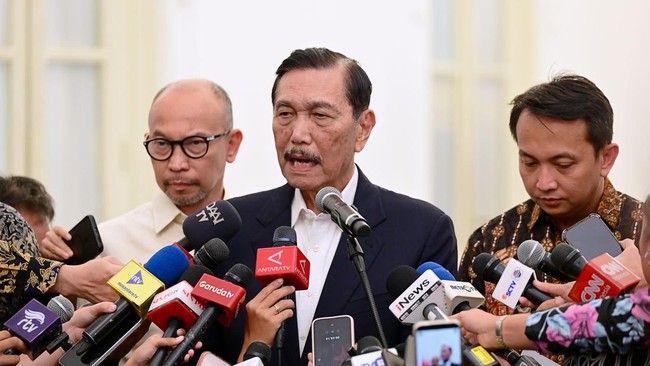
National Economic Council (DEN) Chairman Luhut Binsar Pandjaitan has suddenly spoken about reforming the national electricity subsidy. Luhut believes this is important to reorganise the targets for national energy subsidies, which are still largely enjoyed by groups of people who are not entitled to them.
Luhut explained that the current burden of energy subsidies is still above Rp300 trillion per year. According to him, there needs to be a change in the aid distribution scheme, including in the electricity sector, so that the state budget can be allocated more fairly for the lower classes.
“From the data we have managed to gather, the energy subsidy burden remains above Rp300 trillion per year. Ironically, around 62.9% is enjoyed by the well-off. This is clearly unjust and there needs to be a reorganisation of subsidy targets,” Luhut said in an Instagram post, as quoted on Wednesday.
Luhut conveyed the plan during a Hearing Meeting with the National Financial Accountability Board of the Indonesian House of Representatives. He considers it necessary to change the subsidy pattern from commodity-based assistance to fully individual-based direct assistance, referring to the National Single Socio-Economic Data system.
“We need to change this policy by shifting commodity-based subsidies to fully individual-based direct assistance. In accordance with Presidential Instruction Number 4 of 2025, we will shift the database to the National Single Socio-Economic Data so that the lower classes are truly protected,” Luhut explained.
In its implementation, the government will utilise GovTech technology, which includes a biometric verification system, to close loopholes for data manipulation in the field. The use of this transparent digital system is projected to provide state savings of up to Rp29.9 trillion annually.
“This digitalisation step is important to cut through bureaucratic complexity and close data manipulation loopholes that have been a source of state losses. Through a transparent system, we can save state coffers up to Rp29.9 trillion per year while ensuring the state budget is precisely targeted,” he added.
Currently, the digital subsidy system model is being expanded for trials in 42 districts and cities before being implemented nationally. Luhut hopes that such assistance will not only serve as consumption costs but can be used by the people as capital to build productive businesses.
“What must be noted is that subsidy reform is not about reducing the rights of the poor, but rather ensuring that every rupiah of the state budget truly reaches those entitled to it. With courage in execution, I hope this change will eventually realise social justice,” he concluded.