
LSPR introduces AI-based SADARI media for adolescents with special needs
LSPR Institute of Communication and Business has developed ‘SADARI Ceria’, a health communication medium based on demonstrative videos supported by artificial intelligence (AI) and pictogram cards to help educate adolescents with special needs about early detection of breast cancer.
‘SADARI Ceria’ was developed not only as educational material about breast self-examination, but as a more inclusive health communication approach, said Yolanda Stellarosa, Head of the LSPR Community Service Team, according to a statement received by ANTARA on Wednesday.
Yolanda said the innovation is designed so that health information can be conveyed in a simple, visual, positive way that does not cause fear.
‘AI demonstrative videos and pictograms help translate that information into messages that are easier to understand and reuse by carers,’ she said.
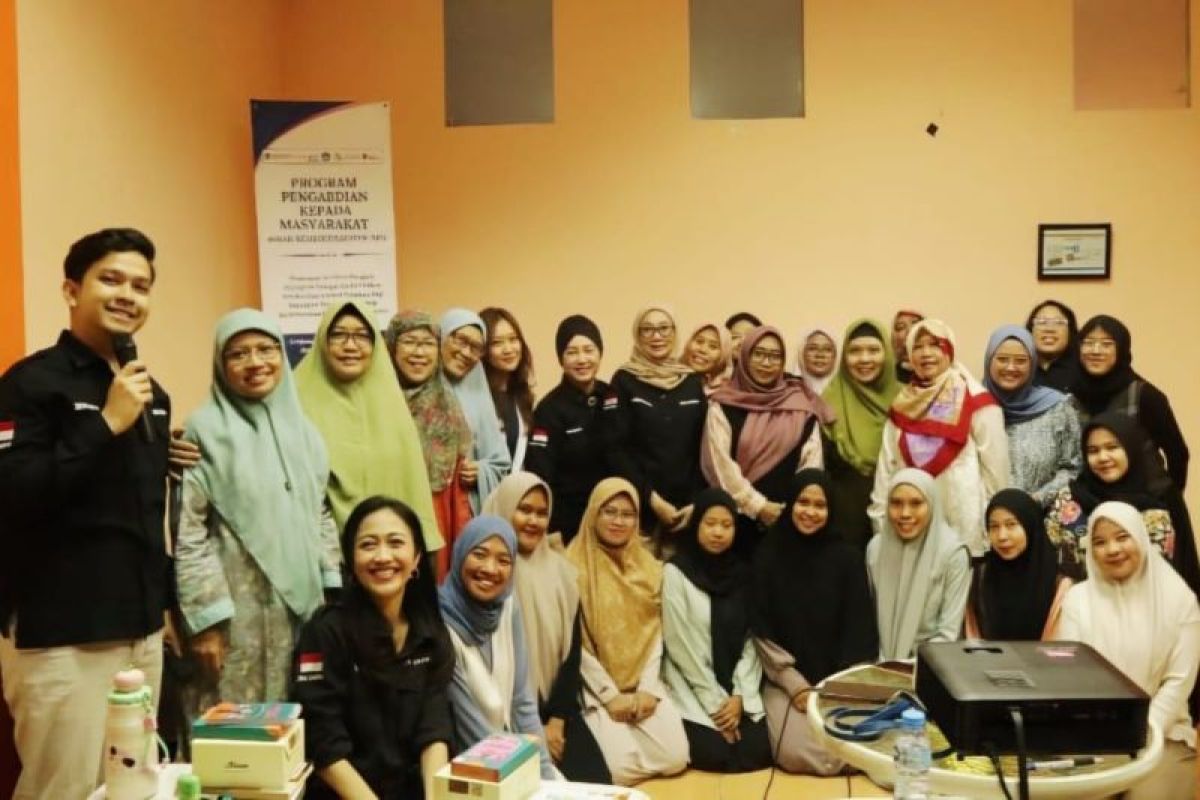
The innovation was introduced through a Community Service activity themed ‘Application of AI Demonstrative Videos and Pictograms as Educational Media for Early Detection of Breast Cancer for Carer Groups of Adolescents with Special Needs at Rumah Autis’ at Rumah Autis, Bekasi.
The activity, which received grant funding from the Directorate of Research and Community Service, Directorate General of Research and Development, Ministry of Higher Education, Science, and Technology, was attended by around 50 participants consisting of parents, adolescents with special needs, and carers.
LSPR developed AI-based demonstrative videos and pictogram cards as health communication media that help translate information into visual, concrete, step-by-step messages that can be reused by parents and carers.
Pictograms are used to simplify messages into visual instructions, while AI-based demonstrative videos present educational stages systematically and consistently.
Both media are designed as communication aids and are not intended to replace the role of health workers or carers.
During the activity, participants received education on the importance of breast health awareness and how to use the demonstrative videos and pictogram cards.
Participants were also invited to discuss how to convey health messages using simple and positive language and to adapt them to the abilities of the message recipients.
A representative of Rumah Autis, Istie, said that animated video media can help parents and carers because it can be understood and watched again.
‘Animated videos are easy to understand and can be watched repeatedly. This innovation is supportive for parents and carers and can be used to convey health information,’ she said.
The programme positions parents and carers as important actors in building health literacy for adolescents with special needs.
LSPR also conducted an evaluation to see changes in participants’ understanding before and after the activity, including understanding of the SADARI message and readiness to reuse the educational media introduced.
The AI-based demonstrative videos and pictogram cards developed are expected to continue to be used by carers at Rumah Autis after the training activity is completed.