
LRT Jabodebek Ridership Hits Record Highs
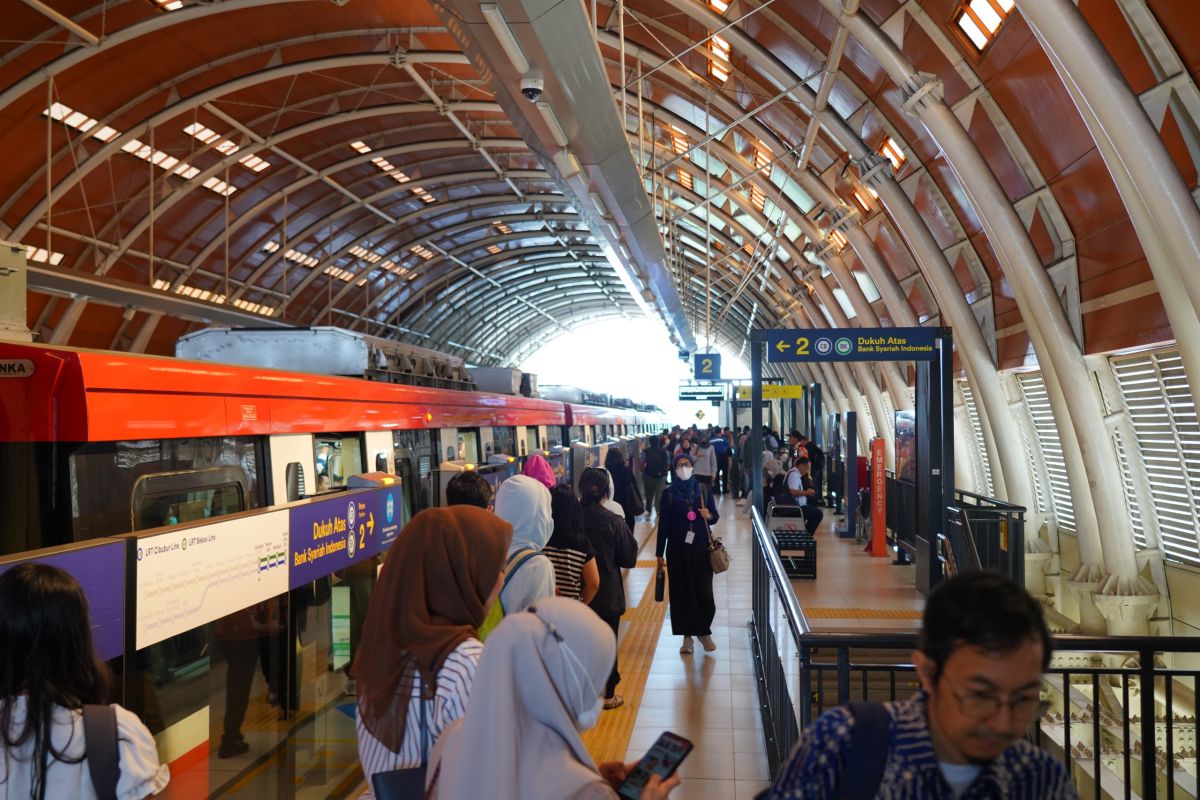
LRT Jabodebek has recorded its highest ridership since operations began, with 129,692 users on Tuesday, May 26. This achievement reflects growing public confidence in integrated, efficient, and punctual public transport supporting daily mobility.
On weekdays, the service saw 129,692 users on May 26, a 2% increase of 2,603 passengers compared to the previous record of 127,089 on 28 April 2026. During public holidays and weekends, it recorded a new high of 59,870 users on Thursday, May 28, a 13% rise of 7,093 passengers from the prior record of 52,775 on 25 April 2026.
LRT Jabodebek Public Relations Manager Radhitya Mardika stated that the rising user numbers demonstrate public transport’s increasing role in enabling efficient, integrated mobility for both work and leisure travel.
‘The growth in users reflects growing public trust in public transport. LRT Jabodebek supports mobility with safe, comfortable, punctual services integrated with other transport modes,’ he said.
Ridership patterns on May 26 showed peak morning and evening commutes. Between 06:00–08:00 WIB, Harjamukti Station had the highest departure volume at 6,180 users, followed by Cikunir 1 Station (2,891) and Jatimulya Station (2,733). Most passengers headed to Kuningan Station (7,390), then Pancoran (5,507) and Dukuh Atas BNI (4,589).
In the afternoon and evening (16:00–21:00 WIB), the majority of trips were leaving Jakarta, with Dukuh Atas Bank Syariah Indonesia Station recording the highest tap-in volume at 14,527 passengers, followed by Kuningan (12,320) and Rasuna Said (6,750).
During the May 28 public holiday, mobility patterns mirrored weekday trends but with different volumes, indicating LRT Jabodebek is increasingly used for both work and leisure travel.
‘The high mobility of LRT Jabodebek users heading to central Jakarta highlights the critical role of public transport in supporting mobility and reducing reliance on private vehicles,’ he added.
LRT Jabodebek continues to optimise operations and strengthen intermodal integration to support a modern, efficient, and sustainable urban public transport ecosystem.