
LRT Jabodebek Increasingly Relied Upon for Mobility, First-Half 2026 Users Up 23 Percent
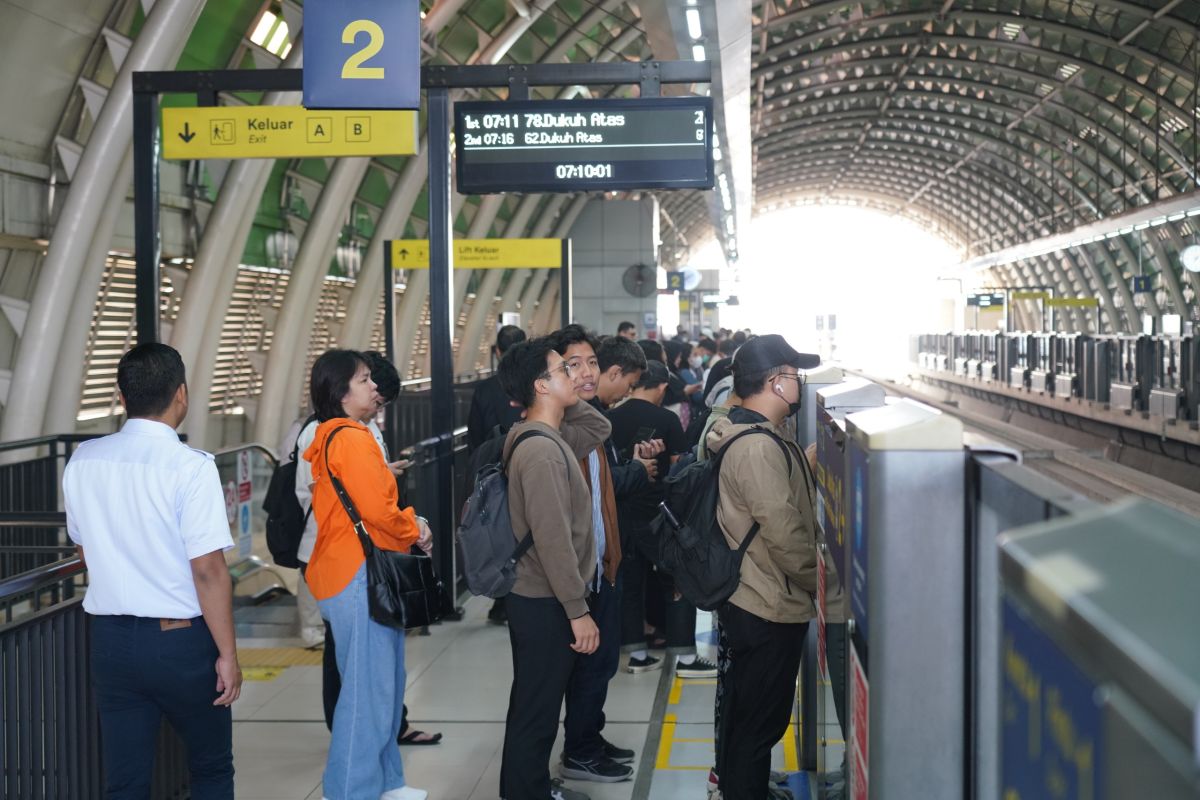
More and more people are relying on the LRT Jabodebek as a mode of transport for their daily activities. Amid increasingly dynamic public mobility, the LRT Jabodebek has become a preferred choice because it offers certainty of travel time, freedom from traffic congestion, and integration with various other transport modes.
This trend is reflected in the growth of LRT Jabodebek users throughout the first half of 2026. From January to June 2026, the LRT Jabodebek served 16,018,911 users, an increase of 2,978,508 users, or approximately 23 percent, compared to the same period last year, which recorded 13,040,403 users.
An increase is also evident in daily usage patterns. Throughout the first half of 2026, the LRT Jabodebek served an average of 115,095 users each weekday, an increase of around 22 percent compared to the first half of 2025 average of 94,553 users per day. Meanwhile, on weekends, the average number of users rose from 40,436 in the first half of 2025 to 45,516 in the first half of 2026.
In June 2026 specifically, the total number of users reached 2,807,055 people, with an average of 115,106 users on weekdays and 50,494 users on weekends. The high number of weekday users indicates that the LRT Jabodebek is increasingly being utilised as a primary mode of transport to support routine public activities, ranging from work and education to various other pursuits.
Travel data also reveals a strengthening mobility pattern between residential areas and activity centres in Jakarta. In June 2026, Dukuh Atas Station recorded the highest user volume, followed by Harjamukti, Kuningan, Cikoko, and Pancoran stations. This high level of activity at these stations demonstrates the LRT Jabodebek’s role in connecting residential areas in buffer zones with business districts, offices, and service centres in the capital.
LRT Jabodebek Public Relations Manager Radhitya Mardika stated that the growth in user numbers shows public transport is increasingly becoming a part of the community’s mobility needs. ‘More than 115,000 people use the LRT Jabodebek every weekday. This shows that more and more people are choosing public transport because it offers more predictable journeys, freedom from traffic jams, and integration with other transport modes, making travel more efficient,’ he said.
He added that this increase is supported by various service improvement efforts continuously undertaken by LRT Jabodebek to keep pace with the evolving mobility needs of the public. ‘KAI continues to make service adjustments through optimising travel frequency, especially during peak hours, and maintaining operational reliability to ensure punctual journeys. These steps are taken so that the public has more options for comfortable, efficient, and reliable travel for their daily activities,’ he added.
This service reliability is one of the factors driving increased public trust in public transport. With more predictable travel times, the public can plan their activities better, reduce uncertainty caused by traffic congestion, and enjoy a more comfortable journey.
Beyond benefiting users, the increased use of the LRT Jabodebek also supports efforts to reduce dependence on private vehicles. The more people who switch to public transport, the greater the contribution towards creating a more efficient, integrated, and sustainable urban transport system.
KAI will continue to improve the quality of LRT Jabodebek services, both in terms of operations, facilities, and intermodal integration, so that more people can make public transport their primary choice for supporting daily mobility.