
LPS to Amend Official Travel and Meeting Expense Regulations by 2027
The Indonesia Deposit Insurance Corporation (LPS) is currently drafting new criteria regarding the establishment of fair standards within its operational expenditure governance regulations. This initiative is being undertaken in accordance with the mandate of Law Number 4 of 2023 concerning the Development and Strengthening of the Financial Sector (UU P2SK).
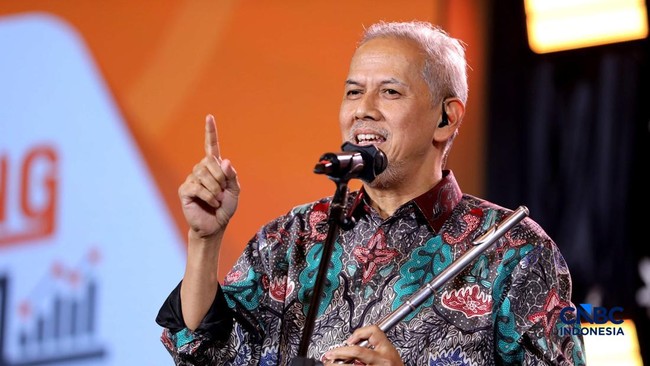
LPS Board of Commissioners Chairman Anggito Abimanyu stated that the LPS is proposing amendments to the LPS Regulation (PLPS) regarding cost standards in the preparation of the Annual Work Plan and Budget (RKAT). This includes moving from the use of Input Cost Standards (SBM) to Output Cost Standards or performance-based standards (SBK).
Anggito noted that these PLPS amendments are targeted to be effective for the calculation and submission of the RKAT by 2027. He added that SBM will still be necessary for specific items such as official travel, meetings, guest speakers, public facilities, information technology, human resources, and other supporting activities.
He also proposed a two-year transition period before the full implementation of the performance-based SBK RKAT. The transition will gradually move towards a more performance-based approach for areas such as applied research, supervision, regulatory drafting, law enforcement, auditing, and the handling of banks and insurance companies.
Anggito emphasised that the latest PLPS will refer to clear benchmarks equivalent to other domestic financial sector regulators and international practices. Under the UU P2SK, the definition of ‘fairness’ is benchmarked against the Ministry of Finance, the Financial Services Authority (OJK), and Bank Indonesia (BI).
He further explained that this internal regulatory adjustment is a regulatory mandate requiring regulators to elevate the status of internal provisions from Board of Commissioners Decisions (KDK) to more legally binding regulations, such as LPS Regulations (PLPS), Bank Indonesia Regulations (PBI), or OJK Regulations (POJK). He clarified that because this is based on statutory requirements, the institution is not starting from scratch.
In his explanation, the LPS divides the comparison for fair standards into two main groups: Domestic Practices, which compares governance and operational costs with similar Indonesian regulators such as Bank Indonesia, OJK, and the Ministry of Finance; and International Practices, which are used specifically to support the execution of specific functions, such as banking resolution and crisis management.
Anggito emphasised that international benchmarks are crucial, particularly when the LPS faces specific situations involving the handling of distressed banks or resolutions that demand rapid, specific, and competent responses. He noted that for resolutions, which must be swift and specialised—such as appointing liquidation teams or bridge banks—traditional tendering is not feasible, thus requiring an SBK that remains accountable and based on international practices.
Through these regulatory adjustments, the LPS hopes its financial governance will not only have a solid legal foundation in accordance with the UU P2SK but also remain flexible and responsive in maintaining national financial system stability.