
LPS Targets Reduction of Unbanked Indonesians to 13 Million
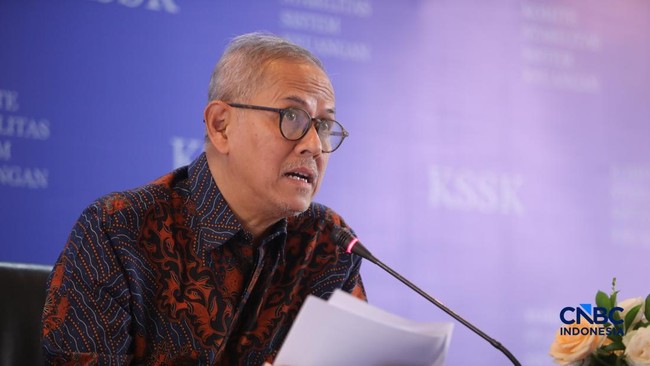
The Indonesia Deposit Insurance Corporation (LPS) has highlighted the high number of people in Indonesia who still lack access to banking services. The Chairman of the LPS Board of Commissioners, Anggito Abimanyu, stated that the number of unbanked individuals is targeted to drop to 13 million people this year.
According to LPS data, the unbanked population has been steadily declining over the last three years, from 59.8 million people in 2023 to 53.2 million in 2024, and further decreasing to 49.7 million in 2025. The most significant decline occurred within the productive age group (15-69 years), which shrank from 23.5 million in 2023 to 18.2 million in 2024, and subsequently to 15.3 million in 2025.
“Every year we have a target to reduce the unbanked—those residents who do not have bank accounts. Currently, there are 15 million in the productive age group. Our annual target is to reduce the unbanked by 2 million. Therefore, by the end of this year, we expect this number to drop to 13 million people without accounts,” he stated during a working meeting with Commission XI of the House of Representatives (DPR RI) in Jakarta on Wednesday.
This target for reducing the unbanked population aligns with the directives of President Prabowo Subianto, who requested that all Indonesian citizens be able to access banking financial services. “The President has instructed us that within three years, all Indonesian residents should begin having bank accounts. That is our target,” he emphasised.
Abimanyu explained that one of the efforts to reduce the unbanked population includes organising financial festivals, such as the recent Financial Festival in Yogyakarta. The event was held alongside other financial institutions and agencies sharing the same objective.
LPS data regarding the financial sector in the Special Region of Yogyakarta (DIY) for 2025 showed several dynamics. The proportion of savers with balances below Rp100 million decreased by 2%, while the number of savers with balances above Rp5 billion increased by 3%.
In terms of intermediation, credit growth remained relatively low at 6.14% with a loan-to-deposit ratio (LDR) of 65%, indicating high banking liquidity. DIY also recorded a banking fund surplus of Rp31.4 trillion, though approximately 20% of existing accounts remain inactive. Furthermore, about 16% of the productive age population (15-70 years) in the region still lacks access to banking services.
The event attracted over 11,000 visitors, dominated by high school and university students, which aligns with the LPS objective of targeting the productive age demographic.
During the same session, the Chairman of Commission XI of the DPR RI, Mukhamad Misbakhun, expressed appreciation for the 2026 Financial Festival. He noted that Yogyakarta is a highly inclusive city for conducting financial education.
LPS data also reveals regional disparities in unbanked percentages. The highest rate is in Kalimantan at 24.67%, followed by Sulawesi, Maluku, and Papua (Sulampua) at 22.83%. Meanwhile, Java recorded 19.21%, Sumatra 18.27%, and Bali-Nusa Tenggara (Balinusra) had the lowest rate at 13.27%.
Conversely, the number of inactive accounts nationwide continues to rise. In 2023, inactive accounts totalled 144.09 million, rising to 158.77 million in 2024, and reaching 173.42 million in 2025. The year-on-year growth of inactive accounts was 9.52% in 2023, increasing to 10.18% in 2024, before slowing to 9.23% in 2025. LPS defines an inactive account as a non-digital commercial bank savings account with a maximum balance of Rp50,000 that shows no change in value throughout the year.
Source: jawawa.id (https://jawawa.id/newsitem/lps-targets-reduction-of-unbanked-indonesians-to-13-million-1782294721)
Originally published by CNBC Indonesia (https://www.cnbcindonesia.com/market/20260624153445-17-745414/lps-targetkan-masyarakat-tanpa-rekening-bank-turun-jadi-13-juta-orang), translated from Indonesian