
LPS Says 161 Banks Have Been Liquidated, Citing Fraud and Inability to Compete
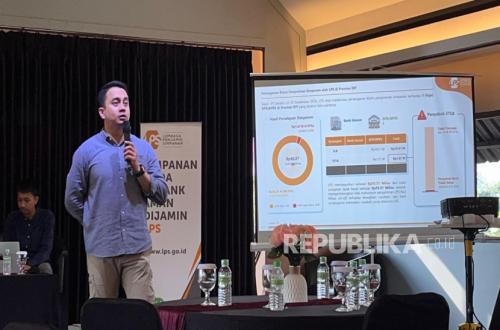
SLEMAN — Weak governance, fraud and an inability to cope with business competition are among the factors that have caused banks to fail and ultimately be liquidated. The Indonesia Deposit Insurance Corporation (LPS) recorded 161 bank liquidations nationwide up to September 2026, including three rural banks (BPRs) in the Special Region of Yogyakarta.
Rhein Valleno Oktoriansyah, head of public relations in LPS’s Secretariat Group, said bank failures were not solely related to financial problems, but also to the quality of internal management and banks’ ability to conduct their business.
“Three banks from Yogyakarta that were liquidated were BPRs,” Rhein said at an LPS media gathering in Sleman on Friday (9 October 2026).
West Java had the highest number of liquidated banks, with more than 50. East Java was next, with 20.
In Yogyakarta, three BPRs had their operating licences revoked from the establishment of LPS through to 30 September 2026. One licence was revoked in 2026, around last July. Rhein said the latest revocation in Yogyakarta was not due to fraud, but because the bank had been unable to compete in its business.
“Its licence was revoked around July, and the deposit-guarantee process is now under way; we have completed the guarantee claim payments,” he said.
Across the three BPR licence revocations in Yogyakarta, LPS recorded Rp59.01 billion in eligible deposits. Of that amount, guarantee claims totalling Rp58.51 billion had been paid. Ineligible deposits were recorded at around Rp1.87 billion.
Rhein said most deposits that did not qualify for payment were funds that had not been recorded in the banks’ books. Deposits ineligible because they were unrecorded accounted for 96.81 per cent. The remaining 3.19 per cent related to banks deemed to be in an unhealthy condition.
“So this is a sample of those three banks,” he said.
“We have handled this properly and, of course, worked with the Financial Services Authority (OJK),” he added.
Rhein cautioned that revocation of a bank’s licence did not automatically mean all customer deposits could be repaid. LPS applies rules to determine which deposits qualify for cover.
Deposits are guaranteed up to a maximum of Rp2 billion per customer per bank, provided the applicable requirements are met. These include the deposit being recorded in the bank’s books and the interest received not exceeding the LPS guarantee interest rate.
The public should therefore consider more than just the interest rate on offer. They should also ensure that the bank holding their funds is well managed and understand the deposit-guarantee rules.
“Claims are paid after taking into account the LPS maximum guarantee of Rp2 billion, set-off against the customer’s obligations, and the outcome of any customer objections accepted by LPS,” he said.
Rhein also said LPS guarantees several types of customer deposits. At conventional banks, these include current accounts, time deposits, certificates of deposit, savings accounts and equivalent forms of deposit. At Islamic banks, they include Wadiah and Mudharabah current accounts, Wadiah and Mudharabah savings accounts, Mudharabah time deposits and other deposits designated by LPS.
“To ensure that bank deposits are covered by LPS, remember the three Ts: the deposit is recorded in the bank’s books; the deposit interest rate does not exceed the LPS guarantee rate; and the customer does not take actions that harm the bank or cause it to fail,” he said.
Source: jawawa.id (https://jawawa.id/newsitem/lps-says-161-banks-have-been-liquidated-citing-fraud-and-inability-to-compete-1791683438)
Originally published by Republika (https://rejogja.republika.co.id/berita/tmpvjb291/lps-ungkap-161-bank-dilikuidasi-penyebabnya-dari-fraud-hingga-kalah-bersaing), translated from Indonesian