
LPS: Middle-Class Savings and Account Activity Improve
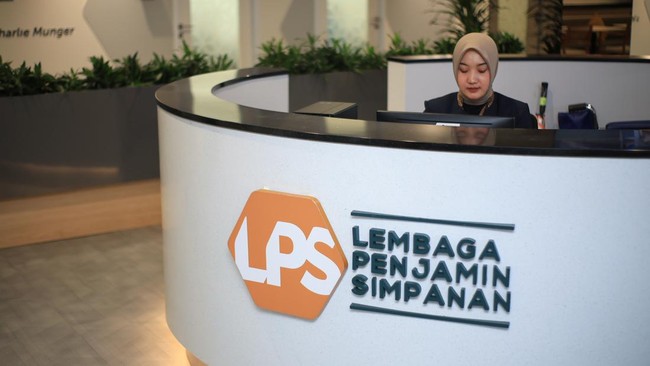
Jakarta, CNBC Indonesia – The Deposit Insurance Corporation (LPS) has said that although credit growth for micro, small and medium enterprises (MSMEs) remains low, other indicators confirm that people’s economic activity is in fact gradually improving.
Chairman of the LPS Board of Commissioners, Anggito Abimanyu, said the perception of economic recovery is not only occurring at the macro level, such as fiscal and monetary stability and foreign exchange reserves, but can also be measured from the micro sector.
“Earlier it was mentioned that MSME credit grew only one per cent — 1.6 per cent as of June, or 0.5 per cent as of May. That’s very low. But if we break it down further, there are actually many indicators that can show the micro sector is also doing well,” he said after meeting Commission XI at the DPR RI building in Jakarta on Monday (20/7/2026).
Anggito stressed that data on super-micro accounts and the number of accounts, as well as their balances, continue to rise, although the increase has tended to slow.
“We hold data on super-micro accounts — the number of accounts keeps increasing, in every group, in the middle group and the upper group,” he said.
He noted that deposits from the middle-income group also continue to grow, both in nominal terms and in the number of accounts. Although he acknowledged a slowing trend in the last three months on a year-to-date basis, the figures still rise on a year-on-year basis.
“Both the nominal amount and the number of accounts are rising, particularly year-on-year. On a year-to-date basis there has indeed been a slowdown over the last three months, but it is still rising. So there is economic activity taking place. That is the first point,” he explained.
He noted that, based on LPS data, the most significant growth occurred in deposits with balances above Rp5 billion.
Anggito believes the rising trend in deposits across various groups indicates that people’s incomes remain sufficient to cover consumption needs and economic activity, while still leaving room to save.
“There are transactions. If savings are rising, that means consumption is rising too. Savings are part of income — income is consumed, and the remainder is saved. If savings rise, consumption is rising along with it,” he said.
On financial inclusion, Anggito revealed that the number of residents without a bank account (unbanked) continues to shrink by around two million people each year. Currently, only an estimated 15 million residents remain without a bank account.
“Every year, based on my monitoring, it falls by around two million. Now only 15 million remain. That means people have bank accounts to carry out their activities. And the number of active accounts is also increasing now,” he said.
The rise in the number of active accounts has been accompanied by high account transaction activity for both payments and receipts. According to the LPS, this is solid proof that the economy at the grassroots level remains active and moving.
“So this shows the economy is actively moving. Account transfers for payments and receipts are rising,” he said.
“Later we will try to elaborate further on the micro and super-micro aspects — the movement or mutations of accounts. Active accounts are increasing, and inactive accounts are decreasing,” he concluded.