
LPS Develops IT for BPR, Puteri Komarudin Urges Stronger Coordination
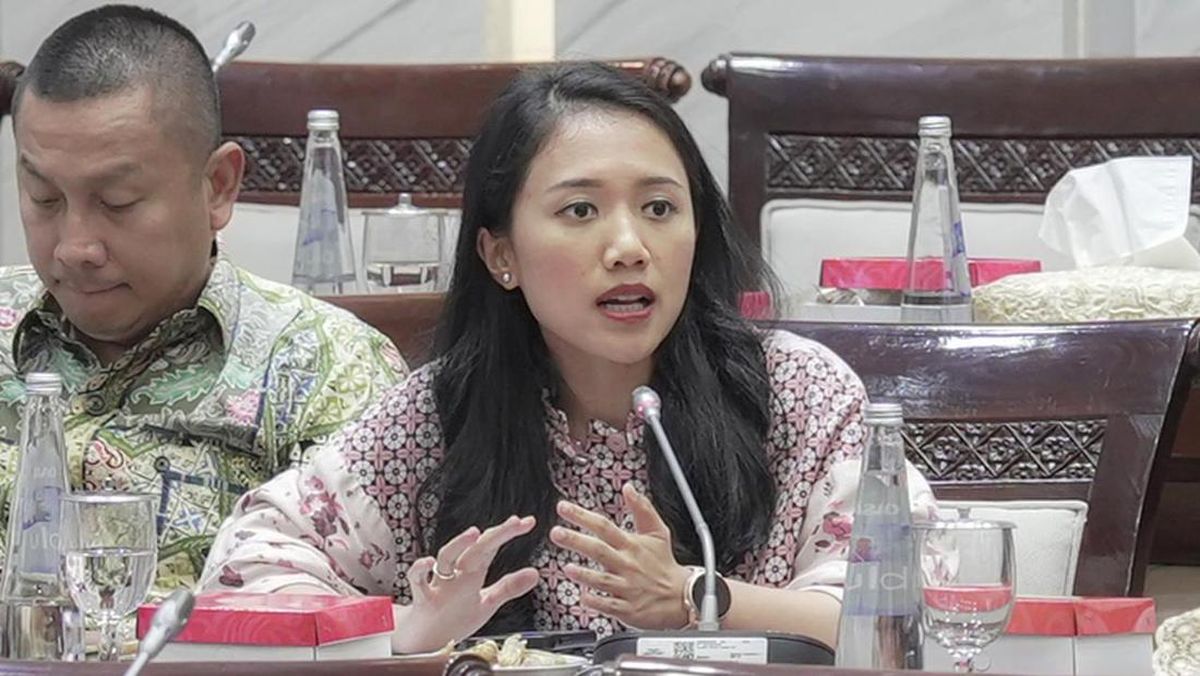
Puteri Komarudin, a member of Commission XI of the Indonesian House of Representatives from the Golkar Party, urged the Deposit Insurance Corporation (LPS) to strengthen coordination with other financial authorities in an effort to develop an AI-based IT system at the Bank Perkreditan Rakyat (BPR) to manage data and enable real-time early detection of banking risks.
The push was disclosed at the Working Meeting (Raker) of Commission XI of the DPR-RI with the Chair of the LPS Board of Commissioners in Jakarta on Tuesday, 19 May.
‘In our view, these plans are very important to clarify the coordination. Because the BPR ecosystem involves not only LPS, but also its main supervisor, the Financial Services Authority (OJK). Moreover, from various visits to the regions related to this issue, there is still confusion about the information system between the powers vested in OJK and LPS,’ Puteri said.
Puteri noted that the ex-officio members of the LPS Board of Commissioners from other authorities, such as OJK, Bank Indonesia, and the Ministry of Finance, could be optimised to strengthen inter-agency coordination. ‘For example, the coordination to resolve the Government Regulation Draft (RPP) on the Programme Penjaminan Polis — which to date remains unfinished due to dynamics in its formation — means there needs to be stronger inter-agency coordination, particularly between LPS and the government. This way, what is mandated in the Financial Sector Development and Strengthening Act (PPSK) can have its technical regulations completed,’ she said.
Furthermore, Puteri expressed support for strengthening LPS’s institutional capacity to carry out the risk minimiser function and the additional mandate as organiser of the Insurance Policy Guarantee Programme in line with the PPSK Act.
‘If we look at benchmarks in other countries, such as South Korea and Malaysia, the risk minimiser and early intervention functions appear more definite and explicit in their organisational structures. In our view this is highly important and could serve as a reference for strengthening LPS’s institutions going forward,’ she added.
In response to Puteri’s request, Farid Azhar Nasution, Deputy Chair of the LPS Board of Commissioners, said LPS would coordinate with other regulators and with relevant associations. ‘We will certainly continue to coordinate with OJK, and of course with BPR associations, so that we do not mis-timely design the system and its use will be optimised. In the initial stage, we will first select 100 BPRs that are truly suitable and integrated into the system,’ he concluded.
At the raker, Commission XI of the DPR-RI, together with the Chair of the LPS Board of Commissioners, agreed to strengthen the coordination function within the remit of the Board, including for ex officio members. Ex officio members will, going forward, strengthen coordination, policy harmonisation, as well as data and information exchange.