
LPS Chief: Windfall Tax as Burden-Sharing Instrument to Safeguard Indonesia's Economy
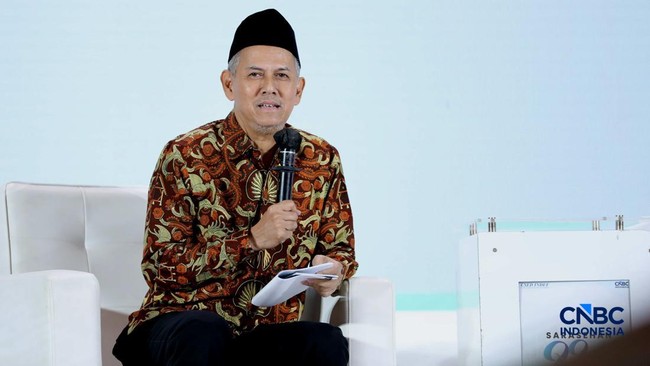
Jakarta, CNBC Indonesia - The windfall tax on commodity natural resources is currently in the spotlight amid global turbulence. This policy, which taxes unexpected profits, is seen as a strategic solution to ensure a fairer distribution of benefits while safeguarding national fiscal stability.
The tax aims to reduce economic inequality and boost state revenues. It works by setting a threshold for profits deemed unexpected; companies exceeding this face taxation.
This tax is typically imposed on firms earning substantial short-term gains, such as oil and gas companies benefiting from rising oil prices. Windfall profits could be ramped up again in Indonesia amid fiscal challenges from increasing global uncertainty.
Anggito Abimanyu, Chairman of the LPS Board of Commissioners, views the phenomenon of commodity price surges as nothing new in global economic history. In 2008, world oil prices soared above $100 per barrel, significantly impacting revenues for energy-producing countries, including Indonesia.
“Thanks to the oil price rise in 2008, our state revenues even exceeded targets by 10 percent,” he explained during an online public seminar via Zoom titled “Natural Resource Tax Reform: Windfall Tax Policy for Indonesia,” quoted on Friday (24/4/2026).
According to this former deputy finance minister, such moments should be leveraged through adaptive fiscal policies. Anggito cited Mexico’s 2009 experience, where it secured state revenues through massive oil hedging strategies.
“Windfall tax is not a new idea. Mexico successfully managed oil price risks through hedging strategies using instruments like put options,” he stated.
Furthermore, he explained that Indonesia, along with other developing countries like Algeria, Nigeria, Kazakhstan, and Brazil, is enjoying windfall profits from surges in commodities such as coal, nickel, and CPO. However, without appropriate policies, this potential will not optimally benefit the national economy.
“Windfall tax can serve as a burden-sharing instrument to maintain economic stability, especially when the burden of energy subsidies increases,” he stressed.
He also highlighted the importance of learning from the 2008 state budget experience and current conditions, where state revenue structures are still dominated by the natural resources sector.
“We need a strong legal framework to respond to market dynamics in a targeted manner and design a more resilient economy moving forward,” he added.
Previously, the House of Representatives’ Commission XI urged the government to begin implementing a windfall tax scheme amid the significant potential for rising prices of Indonesia’s key export commodities in the global market, due to the effects of the Iran-US and Israel war in the Middle East.
Commission XI Chairman Mukhamad Misbakhun said the war not only drives up global crude oil prices—one of Indonesia’s main import commodities—but also key Indonesian exports like crude palm oil (CPO), nickel, coal, aluminium, copper, gold, coffee, and rubber.
“Of course, we can prepare the government for a windfall tax scheme,” Misbakhun said on the Squawk Box CNBC Indonesia programme on Tuesday (7/4/2026).
Misbakhun stated that the windfall tax scheme to tax exporters’ windfall profits from commodities is important as a support for state revenues from the tax side.
This is particularly because current state revenue needs are higher to compensate for spending pressures from energy subsidies, as subsidised fuels like Pertalite are kept from rising despite soaring global crude oil prices to protect people’s purchasing power.
“Of course, this must be discussed with business associations, sectorally, partially, that at certain price levels, when it’s called windfall and then taxed at what percent. This also creates potential beyond the normal,” Misbakhun explained.
Through the windfall tax policy scheme, the Finance Ministry, he said, will have room to keep the state budget deficit within safe limits under the State Finance Law, namely 3% of gross domestic product (GDP). He said the budget deficit would only rise by 0.2 percentage points, from the current year’s target of 2.68% to 2.88%.
“Well, this will certainly provide strengthening to state revenues that can offset the impact of fuel price rises, and we cover it from revenues from sectors experiencing price surges, which we usually call windfall,” Misbakhun elaborated.
Source: jawawa.id (https://jawawa.id/newsitem/lps-chief-windfall-tax-as-burden-sharing-instrument-to-safeguard-indonesias-economy-1777006320)
Originally published by CNBC Indonesia (https://www.cnbcindonesia.com/news/20260424074703-4-729438/bos-lps-windfall-tax-instrumen-burden-sharing-buat-jaga-ekonomi-ri), translated from Indonesian