
LPPOM Targets Strengthening of Halal Product Supply Chain from Raw Material Stores
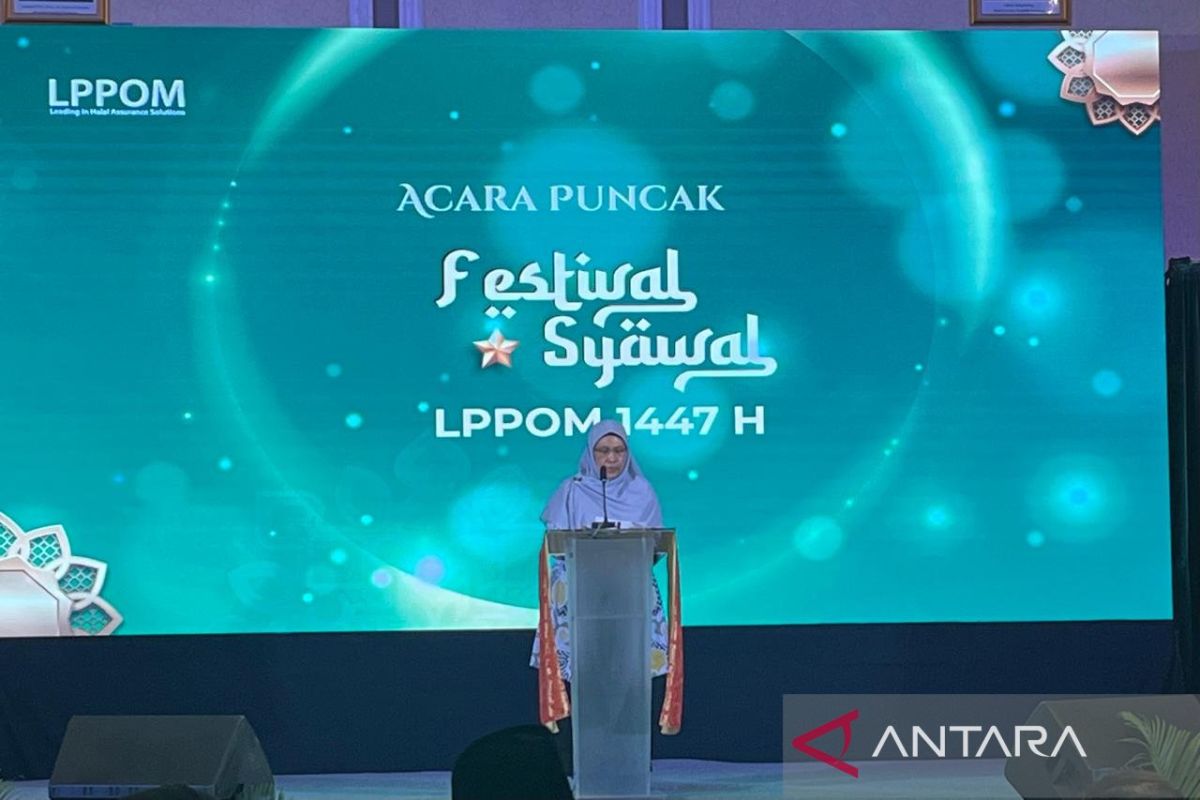
Jakarta (ANTARA) - The Director General of the Food, Drug, and Cosmetics Assessment Agency (LPPOM), Muti Arintawati, has stressed the importance of strengthening the halal supply chain from upstream, particularly from certified halal raw material stores, to build a complete halal ecosystem.
“This is the tangible manifestation of our commitment to continue supporting micro, small, and medium enterprises (UMKM) as the backbone of the national economy. For us, empowering UMKM is not just about providing halal certification sources, but equipping business actors to level up,” said Muti Arintawati at the Syawal Festival 2026 Peak in Jakarta on Thursday.
Therefore, said Muti, the theme of this year’s Syawal Festival 1447 Hijriah, namely Halal Raw Material Stores: The Initial Step Towards Resilient UMKM, was chosen to highlight the importance of the halal ecosystem from upstream.
“One of the main obstacles is the difficulty in obtaining raw materials that are truly guaranteed halal,” said Muti.
Muti gave the example that meatball sellers often face doubts when buying meat at traditional markets, regarding whether the slaughtering process complies with Islamic law. A similar issue occurs with bulk spices without clear labels on their halal status.
In addition, cake and bread business actors also face difficulties in obtaining ingredients from stores that can guarantee the halal status of products, especially those repackaged in small sizes.
According to her, this situation indicates that the existence of certified halal raw material stores, especially at the micro and small levels, remains a broken link in the national halal ecosystem.
“However, raw material stores play a crucial role in ensuring product halal status from upstream. We cannot just promote certification downstream without strengthening upstream,” she said.
Muti emphasised that the halal certification obligation applies not only to products but also to services, including the sales sector. This is regulated in Government Regulation No. 42 of 2024, which covers the entire halal supply chain.
In addition, Minister of Religious Affairs Decision No. 718 of 2021 confirms that retail businesses, both in modern and traditional markets, are included in the category that must be halal certified.
“This means that raw material stores have a crucial role in ensuring halal products from upstream. This is what underpins this year’s halal festival theme,” said Muti.
Through this year’s festival theme, LPPOM seeks to encourage halal certification for raw material stores as a concrete step to reconnect the broken supply chain. This effort is expected to facilitate the certification process for UMKM while ensuring the continuity of product halal guarantees.
“This is our hope, that the halal certification process becomes easier for UMKM and the continuity of halal guarantees can be established,” she said.
The Syawal Festival has been held since the month of Ramadan. Various activities, such as facilitating free halal certificates, facilitating raw material store business actors, webinars on mandatory halal, to providing basic food packages for the community.