
LPPOM encourages halal certification to be viewed as a business development tool
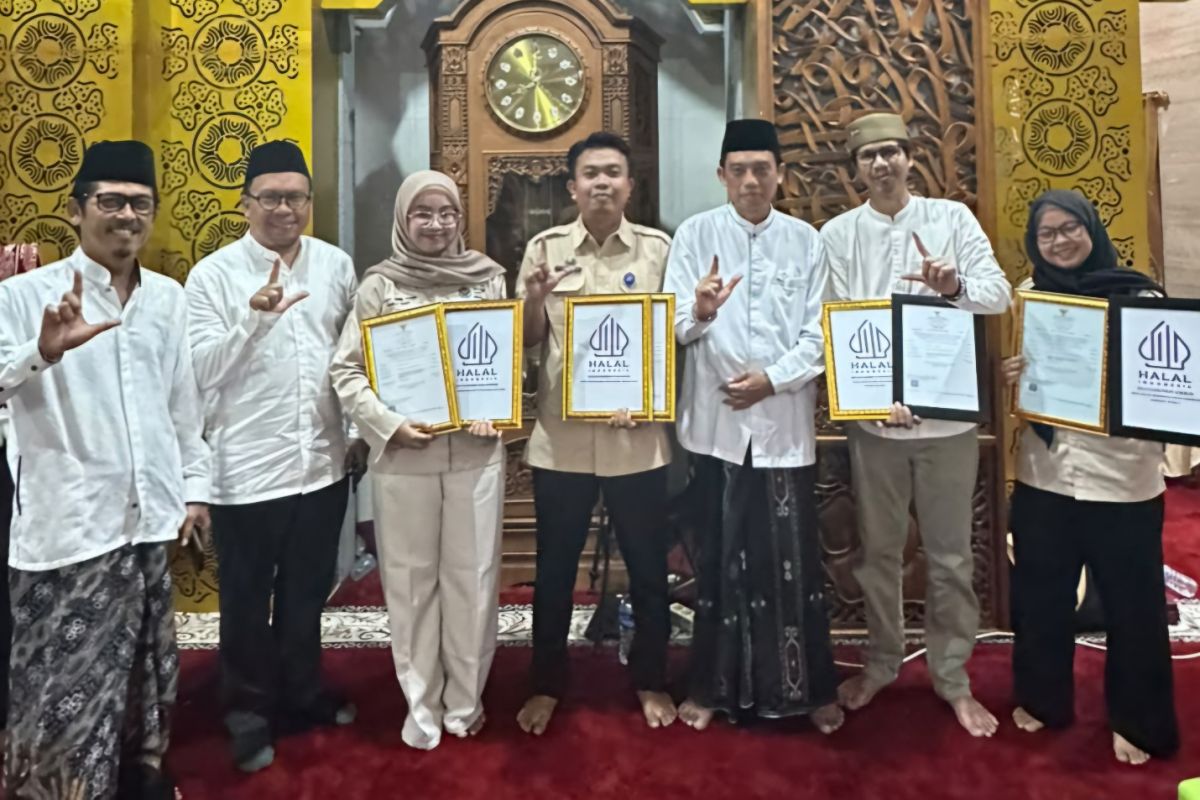
Jakarta (ANTARA) - The President Director of the Institute for Food, Drugs, and Cosmetics Research of the Indonesian Ulema Council (LPPOM MUI), Muti Arlamawati, stated that halal certification should be viewed not only as a fulfilment of an obligation but also as part of business development efforts.
“We want halal certification not to stop at merely fulfilling an obligation. Halal certification also needs to be seen as part of an effort to strengthen competitiveness and open opportunities for business expansion,” Muti said in her statement on Thursday.
According to her, strengthening the halal ecosystem requires cross-sector involvement, including local governments, banking, State-Owned Enterprises (SOEs), corporations, associations, universities, and other strategic partners.
Such collaboration is necessary to expand business actors’ access to financing, capacity building, business networks, and market opportunities, as the implementation of the October 2026 Halal Mandate approaches.
Starting 17 October 2026, several types of products and consumer goods will enter the mandatory halal certification stage in accordance with statutory regulations.
In Bengkulu Province, LPPOM is strengthening collaboration with the government and various halal stakeholders to encourage business readiness for the implementation of this mandate.
This strengthening of collaboration is being carried out through the National Movement for the Implementation of the October 2026 Halal Mandate, which was launched in Bengkulu Province on Thursday (1/10) at the Baitul Izzah Grand Mosque, Bengkulu.
The event, which is a collaboration between the Bengkulu Provincial Government, the Central MUI, and the Bengkulu Provincial MUI, was attended by approximately 2,000 participants, including representatives from provincial and regency/city governments, Islamic community organisations, religious leaders, and the general public.
During the event, halal certificates were also symbolically presented to five business actors whose halal inspection processes were handled by LPPOM Bengkulu Province.
The Director of LPPOM Bengkulu Province, Dr. H. Abdul Qohar, MHI, stated that the implementation of the October 2026 Halal Mandate requires collective action from various parties.
“The implementation of the October 2026 Halal Mandate requires collaboration from various parties. LPPOM Bengkulu is ready to contribute through education, assistance, and halal inspection services so that more business actors understand and are able to meet halal product assurance requirements,” said Abdul Qorhar.
He added that expanding networks with local governments, the business world, universities, financial institutions, associations, and other stakeholders is expected to broaden business actors’ access to information and assistance regarding halal certification.
The strengthening of these networks coincides with the institutional strengthening of LPPOM Bengkulu Province. The management for the 2025–2030 period was officially inaugurated on Tuesday (29/9) at the MUI Secretariat of Bengkulu City by the President Director of LPPOM, Muti Arintawati.
The management team consists of Abdul Qohar as Director of LPPOM Bengkulu Province, Dr. Ahmad Walid, M.Pd as Deputy Director for General Affairs and HR, and Junaidi, SE as Deputy Director for Finance.
The inauguration was also attended by the General Chairman of MUI Bengkulu City, Prof. Dr. H. Zulkarnain Dali, M.Pd.