
LPI: Kaesang's Figure Strengthens PSI's Image as a Youth Party
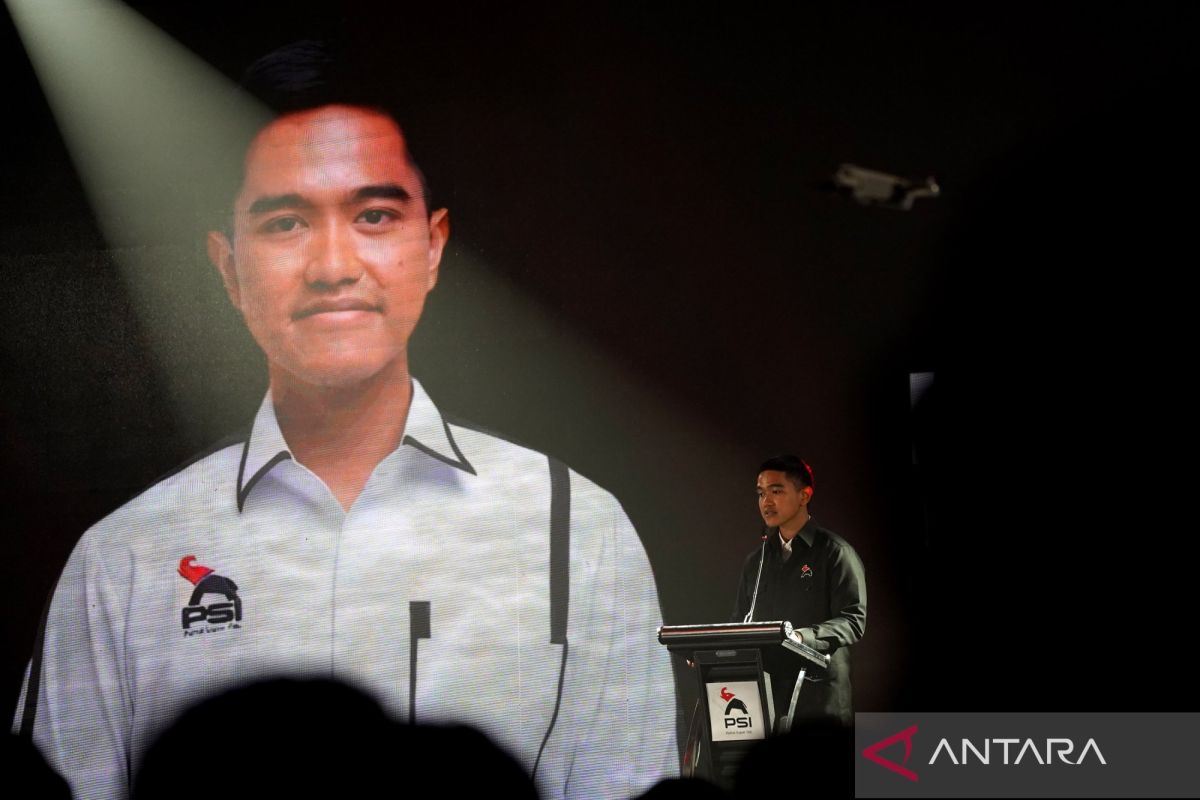
The Indonesian Voters Institute (LPI) has released survey results indicating that the figure of Indonesian Solidarity Party (PSI) Chairman Kaesang Pangarep strengthens the party’s image as a youth party. LPI Director of Research and Political Policy Fernando Emas stated that the main reason respondents favour Kaesang is not solely his status as the son of Indonesia’s 7th President Joko Widodo, but because he is seen as representing the younger generation. “The figure of Kaesang is considered capable of broadening public recognition of PSI and bringing a spirit of renewal,” Fernando said in a statement received in Jakarta on Saturday.
He explained that the survey results showed 69.7 percent of respondents assessed that Kaesang’s leadership could strengthen PSI’s image as a party close to Jokowi, and 68.2 percent acknowledged that their interest in PSI was influenced by Kaesang’s figure. The survey also found that Kaesang’s appeal to PSI stems from his image as a representation of the younger generation. A total of 72 percent stated that Kaesang is considered to represent the younger generation, which was the most chosen reason by respondents. Additionally, around 65 percent of respondents assessed that Kaesang would make PSI better known to the public, while 61 percent believed Kaesang brings a spirit of renewal to politics.
According to Fernando, this finding is interesting because it shows that Kaesang’s appeal has its own selling point, independent of his father’s shadow. “However, these two things, both the Jokowi factor and the Kaesang factor, ultimately reinforce each other in shaping PSI’s image as a youth party associated as Jokowi’s political representation,” he said. He added that Jokowi’s figure also has a significant influence on the image and level of public trust in PSI. From the LPI survey findings, an image transfer occurs between Jokowi and PSI, which is rumoured to be his future party as chairman of the advisory board. The survey results show that an average of 70.2 percent of the public believes PSI’s closeness to Jokowi can enhance the positive impression of the party.
He argued that this positive image will ultimately not only associate the figure with PSI but also other attributions or identities emerging from respondents’ views or assessments. This includes public perception of Jokowi as a man of the people and his unique and distinctive leadership style. The survey shows an average of 64.9 percent of the public considers PSI to be a party of the people, just like Jokowi. However, behind this relatively positive image, Fernando said the LPI survey also found a contrasting fact regarding electability. When respondents were asked which party they would choose if elections were held today, PSI only garnered 1.9 percent of the national vote in the survey. Furthermore, PSI was found to be below the United Development Party (PPP) at 2.8 percent and narrowly ahead of the Perindo Party at 1 percent. “In other words, it is still below the parliamentary threshold of 4 percent of the national vote,” Fernando explained.
From the respondents’ views, it appears that five major parties still dominate the national electoral map: Gerindra at 21.9 percent; PDI Perjuangan at 19 percent; Golkar at 8.1 percent; the National Awakening Party (PKB) at 7.9 percent; and the Prosperous Justice Party (PKS) at 4.7 percent. Fernando assessed this finding as interesting yet a paradox that PSI must examine further. He conveyed that loyalty to Jokowi remains strong, but it is not yet sufficient to drive the public to truly switch their choice to PSI in significant numbers. This means, he said, that the image capital from Jokowi’s figure needs to be quickly converted into concrete work programmes and political substance directly felt by the public. “If not, the popularity accompanying Jokowi’s name risks remaining only a surface image without ever truly turning into votes at the ballot box,” he stated.
The survey, titled ‘The Influence of Jokowi’s Figure on PSI’s Image in the Public View’, was conducted online across 32 provinces from 10 to 17 June 2026 with 1,922 respondents. The sample was taken using a multistage random sampling method with a stratified quota sampling technique based on region, gender, age group, and education to ensure the sample composition closely matches the population characteristics. The survey population comprised all Indonesian citizens aged 17 years and above or those who already have voting rights, in both urban and rural areas. The sample size of 1,922 respondents has a margin of error of ±2.54 percent at a 95 percent confidence level.