
LPG Imports Reach 84 Percent, Indonesia's Energy Resilience Becomes Increasingly Fragile
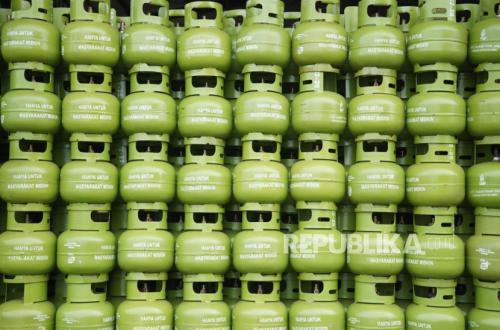
Indonesia’s dependence on liquefied petroleum gas (LPG) imports is increasingly concerning. The Ministry of Energy and Mineral Resources (ESDM) records that the share of LPG imports has even surpassed 80 percent of total national needs.
Secretary of the Directorate General of Oil and Gas (Ditjen Migas) of the Ministry of ESDM, Maompang Harahap, revealed that in 2025, LPG imports reached 80.58 percent of needs, increasing to 83.97 percent in 2026 up to February.
“Domestic production is still far below needs, so imported LPG continues to dominate the national supply,” said Maompang during a hearing with Commission VII of the House of Representatives (DPR RI) on Wednesday (8/4/2026).
National LPG needs were recorded at 25,000 metric tons per day in 2025, increasing to 26,000 metric tons per day in 2026 up to February.
With an import share approaching 84 percent, it means that most of Indonesia’s LPG needs still rely on foreign supplies.
Based on the Ditjen Migas presentation, domestic LPG production is still far behind needs. In recent years, domestic production has only been around 1.9 million metric tons (MT) per year, while needs have exceeded 9 million MT.
This gap makes imports the main pillar of household energy supply, especially for the 3-kilogram subsidised LPG. This condition also shows that increases in domestic production have not been able to keep up with the pace of rising consumption growth.
Not only high, Indonesia’s LPG import structure is also becoming increasingly concentrated. In 2025, around 70.07 percent of LPG imports came from the United States, followed by the United Arab Emirates (11.88 percent) and Qatar (11.84 percent).
Meanwhile, in 2026 up to early April, the dominance of the United States remains very strong at 68.91 percent, followed by the United Arab Emirates (11.83 percent), Saudi Arabia (7.36 percent), and Qatar (5.21 percent). This means that almost seven out of every ten tons of Indonesia’s LPG imports depend on one country.
This structure indicates that diversification of import sources is still limited, although the government has begun opening supplies from Australia and China in small portions. High dependence on imports and concentrated supply increase risks to national energy resilience.
Geopolitical disruptions, changes in exporting countries’ policies, to fluctuations in global energy prices can directly impact domestic LPG supply and prices.
ESDM also highlights the potential for disruptions in global distribution routes, including strategic areas like the Strait of Hormuz, which has long been a main route for world energy trade.
In this condition, Indonesia’s energy resilience becomes highly sensitive to external dynamics. The high LPG imports also impact the state finances. As a subsidised commodity, LPG is one of the major expenditure items in the state budget (APBN).
With consumption continuing to increase and high import dependence, the risk of subsidy swelling is even greater, especially when global energy prices rise or the rupiah exchange rate weakens. This condition places the APBN in a vulnerable position against external pressures that are difficult to control.
With import dependence that has surpassed more than 80 percent, the LPG sector becomes one of the weakest points in national energy resilience.
In addition to stagnant domestic production, concentrated import structure and high subsidy burden increase long-term risks.
Without significant steps to increase domestic production or control consumption, dependence on LPG imports is expected to continue and even deepen.
Source: jawawa.id (https://jawawa.id/newsitem/lpg-imports-reach-84-percent-indonesias-energy-resilience-becomes-increasingly-fragile-1775649163)
Originally published by Republika (https://ekonomi.republika.co.id/berita/td6a1f522/impor-lpg-tembus-84-persen-ketahanan-energi-ri-makin-rapuh), translated from Indonesian