
LPEM FEB UI Identifies Four Barriers Stalling Women-Owned Businesses in Indonesia
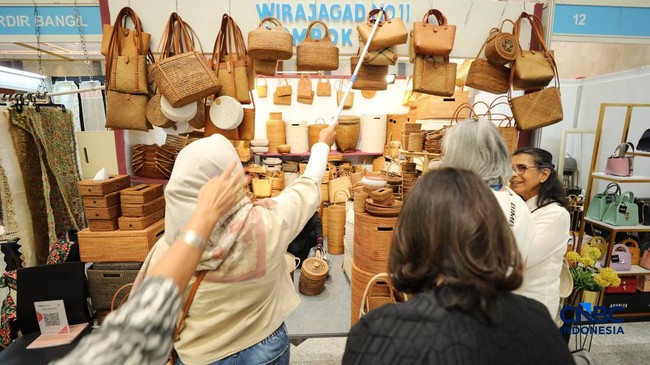
The Institute for Economic and Social Research at the Faculty of Economics and Business, University of Indonesia (LPEM FEB UI), has identified a series of obstacles that make it difficult for women-owned businesses to grow in Indonesia.
These four barriers are behind the concentration of women-owned businesses in the informal sector, which accounts for 50.88%, compared with 49.12% for businesses owned by men, particularly among micro and small industries.
Data from Statistics Indonesia’s (BPS) Micro and Small Industry Survey, used by the LPEM FEB UI economists, also show that women own just 28.03% of formal micro and small industries, compared with 71.97% owned by men.
“Data also show that only 15% of companies currently owned by women are growth-oriented,” according to the LPEM FEB UI report, entitled MSMEs for Inclusive Growth in Indonesia: Integrating Into Supply Chains, Expanding Financing, and Strengthening Gender Sustainability, cited on Monday (12 October 2026).
The LPEM FEB UI economists’ research identified at least four issues that hinder the development of women-owned businesses.
First, restrictive social norms. In some areas, women’s participation in economic activity is still considered incompatible with traditional roles or prevailing norms. This view limits their opportunities to engage fully in entrepreneurship.
“Women entrepreneurs often have to adapt to the social values of the communities where they live. Social acceptance is one factor influencing their decisions,” the LPEM FEB UI economists said in the report.
Second, bias in access to finance. Women-owned MSMEs are generally small in scale and therefore less attractive to formal financial institutions. Married women may also face restrictions on economic decision-making, particularly when using jointly owned property as loan collateral, which requires a spouse’s consent. Their control is further limited when their husbands dominate decisions. Meanwhile, a lack of gender-disaggregated data on MSMEs makes it difficult for the government to design and evaluate well-targeted policies.
Third, women face a greater administrative burden when registering businesses because their time is constrained by childcare and unpaid domestic work. Divorced women may also find it difficult to access or update civil registration documents, making it harder to prove their identity and asset ownership. These obstacles complicate formalisation and leave many women running businesses in the informal sector.
Fourth, bias in business growth and scaling. Women-owned MSMEs with growth potential still face limited access to formal supply chains, product certification, digital marketing and export opportunities. These barriers are compounded by limited access to market information, professional networks and trade-support services.
Based on these findings, LPEM FEB UI put forward several recommendations to address barriers facing women-owned businesses:
Strengthen gender-disaggregated MSME data. Such data are needed to evaluate programmes and design better-targeted policies that reflect local and sectoral conditions.
Tailor financing to women’s needs. Financial institutions should offer more inclusive credit schemes for women-owned MSMEs, particularly those without collateral or formal business registration. Financing should also come with simpler requirements, financial literacy training and business mentoring.
Simplify business formalisation and provide incentives. Community-based assistance and mobile services are also needed to help women with limited time or digital skills. Incentives such as tax relief, easier access to finance and wider market opportunities could encourage women to register their businesses.
Source: jawawa.id (https://jawawa.id/newsitem/lpem-feb-ui-identifies-four-barriers-stalling-women-owned-businesses-in-indonesia-1791805867)
Originally published by CNBC Indonesia (https://www.cnbcindonesia.com/news/20261012155956-4-775418/lpem-feb-ui-ungkap-4-hambatan-yang-bikin-bisnis-perempuan-ri-mandek), translated from Indonesian