
LPDP Alumni Controversy Over 'Proud of Foreign-National Child' Attributed to Lack of Obligation to Indonesia
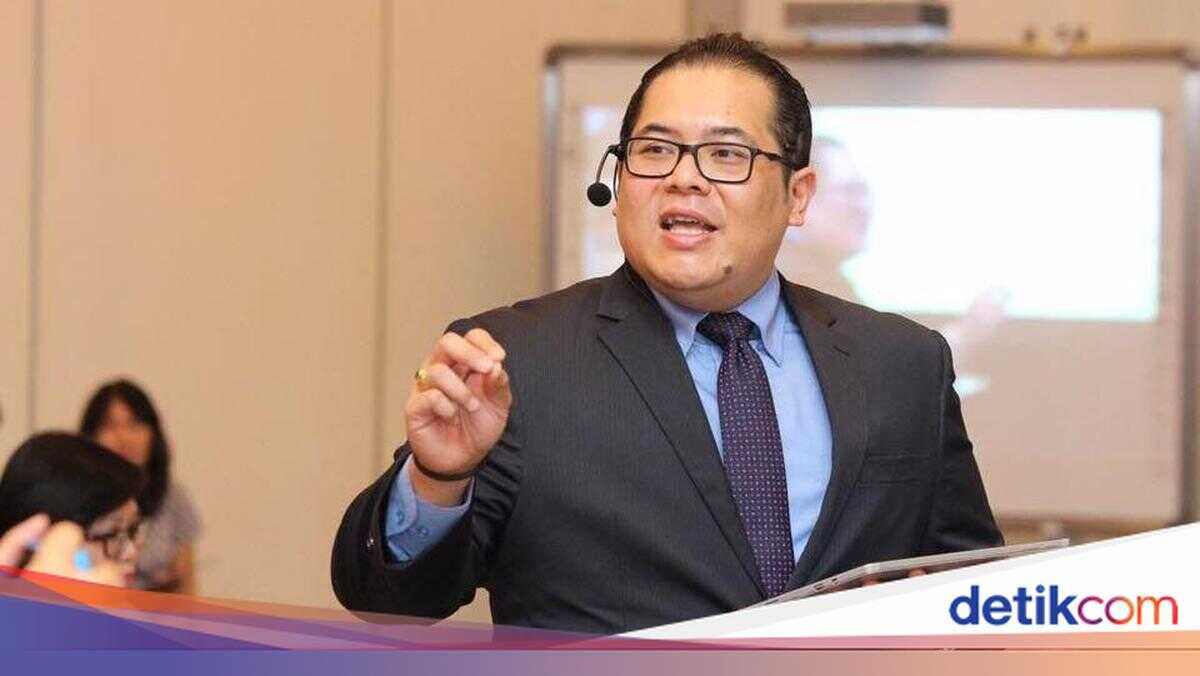
Indra Charismiadji, Executive Director of the Centre for Education Regulations and Development Analysis (Cerdas), has weighed in on the case of a woman identified as DS, whose social media post declaring “It’s enough that I’m an Indonesian citizen — my children need not be” has sparked widespread controversy. According to Indra, many LPDP scholarship awardees do not feel indebted to the state.
Indra said the LPDP scholarship programme gives the impression of simply handing out awards without clear binding obligations, ultimately producing cases like DS, who feels no responsibility towards the country.
“This is what happens in the end: someone receives an LPDP scholarship, but deep down feels no responsibility to the nation, because they don’t feel indebted to the country,” Indra said on Sunday (22/2/2026).
“The selection process is also insufficiently rigorous. It doesn’t prioritise those who genuinely want to build Indonesia and fight for Indonesia,” he added.
He noted that the phenomenon of LPDP recipients not returning to Indonesia, as in the DS case, has been occurring for a long time. According to Indra, scholarship recipients prefer to work abroad because there are no jobs available for them in Indonesia.
“This issue has actually been going on for a long time. Thirty years ago, when I was studying in the United States, there were already many Indonesian students who received state scholarships but chose not to return. At my university, there was even someone selling gado-gado in America, because over there you could earn USD 5,000–6,000 a month,” Indra said.
He therefore offered recommendations for improving the scholarship system. The government must bind scholarship recipients by preparing employment positions for them upon their return.
“Compare this with scholarship models abroad. Recipients are never simply left to their own devices. Their careers are already mapped out. Under the current system, if I were given an LPDP scholarship to study business, even though I’ve signed a contract to return, if I see better opportunities abroad, I could still choose to stay overseas,” he said.
Indra noted that this system is already practised in other countries, citing scholarship mechanisms in Malaysia and South Korea as examples.
“This isn’t even difficult. Other countries already apply such models. When I was studying, my friends from Malaysia and South Korea had clear arrangements. They already knew where they would work, because their expertise was genuinely needed. It wasn’t arbitrary. Here, what matters is simply having a degree,” he said.
LPDP’s Statement
LPDP scholarship recipient DS sparked the controversy after declaring “It’s enough that I’m an Indonesian citizen — my children need not be.” She is currently residing in the United Kingdom and posted about her child receiving a passport from the British Government.
LPDP expressed regret over the controversy, saying DS’s actions did not reflect the values of integrity expected of recipients.
“LPDP regrets the social media controversy triggered by the actions of one of its alumni, DS. Her actions do not reflect the values of integrity, ethics, and professionalism that LPDP instils in all scholarship recipients,” the agency stated.
Meanwhile, her husband, who is also an LPDP awardee, is suspected of not having completed his service contribution. The couple are known to be residing in the United Kingdom.
“In accordance with regulations, all LPDP awardees and alumni are obligated to undertake a period of service contributing to Indonesia for a duration of twice the length of their study plus one year,” LPDP said.
“In the case of DS, who studied for two years, the contribution obligation is five years,” it added.
LPDP confirmed that DS is no longer bound to the agency, having completed her studies in August 2017.
“DS completed her master’s degree and graduated on 31 August 2017, and has fulfilled her entire service obligation in accordance with regulations. Accordingly, LPDP no longer has any legal ties with her,” the agency said.
“Nevertheless, LPDP will continue to communicate with DS to urge her to exercise greater prudence in her use of social media, to be mindful of public sensitivities, and to remind her that LPDP scholarship recipients have a national duty to serve their country,” it added.