
LPDB Strengthens Cooperative Role Through Revolving Fund Distribution and Mentoring
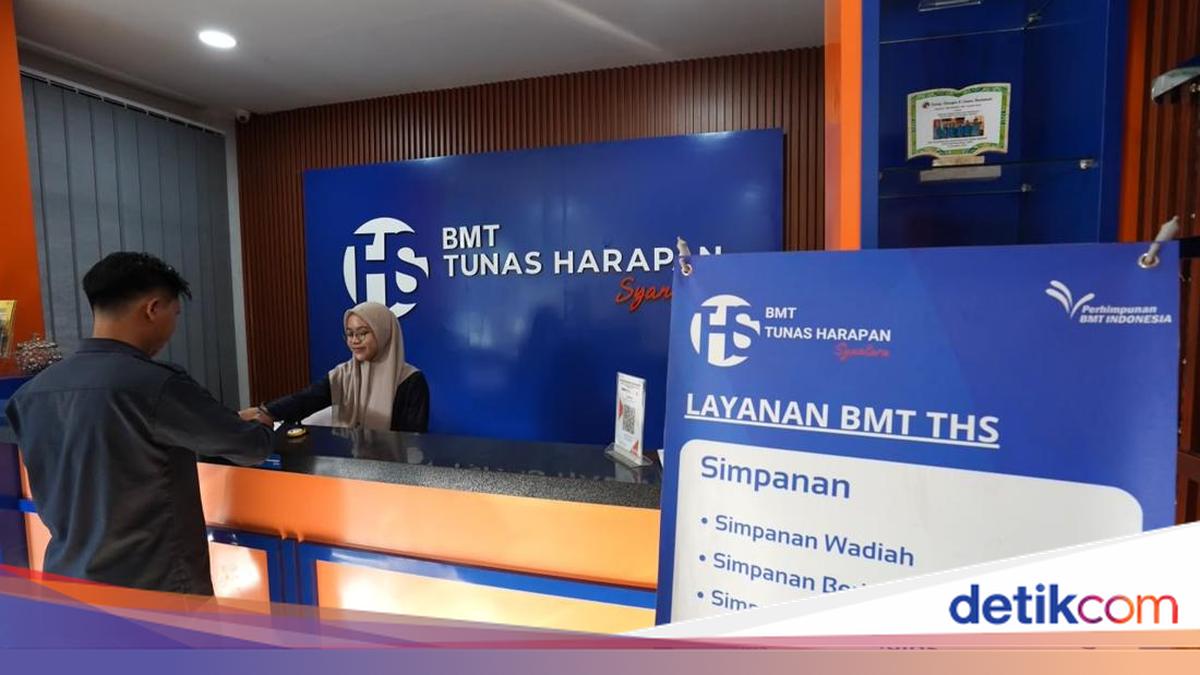
The Revolving Fund Management Institution (LPDB) for Cooperatives has fostered a sustainable business ecosystem, as demonstrated by the Sharia Savings and Loans and Financing Cooperative (KSPPS) BMT Tunas Harapan Syantara (THS) in East Lombok Regency, West Nusa Tenggara. Supported by LPDB financing and mentoring, BMT THS has not only expanded financing access for its members but also built a sharia-based business ecosystem connecting fish farmers, feed distributors, collectors, and market access within a mutually reinforcing business chain.
LPDB Cooperatives President Director Krisdianto said the success of BMT Tunas Harapan Syantara shows that revolving funds will have a far greater impact when managed by cooperatives with sound governance, that build member business ecosystems, and continue to innovate in service delivery. “The success of BMT Tunas Harapan Syantara shows that revolving funds will have a far greater impact when managed by cooperatives with good governance, that build their members’ business ecosystems, and continue to innovate. For LPDB Cooperatives, financing is only the entry point. What is far more important is how the cooperative grows, its members become more empowered, their businesses develop, and economic benefits can be felt widely by the community,” Krisdianto said in a written statement on Tuesday (25/8/2026).
According to Krisdianto, LPDB Cooperatives is present not only as a financing institution but also as a strategic partner for cooperatives through institutional mentoring, governance strengthening, business monitoring, and capacity building for management so that cooperatives can grow healthily and sustainably. “We want every LPDB partner cooperative to grow not only in terms of assets and financing distribution but also to become a centre for community economic empowerment. When a cooperative is able to build a business ecosystem like BMT Tunas Harapan Syantara has done, the benefits of revolving funds will multiply. Members gain access to financing, business certainty, mentoring, and market expansion. This is the great goal we want to continue promoting through LPDB Cooperatives revolving funds,” he said.
Meanwhile, KSPPS BMT Tunas Harapan Syantara Management Chairperson Sarni explained that the cooperative, established in 2013, has now developed into a modern sharia cooperative focused on sharia savings and loans and financing services. Various productive business units previously under the cooperative were separated into separate business entities so that the cooperative could focus on its financial intermediation function without reducing the business sustainability of its members. According to Sarni, this step became the foundation for the birth of a closed-loop ecosystem business model that is now the cooperative’s main strength.
Through this model, the cooperative not only provides financing to fish farmers but also to feed distributors, collectors, and other business actors within a single business chain. All these business actors become cooperative members, creating a mutually reinforcing economic cycle. Currently, around 300 fish farmers are part of this ecosystem with the support of about 10 collectors who mentor dozens of farmers. Some of the members’ production has even supplied the kitchen needs of the Free Nutritious Meals Programme (MBG).
“For farmers, they no longer struggle to find capital, buy feed, or sell their harvest. Everything is connected in one system,” Sarni said. The ecosystem built by the cooperative does not stop at the economic aspect. When the community faced water distribution problems, the cooperative helped initiate the Hamlet Drinking Water Management (PAMDUS), which now supplies water for fish farming areas. As a sharia cooperative, BMT THS also develops the Baitul Maal function through the management of zakat, infaq, alms, and various education and community empowerment programmes.
Sarni revealed that the partnership with LPDB Cooperatives has been one of the important factors accelerating the cooperative’s growth. “We are actually not just looking for a source of funds. What we are looking for is the mentoring. That is what we find very valuable,” she said. According to her, the mentoring provided by LPDB Cooperatives has increased public trust in the cooperative. The impact is visible in increased member savings, growth in cooperative assets from around Rp10 billion to Rp18 billion, and the expanding business network built together with members.
Young Generation Cooperative
The cooperative’s transformation is also supported by the younger generation. The majority of BMT THS management and staff come from millennials and Generation Z who are actively developing digital innovations through the My Collector and THS Mobile applications, making services to members faster, more transparent, and more efficient. The benefits of LPDB Cooperatives revolving fund financing are directly felt by members.
Meanwhile, BMT THS member fish farmer Mahrip said cooperative financing provides capital certainty tailored to the fish farming business cycle. “For fish farmers, the most important thing is fast capital and repayments that match the harvest season. At BMT THS we are helped with financing according to business needs. The instalments also follow our business cycle, so they are not burdensome,” Mahrip said. According to him, the cooperative’s presence means farmers no longer struggle to obtain capital to buy fingerlings or feed. In addition, the harvest now has a clear market through the business network built by the cooperative.
“It is not only capital that we get, but our business is also more secure because the harvest already has a buyer,” he said. A similar testimonial was shared by Murdini, a BMT THS member who works as a fish collector. He used cooperative financing to buy an operational vehicle that is now the main support for distributing seafood to various traditional markets in Lombok. “I once tried applying to a bank, but I had not yet…”