
LPDB Koperasi Helps Lurik Prasojo Klaten Move Up to the Global Market
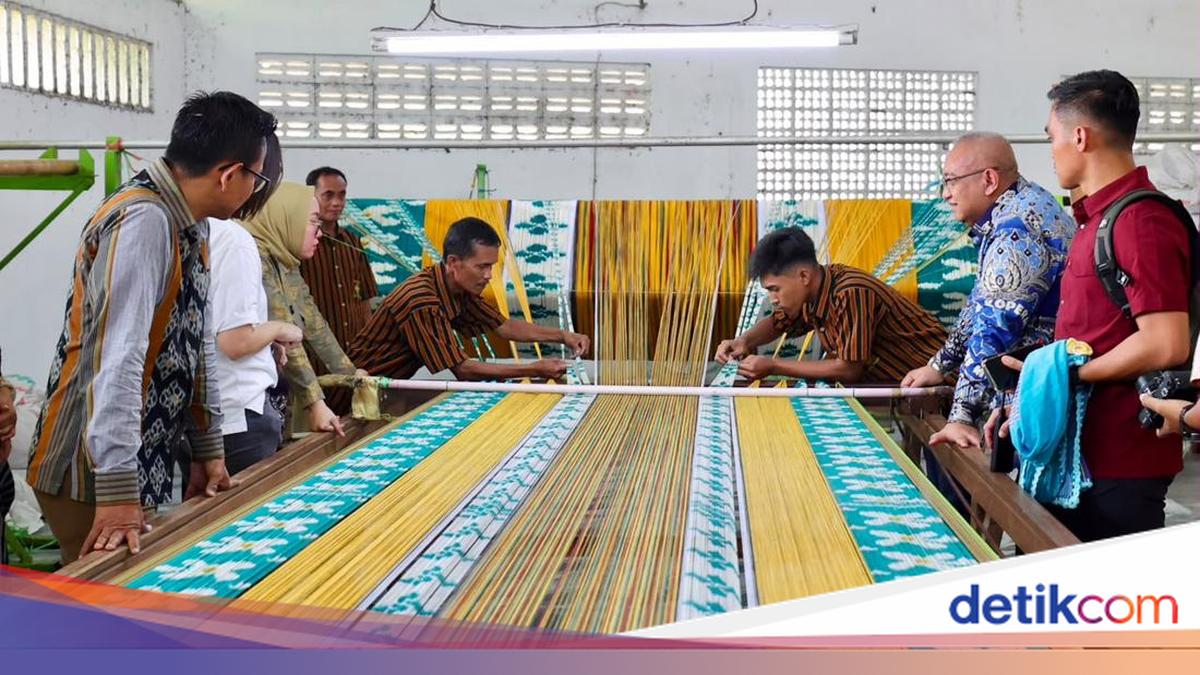
Lurik fabric is not merely a cultural heritage. In the hands of cooperatives, this distinctive Klaten textile has the opportunity to develop into an economic force capable of reaching wider markets, even overseas.
This opportunity is evident in the development of the Karyama Kusuma Aji Tera Consumer Cooperative (Lurik Prasojo) in Klaten Regency, Central Java. The cooperative, which has been supporting lurik artisans since 1950, continues to be encouraged to strengthen its business capacity and expand its business ecosystem through financing support from the Revolving Fund Management Agency (LPDB) for Cooperatives.
The support is part of LPDB Koperasi’s commitment to strengthening real-sector cooperatives so that they are not only a vehicle for members’ economic activities but can also develop into business actors producing value-added, competitive products.
Deputy Minister of Cooperatives Farida Farichah said the financing provided through LPDB Koperasi is expected to serve as a foundation for Koperasi Aji Tera to increase its business scale until it is able to enter international markets.
“This financing is not just to keep the cooperative running, but we hope Koperasi Aji Tera with its Lurik Prasojo can move up to the international stage. We want to build a weaving and lurik ecosystem that is as strong as batik,” Farida said in a statement on Friday (21/8/2026).
She made the remarks during the Cooperative and Wastra Industry Synergy event at Koperasi Aji Tera, Klaten, on Thursday (20/8).
LPDB Koperasi President Director Krisdianto said financing support for real-sector cooperatives such as Koperasi Aji Tera is part of LPDB Koperasi’s efforts to ensure that revolving funds have a tangible impact on cooperative business development.
According to him, cooperatives hold a strategic position in connecting local economic potential with wider markets. Therefore, financing must be accompanied by strengthening business capacity, product development, market expansion, and building an ecosystem involving members and business actors around the cooperative.
“We want revolving funds not to stop at the financing aspect. The funds must become a lever so that cooperatives become more productive, expand their businesses, increase product value added, and ultimately provide greater benefits to members and the community,” Krisdianto said.
He added that Koperasi Aji Tera demonstrates how cooperatives can become a shared home for cultural preservation as well as productive economic development.
The existence of Lurik Prasojo, which has survived for decades, is an important asset for building a local wastra brand with a strong identity. With financing support and strengthening of the business ecosystem, this potential can be developed into products that are increasingly competitive in both national and global markets.
Krisdianto emphasised that this development pattern is in line with the cooperative transformation direction promoted by LPDB Koperasi, namely strengthening real-sector cooperatives to become more productive, professional, and capable of being an important part of the national economic supply chain.
“Potential such as that owned by Koperasi Aji Tera must continue to be developed. Cooperatives must not only preserve existing heritage but also be able to create new economic value. This is what we are promoting through revolving fund support,” Krisdianto said.
Going forward, productive cooperatives such as Aji Tera are also expected to become part of a broader ecosystem, including supporting the Merah Putih Village/Sub-district Cooperatives as showcases for local products from various regions in Indonesia.
The development of Lurik Prasojo has also drawn attention from Deputy Minister of Creative Economy Irene Umar.
According to Irene, lurik has a significant opportunity to be accepted in international markets because it offers not only fashion products but also carries stories, philosophy, and cultural values embedded in each motif.
“Lurik has a simplicity of pattern that is very acceptable to international markets. The straight-line or dotted motifs are not merely visual but carry a narrative of closeness to the Creator and hopes for blessings. Our wastra can become a healing medium for the world’s people,” Irene said.
This potential opens up wider collaboration opportunities between cooperatives, the government, creative economy actors, designers, and the fashion and tourism industries.
The government is also promoting Lurik Prasojo through various promotional channels, including publication opportunities in national airline media and the integration of woven wastra into the creative economy ecosystem and popular culture that is close to younger generations.
LPDB Koperasi views the development of Koperasi Aji Tera not only as a matter of scaling up one cooperative’s business. More than that, strengthening cooperatives is expected to create a multiplier effect for artisans, cooperative members, women entrepreneurs, and communities around production centres.
Thus, the lurik value chain can grow from upstream to downstream, from artisans, production, design, marketing, to distribution.
With financing support, capacity building, product innovation, and expanded market access, Klaten lurik is expected not to remain a story about past heritage but to grow into a new story about Indonesian cooperatives capable of bringing local products to the world stage.