
LPDB Cooperatives Reports Improved Performance Among Incubation Participants
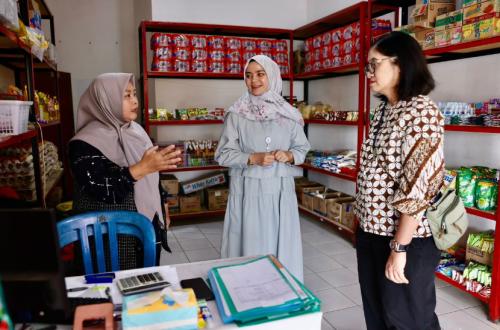
JAKARTA – Business mentoring is beginning to strengthen the capacity of cooperatives in Bandung and Sumedang regencies, West Java. The 16 cooperatives taking part in an incubation programme recorded average performance indicator achievement of 84.81% in October 2026, up from 78.94% the previous month.
The improvement was recorded in monitoring results for the 2026 Cooperative Business Incubation Programme, run by the Revolving Fund Management Agency for Cooperatives (LPDB Koperasi) with the IKOPIN Centre for Business and Entrepreneurship Incubator (PIBI IKOPIN). The programme, which began in May 2026, involves 14 Merah Putih Village Cooperatives (KDMP) and two regular cooperatives.
LPDB Koperasi’s Director-General for General Affairs and Legal Affairs, Deva Rachman, said mentoring needed to deliver improvements in business capacity, governance and cooperative independence. This strengthening is also expected to improve cooperatives’ readiness to access financing for business development.
“The incubation programme must bring about tangible changes in cooperatives’ capacity and independence, enabling them to grow sustainably and be ready to access financing,” Deva said in a written statement in Jakarta on Saturday (31 October 2026).
Deva said monitoring as at 18 October 2026 showed that average achievement of the Objective and Key Results (OKR) indicators had risen by 5.88 percentage points compared with the position on 18 September 2026. Of the 16 participating cooperatives, nine improved their achievement, while seven recorded no change.
Eight cooperatives had reached at least 90% of their performance indicators, while two were in the 85–89% range. Four achieved 70–84%, and the remaining two were below 70%.
Deva said mentoring needed to be tailored to each cooperative’s economic potential and characteristics. This approach is intended to ensure business development does not follow a uniform template, but instead makes use of local economic opportunities.
“We want cooperatives not merely to receive mentoring, but genuinely to develop, operate viable businesses and maintain good governance, and ultimately be ready to access LPDB Koperasi financing to expand their operations,” Deva said.
The incubation programme covers institutional strengthening and legal compliance, business governance, financial management, digitalisation, and facilitation of access to financing and partnerships. Support is provided through training, coaching, mentoring, assistance, and monitoring and evaluation tailored to each cooperative’s needs.
By business sector, 12 cooperatives operate in trade and staple goods, three in agriculture and agribusiness, and one in livestock. Deva said this range of activities required mentoring suited to the characteristics of each market and the potential of each area.
One example of progress is KDMP Ganjarsabar, which has begun improving its administration and financial record-keeping. Its chair, Purnama, said the cooperative now uses an application to manage commodities, cash flow, journals, balance sheets and business results.
“Since receiving incubation support from PIBI IKOPIN, our cooperative’s administration has become much more organised. This has greatly helped us manage the cooperative,” Purnama said.
Mahatmi Parwitasari Saronto, Director of Cooperatives and Micro, Small and Medium Enterprises at the Ministry of National Development Planning (Bappenas), said cooperative strengthening should be accompanied by the development of productive business activities. Cooperatives are expected not only to distribute goods, but also to process local economic resources into products with added value.
“We encourage cooperatives to develop businesses based on the potential of their areas. They should not only act as distributors or intermediaries, but also move into production, creating added value and supporting the growth of local economies,” Mahatmi said.
PIBI IKOPIN Director Deddy Supriyadi said the success of incubation could not be judged solely by the completeness of institutional documents or the number of mentoring activities. Cooperative development should also include improvements in human resource quality and business management, as well as the ability to take advantage of market opportunities.
“Incubation success is measured not just by whether activities have taken place, but by the extent to which cooperatives improve, become healthier and better, and are able to benefit their members and the wider community,” Deddy said.
Yudi Azis, rector of the Indonesian Cooperative University (IKOPIN), said collaboration between financing institutions, universities and government could help strengthen cooperatives based on conditions on the ground. Monitoring and evaluation findings are also expected to inform recommendations for the broader development of cooperatives.
“The evaluation findings are also expected to provide lessons and recommendations for the wider development of cooperatives,” Yudi said.