
Lowest Ever: German Chancellor Merz's Popularity Plummets to 10%
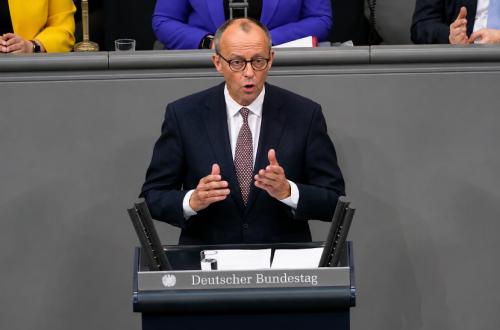
German Chancellor Friedrich Merz has cancelled his planned trip to New York to attend the United Nations (UN) General Assembly debate next week. The cancellation comes as Merz faces intense domestic political pressure following his party’s decline in state elections and a drop in performance satisfaction to the lowest level since he took office.
Government sources stated that Merz’s presence is required in Berlin. However, the government did not provide specific details regarding the agenda that necessitated the cancellation of the New York trip.
“Contrary to the original plan, the Chancellor will not travel to New York next week because his presence is required in Berlin,” a government source told the German news agency DPA, as reported by Berliner Zeitung on Tuesday, 15 September 2026.
Merz was originally scheduled to appear at the annual meeting of heads of state and government at the UN headquarters. Following the announcement of the cancellation, the government has yet to confirm who will represent Germany at the General Debate.
Reuters reported on Tuesday, 15 September 2026, that the cancellation occurred as pressure on Merz intensified following the political decline of the Christian Democratic Union (CDU), particularly after the Saxony-Anhalt state election on 6 September. The next two state elections are also a major concern for the CDU.
Satisfaction with Merz Drops to 10 Per Cent
Pressure on Merz is further evidenced in recent surveys. Results from the RTL/ntv Trendbarometer, conducted by the Forsa institute, show that only 10 per cent of respondents are satisfied with Merz’s performance. Conversely, 88 per cent expressed dissatisfaction.
RTL/ntv stated that this satisfaction figure is the lowest level ever measured by Forsa for Merz. The survey was conducted between 8–14 September 2026 among 2,502 respondents, with a margin of error of approximately plus or minus 2.5 percentage points. The results were published on Monday, 14 September 2026.
Merz’s struggles are also evident among his own political base. Only 42 per cent of CDU and Christian Social Union (CSU) supporters expressed satisfaction with his work, while 57 per cent were dissatisfied.
Forsa noted that Merz’s position is even lower than the lowest point of his predecessor, Olaf Scholz, in the institute’s measurements. In July 2024, 23 per cent of respondents expressed satisfaction with Scholz’s performance, while 76 per cent were dissatisfied. This comparison refers to public satisfaction measurements at different periods and is not a comparison of election results.
Pressure is also mounting on the CDU/CSU. In questions regarding party preference if a federal election were held during the survey, support for the CDU/CSU stood at 20 per cent, down one point from the previous week. The AfD stood at 27 per cent, the Greens at 18 per cent, while the SPD and Die Linke each stood at 12 per cent. Such opinion polls reflect respondent preferences at the time of data collection and are not predictions of future election results.
Blow from Saxony-Anhalt
Pressure on Merz intensified after the CDU suffered a setback in the Saxony-Anlant state election on 6 September. Reuters reported that the result has intensified debates regarding the direction of Merz’s government and his economic reform agenda.
The AfD achieved strong results in the election, while the CDU suffered a significant defeat. This development has increased pressure on Merz’s leadership ahead of the upcoming state elections in Mecklenburg-Vorpommern and Berlin.
Reuters reported on Tuesday, 15 September 2026, that the CDU has scheduled a special meeting to discuss strategies for facing the series of elections. Amid questions regarding his leadership, Merz stated his intention to complete his four-year term. CSU leader Markus Söder has also openly provided support to Merz.
In this context, the decision to remain in Berlin focuses Merz’s attention on domestic political issues during the very week he was originally scheduled to appear at the UN, the world’s largest international forum.