
Low Trust in Political Parties Must Be Addressed, Says Yasonna
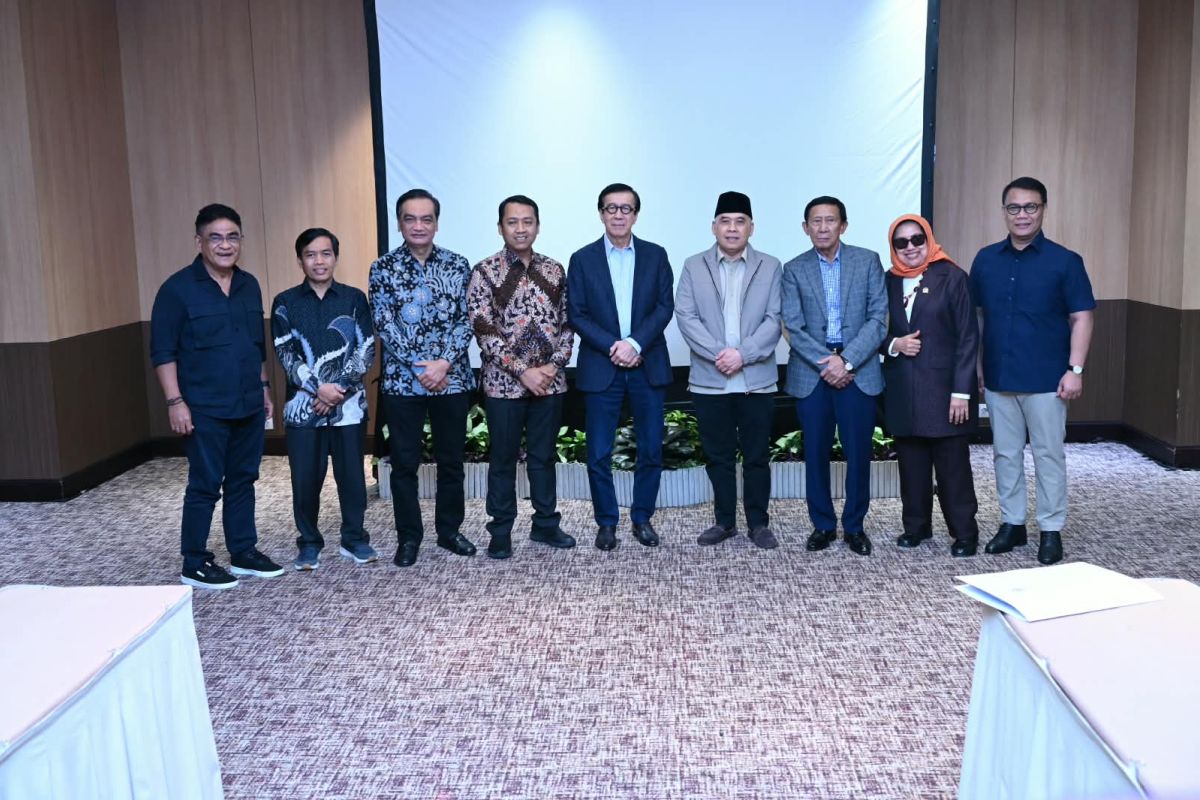
Jakarta (ANTARA) – Yasonna Laoly, chair of the Indonesian People’s Consultative Assembly’s (MPR) Study Board, said widespread public dissatisfaction with political parties, as reflected in surveys by various organisations, was inseparable from pragmatism among party elites.
“What matters is securing as many votes as possible and having the financial means to fund an election. Sometimes parties even poach legislative candidates with strong chances of being elected to ensure they remain in the House of Representatives,” Yasonna said in a statement in Jakarta on Saturday.
Yasonna made the remarks after chairing a Focus Group Discussion of the MPR Study Board’s Group I in South Tangerang, Banten, on Friday (6 November). The discussion examined “Popular Sovereignty from the Perspective of Pancasila Democracy”.
“As a result, parties move quickly to choose public figures who can attract votes and have the financial means to bear the political costs of an election. They no longer consider whether the person is a party cadre who understands the party’s ideology,” he said.
Yasonna said this pragmatic approach to choosing candidates for the House of Representatives, the presidency and regional leadership was harmful and should prompt parties to reassess their practices.
“Popular sovereignty in elections does not end when the election is held and the results are announced. It continues, with the public remaining voters in the next election,” he said.
Yasonna said that when people felt their aspirations were being blocked, either in representative bodies or by political elites, their trust in political parties would inevitably decline, as surveys by various organisations have indicated.
“Discussions have raised the possibility of replacing the current electoral system, either by returning to a closed-list system or adopting a mixed, partly closed system, rather than the fully open system we have now. The hope is that this could curb pragmatism in selecting legislative candidates, because the current approach is unhealthy in the long run,” he said.
“This would make parties’ responsibility for selecting candidates clear. The public could also hold parties accountable if they put forward poor-quality members of the House or regional leaders. The punishment would be not voting for them in the next election,” Yasonna said.
Yohan Wahyu Irianto, a researcher at Kompas Research and Development, said the public felt political parties had not yet become a channel for their aspirations.
“Some 56.4 per cent of respondents said political parties had not been able to channel their aspirations, while only 37.8 per cent believed they could,” he said.
Yohan said parties would need to strengthen their role to increase public confidence in their ability to represent people’s aspirations.
“This is consistent with the fact that the public does not agree with parties choosing to nominate candidates from other parties rather than their own cadres. The proportion of respondents who support parties putting forward their own cadres is 64.7 per cent,” he said.
Source: jawawa.id (https://jawawa.id/newsitem/low-trust-in-political-parties-must-be-addressed-says-yasonna-1794041496)
Originally published by Antara (Indonesian) (https://www.antaranews.com/berita/5838423/tingkat-kepercayaan-terhadap-partai-rendah-yasonna-harus-dievaluasi), translated from Indonesian