
Longest Dry Spell: Pajangan, Bantul Records 90 Days Without Rain
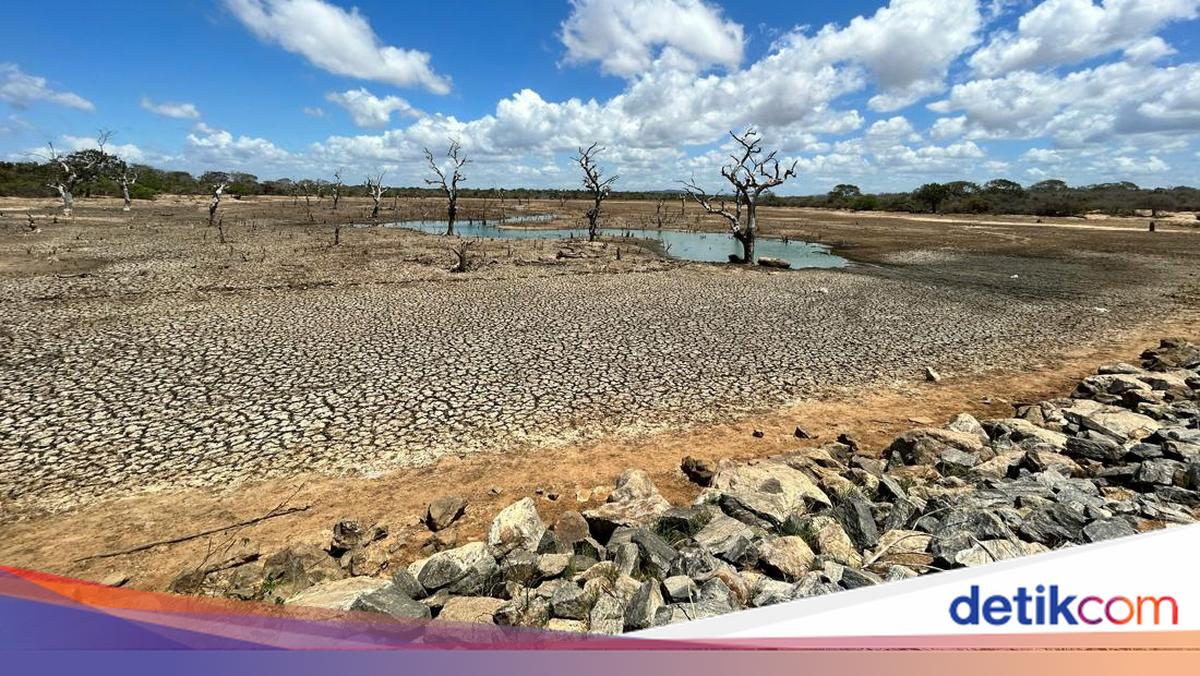
Most of Indonesia remains in the grip of a dry season, with the Meteorology, Climatology, and Geophysics Agency (BMKG) reporting that the longest period without rain has been recorded in Pajangan, Bantul, at 90 days. The agency noted that regions experiencing very long to extreme dry spells include Java, Bali, Nusa Tenggara, southern Sumatra, southern Kalimantan, North Maluku, and parts of Sulawesi. Conversely, areas such as Aceh and West Sumatra still have the potential for localised rainfall.
BMKG explained that heavy to very heavy rain was recorded in Aceh, North Sumatra, West Sumatra, Riau Islands, and North Kalimantan during the period of 30 July to 2 August 2026. This was caused by Kelvin and Rossby equatorial waves. An anomaly in Outgoing Longwave Radiation (OLR) indicated increased cloud cover over parts of western and central Indonesia, suggesting that local rain can still occur despite the increasingly dry season in most regions.
The intensifying dry conditions in many areas are attributed to a combination of atmospheric phenomena and a strong El Niño, which significantly reduces the formation of rain clouds and precipitation. Many areas are also at risk of being hit by strong winds.
For the period of 4-7 August 2026, BMKG has warned of increased rainfall in Aceh, North Sumatra, West Java, North Kalimantan, Central Papua, Highland Papua, and Papua. Strong winds are expected in Aceh, North Sumatra, West Sumatra, East Nusa Tenggara, West Kalimantan, South Kalimantan, North Sulawesi, South Sulawesi, North Maluku, Maluku, Southwest Papua, West Papua, and South Papua. For the period of 8-10 August 2026, increased rainfall is forecast for Aceh, Central Papua, Highland Papua, and South Papua, while strong winds are expected in Aceh, Banten, West Java, West Kalimantan, West Sulawesi, South Sulawesi, Central Sulawesi, North Sulawesi, North Maluku, Central Papua, and South Papua.
BMKG has urged the public to conserve water as the dry season intensifies and to remain vigilant against the threats of drought and forest and land fires. Residents are advised not to burn rubbish or clear land carelessly, especially in fire-prone areas such as peatlands, scrublands, and forests. In regions with potential for strong winds, the public should be wary of falling trees, branches, and collapsing billboards.