
Long Fuel Queues Become the New Face of Iran's Crisis
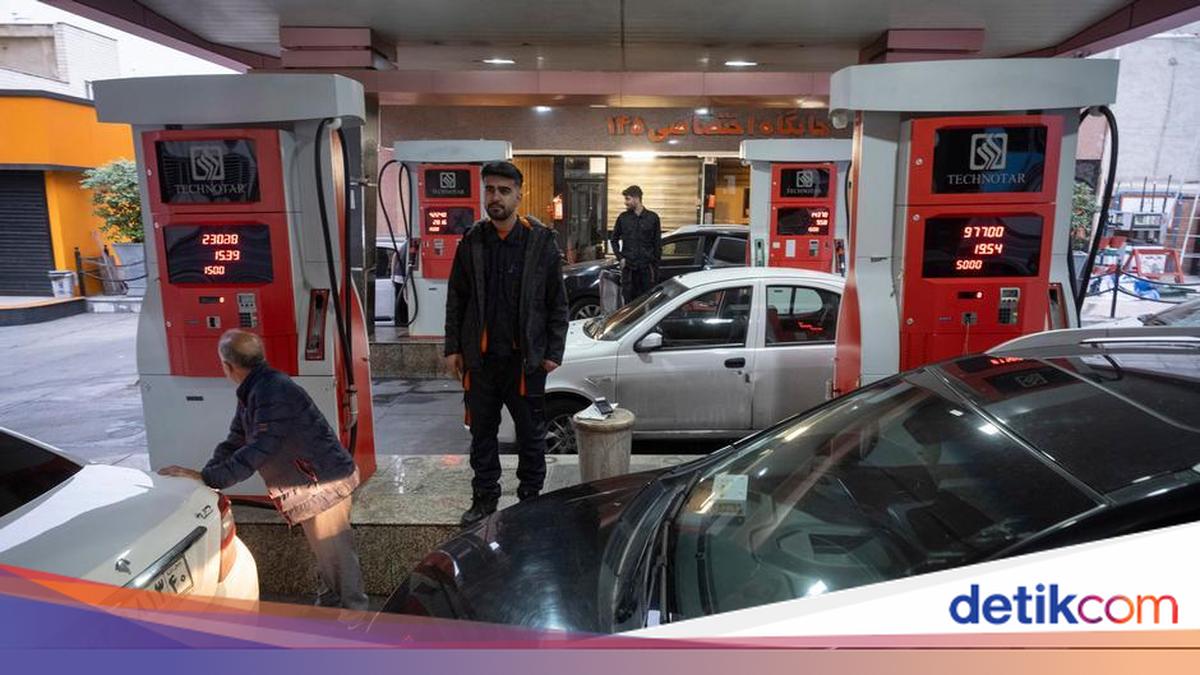
Only a few days after Washington announced a new round of economic sanctions against Iran, petrol shortages in the country have become increasingly visible on the streets.
In various Iranian cities, drivers report having to queue for hours at filling stations. Videos circulating on social and media show people arriving before midnight or even sleeping in their cars to ensure they obtain fuel the following morning. Some filling stations even close before all vehicles in the queue have been served.
The situation is even more dire for diesel. Truck drivers say queues at filling stations near major cities can stretch for several kilometres. They are forced to wait overnight just to obtain enough fuel to return to work.
Iran is actually facing a petrol deficit of approximately 15 million litres (about 4 million gallons) per day. Damage from war, difficulties in importing refined oil products, and the increasingly tight United States (US) blockade make this long-standing structural problem even harder to manage.
Hours of queuing for a few litres
A resident of Karaj, a city west of the capital Tehran, told DW that several filling stations are limiting purchases to approximately 5 litres (about 1.3 gallons) per person.
“I am queuing for petrol now. It took about 45 minutes just to get this far,” they said. “Yesterday I went to several stations. Some were closed, some had no petrol, and others had very long queues.”
They said they returned at 06:00 the next morning in the hope of avoiding the crowds, but found long queues once again. They suspect the shortage is being partially used to prepare public opinion for an upcoming increase in petrol prices, though this claim cannot be independently verified.
For truck drivers, the time spent queuing translates directly into lost income. “Our entire lives are spent either in diesel queues or on the road,” said one driver. He recounted sleeping at a filling station while waiting for a tanker that might arrive around midday, only to supply fuel for a few dozen trucks.
Another driver said they had been waiting since 08:00 after failing to obtain diesel the previous day. For drivers whose income depends directly on vehicles remaining operational, every lost day adds to the burden of increasing costs for insurance, tyres, oil, repairs, and maintenance.
Is Iran adulterating its petrol?
The shortage coincides with the use of methanol in domestically produced petrol. Vahid Ghaneifard, CEO of Persian Gulf Star Oil Company, recently confirmed that the refinery has begun testing methanol as an oxygenate in petrol.
The company stated that methanol accounts for approximately 0.5% of the mixture. Iranian refining authorities say national fuel standards allow for a methanol concentration of up to 3%.
Government officials insist the trial meets technical requirements. However, the timing has triggered public suspicion. Videos shared online show motorists carrying bottles of fuel that appear very clear, claiming the quality of the petrol has declined. Some accuse excessive amounts of water or alcohol of being mixed into the supply, though these allegations have not been independently confirmed.
However, there has been at least one confirmed incident of water contamination. In the city of Rafsanjan, local authorities admitted that water was mixed with petrol at a filling station after videos showed cars and motorcycles experiencing engine issues. Officials stated the incident was caused by technical failure and is under investigation.
Distrust in fuel quality is rising
For motorists already facing shortages, isolated incidents can reinforce broader concerns. A resident of Tehran told DW that they had spent approximately 1 billion toman—about US$5,250 (around Rp 93.9 million) at current rates—to repair their car after a crankshaft failure. They believe poor petrol quality caused the damage, though the link has not been independently proven. They added that they were reluctant to protest openly.
Other residents in Rey, south of Tehran, told DW that motorists gathered outside a filling station after several cars allegedly suffered damage after refuelling.
These concerns are not merely technical. They reflect the eroding trust between consumers and the government, as the state is also discussing increases in petrol and diesel prices. Tehran argues that the current subsidy system encourages excessive consumption and smuggling, while also placing an unsustainable burden on national finances.
However, consumers point to other issues, such as inefficient vehicles, inadequate public transport, and incomes that are unable to keep pace with inflation.
Is a price hike being prepared?
Economist Hassan Mansour believes the government is preparing the political groundwork for an energy price hike. Officials have repeatedly stated that Iran’s petrol prices are artificially low, leading to large-scale smuggling abroad, and that the Iranian economy consumes far more energy per unit of output than comparable nations.
The proposed solution is to bring domestic fuel prices closer to international rates.
“Once again, the government finds itself preparing the ground to raise energy prices,” Mansorb told DW.
However, the problem goes deeper than mere petrol subsidies. Mansour highlighted the financial condition of Iran’s oil industry. Budget documents show the National Iranian Oil Company…
Source: jawawa.id (https://jawawa.id/newsitem/long-fuel-queues-become-the-new-face-of-irans-crisis-1788407874)
Originally published by detikcom (https://news.detik.com/dw/d-8646128/antrean-panjang-bbm-jadi-wajah-baru-krisis-iran), translated from Indonesian